Red light therapy devices range from under a hundred dollars to several thousand, and the spec sheets are written to make comparison difficult. Two devices with nearly identical marketing can deliver very different amounts of light to your skin.
This guide covers the four things that actually determine whether a device does what it claims — and the specification tricks worth recognising before you spend money.
1. Wavelength
This is the first filter, and it's binary: either the device emits wavelengths with research behind them, or it doesn't.
The two ranges with the most established research are:
- Red: roughly 630–660nm
- Near-infrared: roughly 830–850nm
These aren't arbitrary. They fall within what researchers call the optical window — the range where light passes into tissue rather than being absorbed at the surface as heat. Wavelengths outside this range don't reach cells the same way. Our photobiomodulation guide covers the mechanism, and the 660nm and 850nm buyer's guide goes deeper on the specific wavelengths.
What to check: the device states its peak wavelengths in nanometres. Not "red light", not "infrared" — actual numbers.
On multi-colour devices: masks offering blue, green, and yellow alongside red aren't necessarily better. Those wavelengths interact more with the skin's surface and serve different purposes. More colours is a different feature set, not a stronger one.

2. Irradiance — And the Trick to Watch For
Irradiance is how much light output actually reaches your skin, measured in mW/cm². It's the single most important number and the one most often manipulated.
The trick: some manufacturers measure irradiance at the LED surface — zero distance — rather than at the distance you'd actually use the device. Surface measurement produces a far bigger number that has nothing to do with what your skin receives at 15–30cm.
What to check: irradiance stated at a specified distance. "100 mW/cm²" means nothing. "100 mW/cm² at 15cm" is a real specification. If a brand publishes a number with no distance attached, treat it as marketing.
Related trap — wattage. Wattage measures the electricity the device consumes, not its light output. If a brand presents wattage as evidence of power, that's a signal they're avoiding the specification that matters.
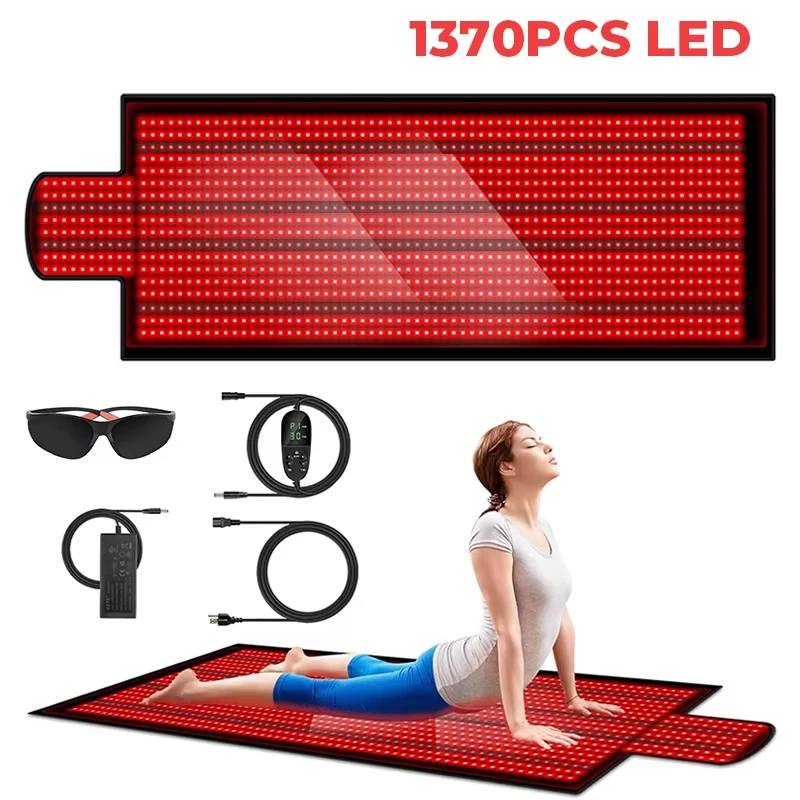
Related trap — LED count. "500 LEDs" is meaningless without power density. A large number of weak LEDs doesn't produce a useful dose. Count is the easiest number to inflate and the least informative.
3. Consistency Across the Device
Less discussed but genuinely important: irradiance often varies significantly across a single device, and from the stated specification.
In cheaper devices this creates hotspots — some areas delivering far more energy than others. That's a real problem, because the dose response for red light is biphasic: benefit rises to an optimal dose, then diminishes and can become counterproductive past it. A device with wildly uneven output delivers unpredictable dosing across whatever you're treating.
What to check: whether the manufacturer says anything about output consistency across the device, and whether any independent third-party testing exists. Brands that commission and publish external testing are more credible than those self-reporting.

4. Format and Coverage
The right format depends entirely on what you're treating — and this decision matters more than small spec differences between similar devices.
| Format | Best for | Trade-off |
|---|---|---|
| LED mask | Face, neck, décolletage | Facial area only |
| Belt / wrap | One targeted area, hands-free, moving around | Small coverage area |
| Mat / blanket | Large areas, whole body, lie-down sessions | Needs floor space, less portable |
| Panel | Flexible — face, torso, limbs at distance | You have to sit still in front of it |
A common mistake is buying the largest device available when a targeted one suits the actual routine better. Coverage you don't use isn't value.
Relevant comparisons: blanket vs mat, full body at home, LED face mask buyer's guide.
What Doesn't Matter As Much As You'd Think
Price. A more expensive device isn't automatically better. Price often reflects brand positioning and design rather than output or build quality.
"Medical grade" labelling. This phrase has no fixed regulatory meaning in consumer marketing and is frequently used loosely. It is not the same as being registered as a medical device — our medical grade devices guide explains the distinction, which matters in Australia specifically.
Reviews on marketplace sites. Many are incentivised. Reviews describing specific experiences over months are worth more than volume of generic praise.
Extra modes and settings. Pulsing options, preset programs, and app connectivity are convenience features. They don't change the fundamentals of wavelength and irradiance.

A Practical Checklist
Before buying, confirm:
- Peak wavelengths stated in nm, in the 630–660nm and/or 830–850nm ranges
- Irradiance stated at a specified distance, not at the LED surface
- Format matches the areas you actually want to cover
- Manufacturer publishes real specifications rather than vague power language
- Clear guidance on session length, distance, and frequency
- Reasonable warranty
- You'll realistically use it consistently — the biggest variable in any red light routine
That last point is worth as much as the rest combined. The best-specified device you use twice a month will do less than a modest one you use four times a week.
Where to Go Next
If you're comparing specific products for the Australian market, our best red light therapy device Australia guide covers the options directly, and red light therapy at home Australia is the broader buyer's guide.
New to red light therapy entirely? Start with what is red light therapy, then how to use it at home once you've chosen a device.
FAQs
What's the most important specification in a red light therapy device? Irradiance stated at a real treatment distance, in mW/cm². Wavelength determines whether the light is useful; irradiance determines how much of it reaches you.
What wavelengths should a red light therapy device have? Roughly 630–660nm for red and 830–850nm for near-infrared — the ranges with the most established research. Many quality devices combine both.
Does a higher LED count mean a better device? No. LED count without published power density tells you nothing. A large number of low-output LEDs doesn't deliver a useful dose.
Is a more expensive device better? Not necessarily. Price often reflects brand positioning and design rather than output or build quality. Compare specifications, not price tags.
Does "medical grade" mean anything? Not in a regulated sense for consumer marketing. It's not the same as being registered as a medical device, which is a specific regulatory status in Australia.
Do I need a full-body device? Most people don't. A targeted device suited to the areas you actually want to cover, used consistently, is usually a better purchase than a large device used occasionally.
These devices are general wellness products and are not intended to diagnose, treat, cure, or prevent any disease. Individual results vary. If you are pregnant, photosensitive, taking light-sensitising medication, or have a diagnosed health condition, check with a health professional before use.