You've got the device. Now what?
Most red light therapy guides either overcomplicate this or assume you're using a face panel. This one is practical, covers the main device formats (mask, belt, mat, panel), and is honest about the parts that genuinely vary by product — because "check your device's manual" isn't a cop-out, it's the actual answer for a few of these steps.
(New to the topic entirely? Start with What Is Red Light Therapy? for the fundamentals, then come back here.)

Before Your First Session
1. Read your device's specific guide first. Distance, session length, and recommended frequency genuinely differ between a face mask sitting directly on skin, a wrap-around belt, a full-body mat, and a standing panel. Anything you read online — including this article — is general guidance. Your product's own instructions win every time.
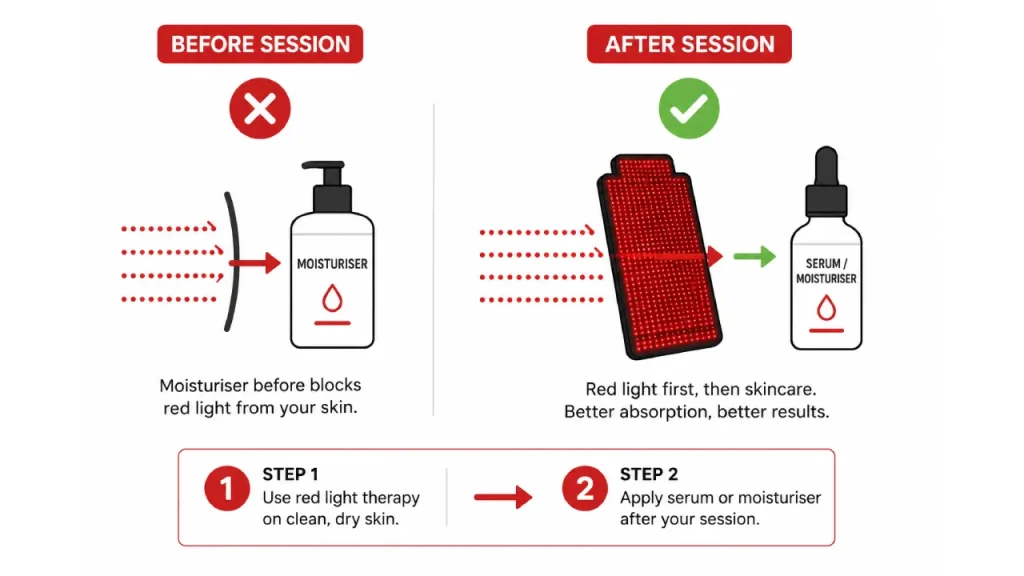
2. Clean the area you're treating. Light needs to actually reach your skin. Makeup, sunscreen, thick moisturiser, and heavy oils all sit between the LEDs and you, reducing how much light gets through. Cleanse, pat dry, and go bare-skinned where practical.
3. Set up somewhere you'll actually sit still. Sessions are typically 10–20 minutes. If you're going to be irritated and cut it short, that's a consistency problem — pick a spot where you can genuinely relax (podcast, TV, whatever works).

The Session Itself
4. Get the distance right.
- Panels: most manufacturers suggest somewhere in the 15–30cm range from the skin — check yours.
- Masks: designed to rest on or very close to the face, so distance is built into the product.
- Belts and wraps: worn in direct contact with the skin.
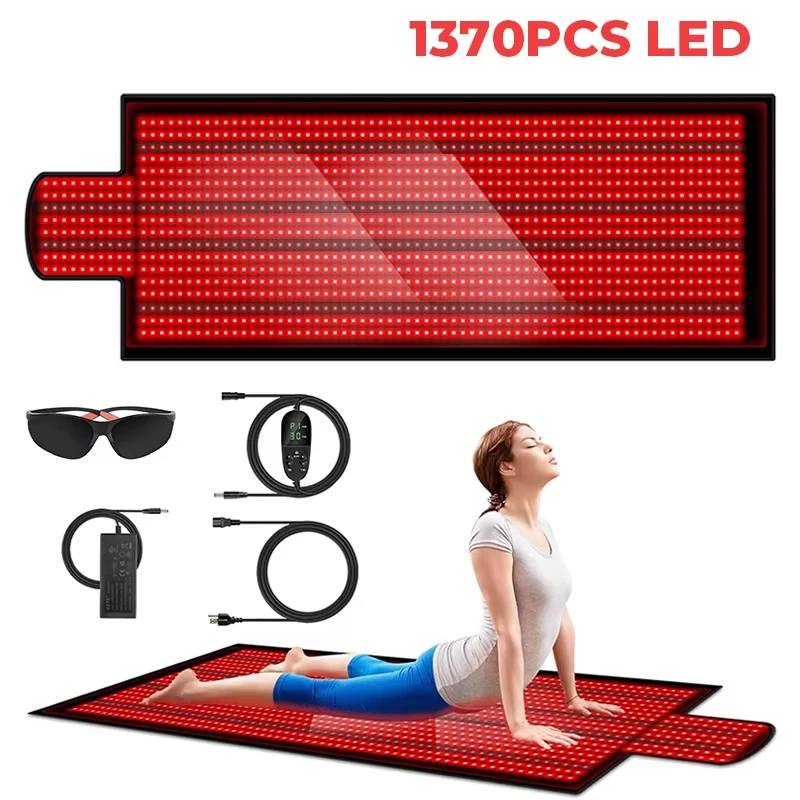
- Mats: you lie directly on them.
Closer isn't automatically better. The distance a manufacturer recommends is based on that device's output — moving nearer doesn't linearly improve anything and can just make the session uncomfortable.
5. Protect your eyes if needed. Red light therapy devices don't emit UV, but they can be genuinely bright — particularly panels and face masks. Many devices include eye protection, and plenty of people use it simply for comfort. Don't stare directly into the LEDs regardless of what your device recommends.
6. Time it — don't wing it. 10–20 minutes per session is the typical range for at-home devices, but this varies by product. Longer sessions aren't better; going well beyond the recommended time doesn't scale up results and just eats your day.
7. Cover the area evenly. If you're using a panel on a larger area, reposition part-way through rather than leaving one spot exposed the whole time and neglecting the rest. Belts and mats handle this by design.

Building the Routine
8. Frequency: consistency beats intensity. Most at-home routines land somewhere around 3–5 sessions per week, though some devices are designed for daily use. Check what yours recommends. What's clear from how these routines work is that regular use over weeks matters far more than any single long session.
9. Give it a realistic timeframe. Skin-related routines are generally assessed over 8–12 weeks, not days. Judging results after a week is too early. Track loosely — a photo every few weeks in the same lighting is more useful than daily mirror-checking.
10. Fit it around, not into, your existing routine. For skin, the usual approach is cleanse → red light session → serums/moisturiser afterwards. Applying products before a session just creates a barrier.
Common Mistakes Worth Avoiding
- Skipping the cleanse. Sunscreen especially — it's designed to block light.
- Going too close, too long. More isn't better, and manufacturer guidance exists for a reason.
- Inconsistent use. Three sessions in one week then nothing for a fortnight won't reflect how these routines are meant to work.
- Expecting fast results. Gradual and cumulative is the honest framing. Results vary between people, and nothing is guaranteed.
- Using it through clothing. Fabric reduces how much light reaches your skin. Bare skin where practical.
Choosing the Right Device Format
If you haven't bought yet — or you're deciding whether to add a second format — the practical question is which body areas you actually want to cover:
- Face and neck → an LED mask is the easiest to use consistently. See our LED Face Mask Australia Buyer's Guide.
- Larger areas / whole body → mats and panels. Our Full Body Red Light Therapy at Home guide and Blanket vs Mat comparison break these down.
- Targeted, wearable, hands-free → belts and wraps, useful if you want to move around during a session.
Still comparing? Our Red Light Therapy at Home Australia buying guide covers the whole range.
FAQs
How long should each red light therapy session be? Typically 10–20 minutes for most at-home devices, but this varies by product — follow your device's specific guidance rather than a general number.
How often should I use red light therapy? Many at-home routines run 3–5 times per week, though some devices are designed for daily use. Consistency over weeks matters more than session length.
Do I need to wear eye protection? Devices don't emit UV, but they can be very bright — many include eye protection and plenty of people use it for comfort. Don't look directly into the LEDs.
Should I apply skincare before or after a session? After. Products applied beforehand sit between the light and your skin, reducing how much light gets through.
How long until I might notice something? Most routines are assessed over 8–12 weeks of consistent use. Results vary significantly between individuals and aren't guaranteed.
Standard Disclaimer: This device is a general wellness product and is not intended to diagnose, treat, cure, or prevent any disease. Individual results vary. If you are pregnant, photosensitive, taking light-sensitising medication, or have a diagnosed health condition, check with a health professional before use.