Want the benefits of full body red light therapy — without the $80–$150 per clinic session price tag? You're not alone. More Australians are now exploring this technology at home as part of a consistent wellness routine. But with mats, blankets, and panels all on the market, it can be hard to know where to start.
If you are comparing full-body options now, start with the Alpha full red light therapy mat range.
This complete guide covers everything you need to know — how full body red light therapy works, how people use it in home routines, which device type is right for you, and how to use it more confidently at home.
What Is Full Body Red Light Therapy?
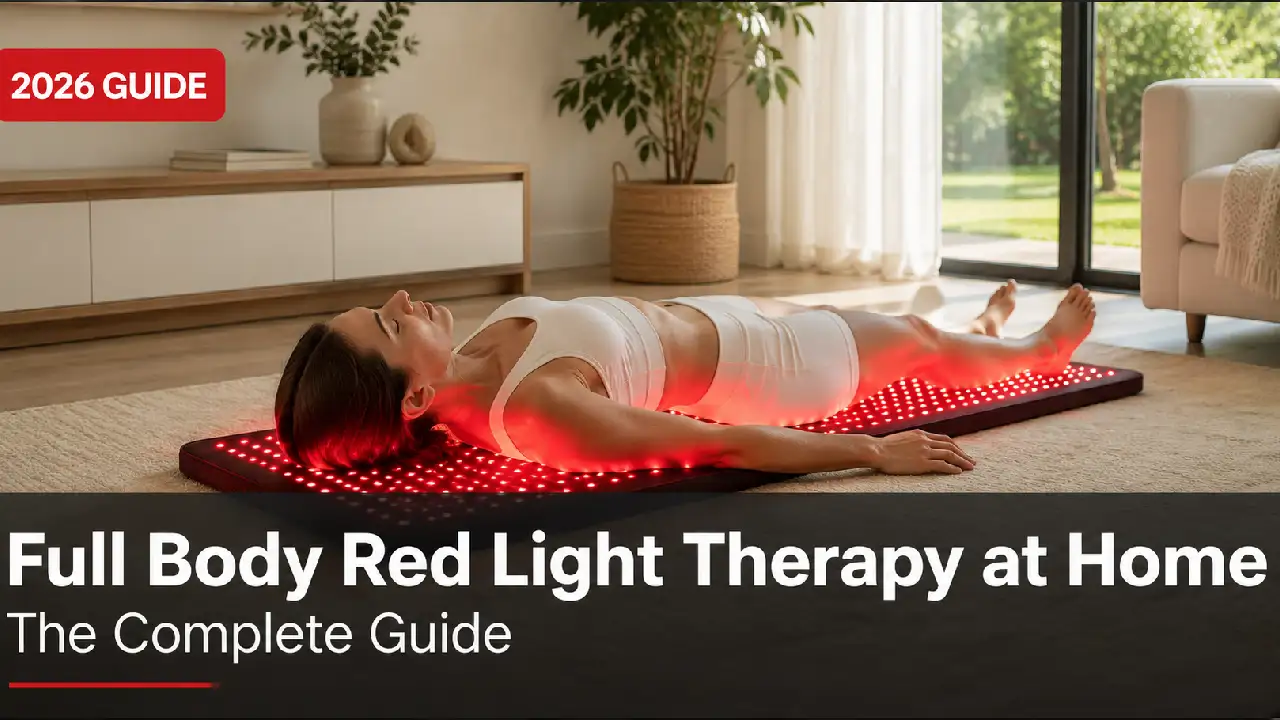
Full body red light therapy is exactly what it sounds like — red and near-infrared light delivered across your entire body simultaneously, rather than targeting just one area.
It uses the same core technology as targeted devices (like a belt or handheld wand), but instead of focusing only on your back or knee, a full body approach exposes the entire surface of your body — from your neck to your feet — to red and near-infrared wavelengths of light in a single session.
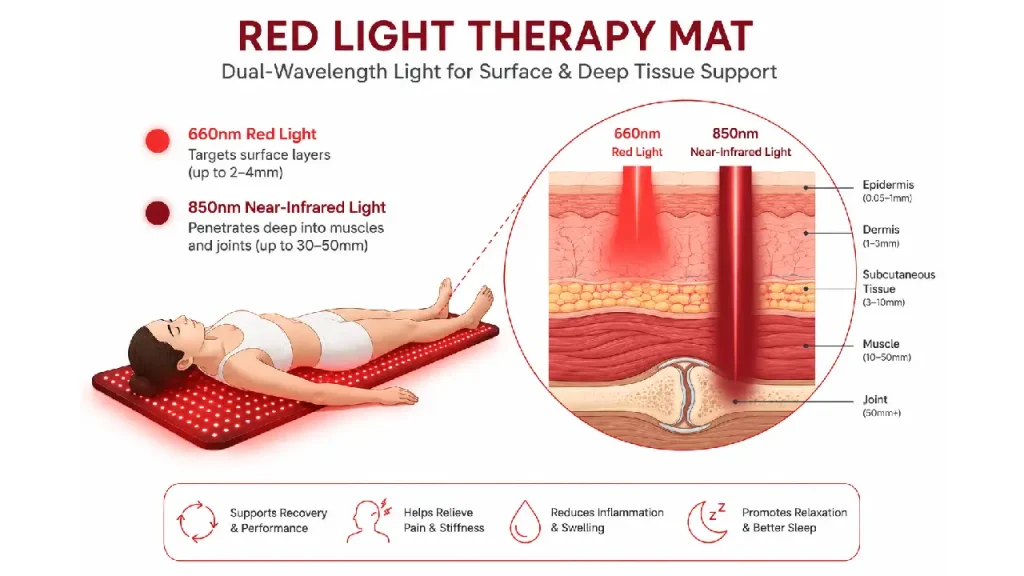
The clinical term is photobiomodulation (PBM), and the core wavelengths used are 660nm red light and 850nm near-infrared (NIR) light — wavelengths commonly discussed in research on comfort, skin-focused routines and recovery support.
What makes the full body approach different is scale. Rather than a localised cellular response in one area, you are supporting a broader light-exposure routine across your body at once.
If you're looking for targeted relief for a specific area like your back or joints, read our red light therapy belt review first.
How Does Full Body Red Light Therapy Work?
The process is similar whether you are focusing on one area or a larger surface area, but a full body setup changes how much of the body is exposed in one session.
When red and NIR light wavelengths reach your skin, they're absorbed by the mitochondria inside your cells. This is linked with ATP (adenosine triphosphate), the molecule involved in normal cellular energy processes.
With more ATP available:
- Cellular energy and recovery processes may be supported
- Comfort and recovery routines may feel more manageable
- Circulation support is often discussed in light-therapy research
- Skin-focused routines may be supported across a larger area
- Comfort-focused routines may feel more manageable
Why full body exposure matters: When you use a larger-area device, you are not limited to one small spot — you are supporting a broader recovery and wellbeing routine. Larger exposure areas are often discussed by users who want a simpler whole-body recovery routine, particularly after training or as part of a regular wellness schedule.
Why People Compare Full Body Red Light Therapy Devices
Full body red light therapy offers a broader format than a targeted belt or handheld device.
Whole-Body Comfort and Recovery Support A larger device can make it easier to build a regular routine around the back, posterior chain, joints and soft tissue areas. That consistency is one reason many home users prefer mats and blankets over occasional clinic visits.
Post-Training Recovery Support Athletes and active Australians are increasingly using full body red light therapy for post-training recovery. A full body session can be useful after training because it lets you cover several muscle groups in one quiet routine rather than moving a small device from area to area.
Skin Health From Head to Toe Red light at 660nm is commonly used in skin-focused routines. A full body session lets you include areas beyond the face, which can suit people who want a broader body-care routine.
Improved Sleep and Wellbeing Many people prefer evening sessions because the routine itself is quiet, screen-free and easy to repeat. For sleep-related concerns, it is still best to follow professional medical advice.
Circulation and Metabolic Support NIR light at 850nm is commonly included in recovery-focused devices because it penetrates differently from visible red light. Full body exposure is mainly about convenience and coverage.
Full Body Red Light Therapy at Home vs. Clinic: Is There a Difference?
This is one of the most common questions — and the honest answer is: clinic devices are typically more powerful, but consistency at home usually wins.
| Clinic | Home Device | |
|---|---|---|
| Cost per session | $80–$150 AUD | $0 after purchase |
| Convenience | Appointment required | Use anytime |
| Frequency | 1–2x per week (typical) | Daily if needed |
| Device power | Higher irradiance | Clinical-quality home devices now available |
| Long-term value | Expensive ongoing | One-time investment |
For most home routines, consistency matters more than intensity. A realistic routine that you can repeat several times per week is usually more practical than relying on occasional appointments. Most Australians simply cannot sustain that frequency at a clinic — both practically and financially.
A quality home device used regularly can be a practical alternative to occasional clinic visits for many wellness and recovery routines.
Types of Full Body Red Light Therapy Devices
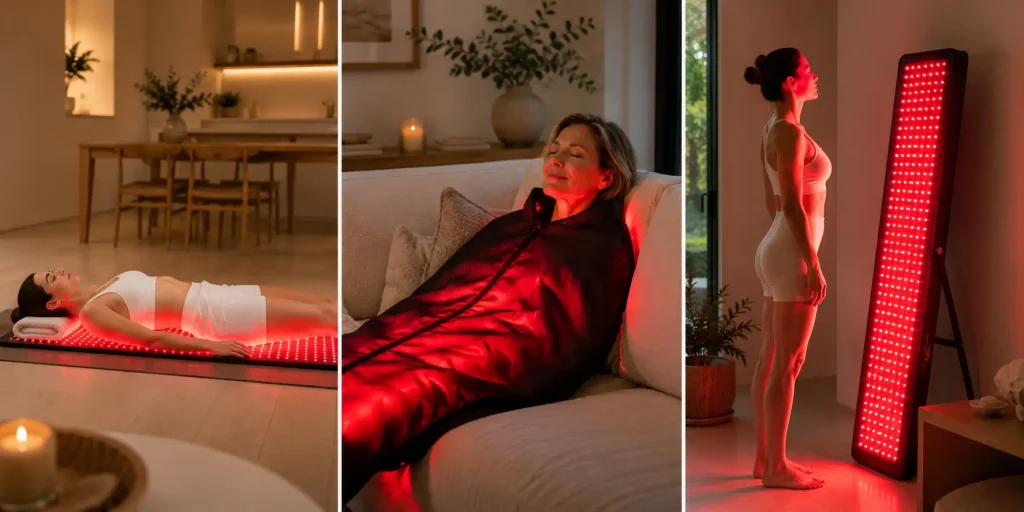
There are three main formats for full body use at home, each with different strengths.
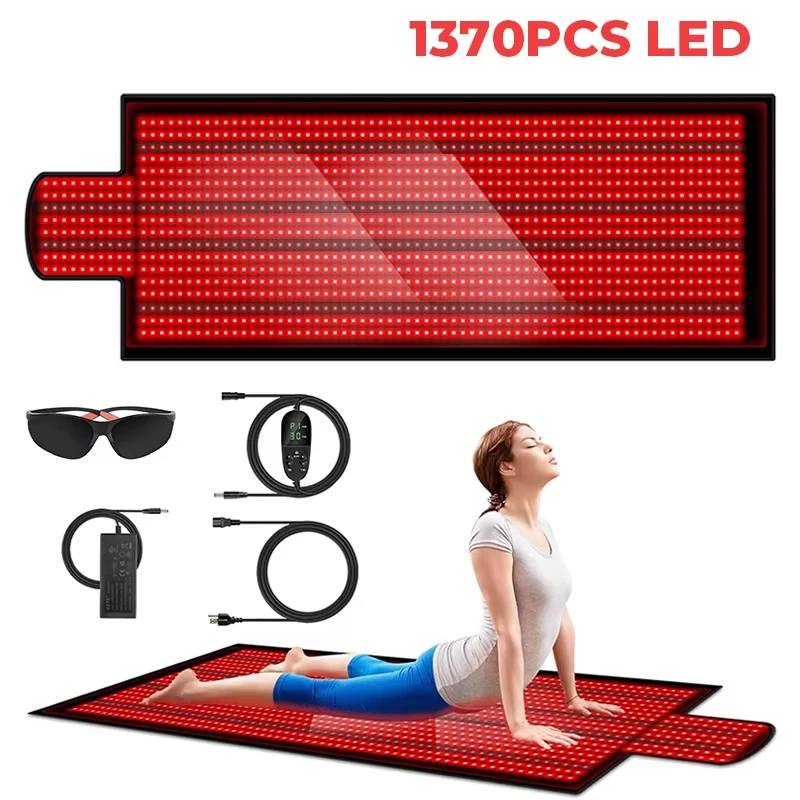
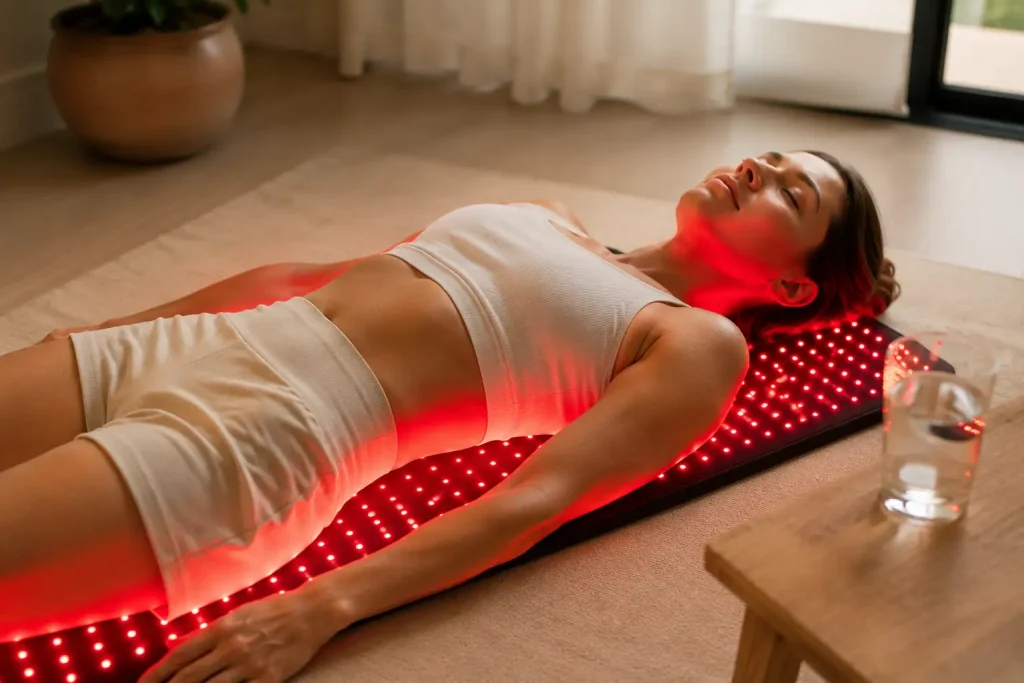
Red Light Therapy Mat A mat is a flat, flexible device you lie on directly, exposing your back, posterior chain, and larger body surface from below. Mats can suit passive wind-down routines where you simply lie down and rest. They can suit back-comfort routines, mobility routines and posterior chain recovery support.
Red Light Therapy Blanket A blanket wraps around your entire body, covering both sides in a single session. This cocoon-style format provides 360-degree coverage, making it the most comprehensive full body option available for home use. Blankets are particularly suited for people seeking broader wellness routines — including recovery support, relaxation, sleep support, and skin-focused routines.
Red Light Therapy Panel A large panel is a fixed or mounted device you stand or sit in front of. Panels typically deliver the highest irradiance (light intensity), making them powerful for targeted treatment — but they require repositioning to treat different body areas, and you need to stand or sit for the session duration. This can suit people comparing higher-intensity targeted routines.
Which is right for you?
- For passive, whole-body wind-down routines: Blanket
- For back comfort and posterior-chain routines: Mat
- For higher-intensity targeted routines: Panel
- For focused comfort on the go: Belt (worn directly on the body)
Introducing the Alpha Full Body Red Light Therapy Range
The Alpha Red Light Therapy range brings dual-wavelength light routines into Australian homes — at a fraction of the ongoing cost of clinic sessions.
Alpha Red Light Therapy Mat Lie down and unwind. The Alpha mat delivers dual-wavelength therapy (660nm + 850nm) across your back, posterior chain, and full body surface. Designed for daily use at home — whether it is for a post-training wind-down, back-comfort routine, or daily wellness routine.
Alpha Red Light Therapy Blanket The most comprehensive full body option in the Alpha range. Wrap the blanket around your entire body for simultaneous 360-degree coverage. 660nm red light for skin, circulation, and surface tissue. 850nm near-infrared for deeper-feeling warmth and recovery-focused routines. One passive session covers a large area at once.
Both devices are designed for Australian homes, ship across Australia, and require no ongoing costs or clinic appointments.
How to Use Full Body Red Light Therapy at Home
Getting the most from your device comes down to a few key practices.
Preparation: Use the device on clean, bare skin. Remove moisturisers, oils, or lotions before each session — these may reduce direct light exposure.
Session length: For a full body mat or blanket, 15–20 minutes per session is a common home-use starting point. More is not always better — follow the device instructions and avoid assuming that longer is always better.
Frequency: For general wellness and recovery, 3–5 sessions per week. For more focused routines, some users begin more regularly before settling into 3–5 sessions per week. Use the device instructions as your main guide, and speak with a health professional if you have a medical condition.
Timing: Many people use these routines at different times of day. For sleep support and recovery, evening sessions 30–60 minutes before bed tend to produce the best results. For energy and performance, morning sessions are preferred by many athletes.
Hydration: Drink water after each session if that helps you keep the routine comfortable.
Eye protection: While red and NIR light does not emit UV radiation, wearing the included protective goggles during sessions is recommended — particularly for blanket and mat devices with high LED counts.
When Will You See Results?
Realistic expectations matter. Here's a general timeline based on clinical evidence:
Sessions 1–5: Many users focus on comfort, relaxation and simply building the habit. Avoid judging a device from one session.
2–4 weeks of consistent use: This is when a routine starts to feel easier to judge. Pay attention to comfort, recovery after training, and whether the schedule is realistic.
4–8 weeks: This is a sensible window for deciding whether the device belongs in your longer-term routine.
The key word — as always — is consistent. A steady, structured routine is easier to assess than sporadic use.
Frequently Asked Questions
Can I use full body red light therapy every day? Yes. Many devices are designed for frequent home use, but you should follow the product instructions and speak with a health professional if you are pregnant, taking light-sensitive medication or managing a medical condition.
How long should each full body session be? 15–20 minutes is the standard recommendation. Full body sessions don't need to be longer than targeted sessions — the benefit comes from covering a larger surface area simultaneously, not from longer exposure.
Is a mat or a blanket better for full body use? It depends on your goal. A blanket covers both sides of the body simultaneously — useful for 360-degree coverage and broader wellness routines. A mat focuses on your back and posterior chain — useful for targeted comfort, mobility routines and posterior recovery support. Many people eventually own both for different purposes.
Can I use it for weight loss? Red light therapy should not be treated as a standalone weight loss solution and should not replace diet, exercise or professional advice.
Is it safe? Red light therapy using 660nm and 850nm wavelengths is generally marketed as non-invasive. It does not emit UV radiation. Avoid using over open wounds, directly on the eyes (use provided goggles), or on active skin conditions without consulting a healthcare professional first.
How does it compare to infrared sauna? These are different technologies. An infrared sauna works through heat — raising your core body temperature. Red light therapy works through cellular light absorption — photobiomodulation — which is a non-thermal process. Both have wellness applications, but the mechanisms and outcomes are different.
Final Verdict: Is Full Body Red Light Therapy at Home Worth It?
For anyone building a home routine around recovery support, skin-focused care or general wellness, full body red light therapy can be a practical long-term device category to compare. The main advantage is convenience: one quiet session from home, without booking appointments.
The Alpha Red Light Therapy mat and blanket range offers dual-wavelength coverage designed for Australian homes, with no appointment schedule and no per-session clinic cost.
Ready to compare your options? Explore the Alpha Red Light Therapy mat and blanket range and start comparing the full body range.
→ Shop the Alpha Full Body Red Light Therapy Range
This article is for informational purposes only and does not constitute medical advice. Always consult a qualified healthcare professional for diagnosis and treatment of medical conditions.