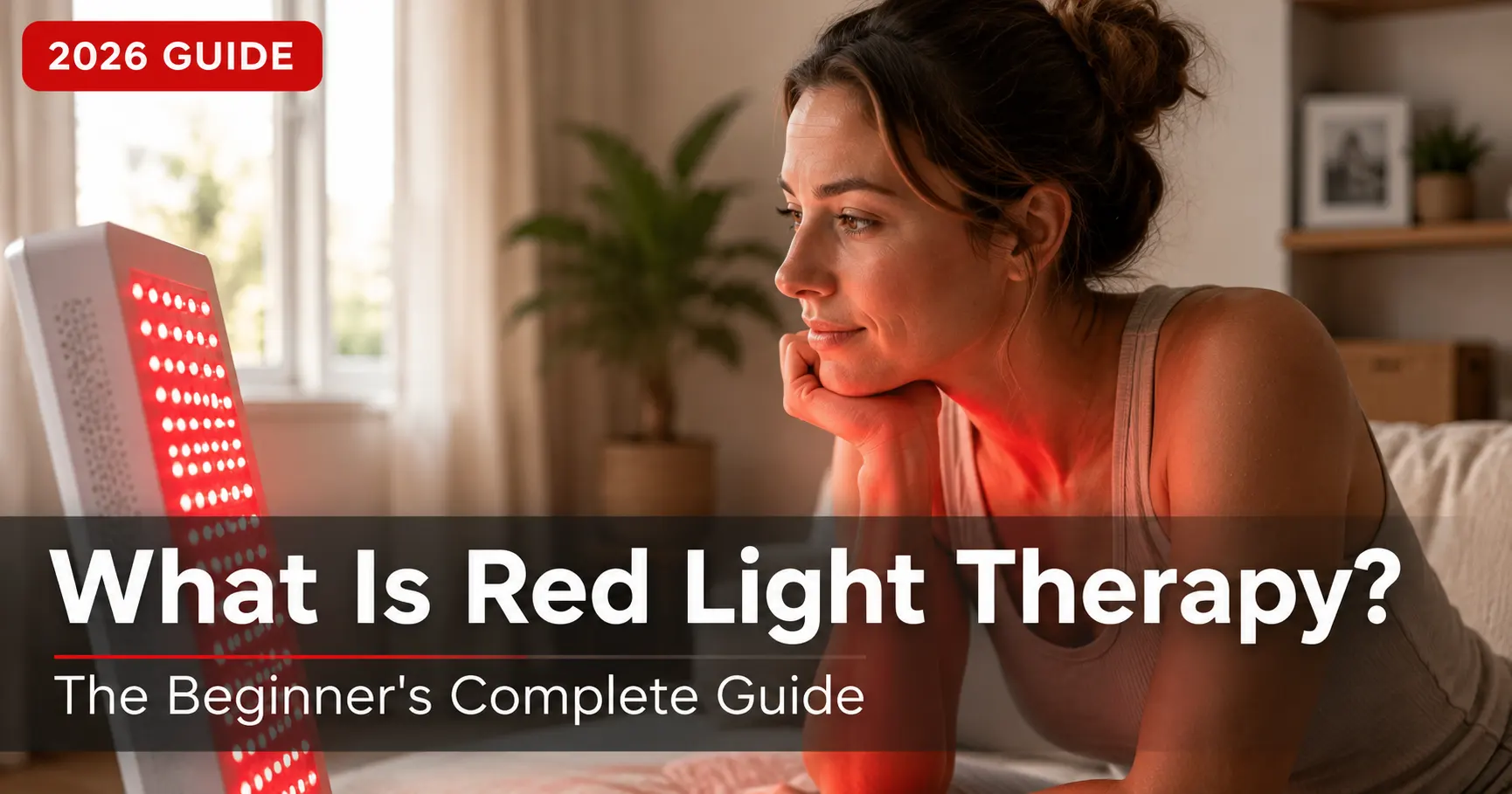
If you've started seeing red light therapy panels, masks, and mats show up everywhere — from Instagram ads to your gym's recovery room — you're probably wondering what's actually going on with the glowing red light, and whether it's worth adding to your own routine.
This guide covers the basics in plain English: what red light therapy is, how the light interacts with your body, what a typical at-home session looks like, and what to keep in mind before you start.
What Is Red Light Therapy?
Red light therapy (sometimes called RLT, or photobiomodulation in scientific literature) is the use of specific wavelengths of red and near-infrared light, delivered through LED devices, as part of a general wellness routine. Unlike sunlight, these devices don't emit UV rays, and unlike lasers used in clinical settings, most consumer devices work at low, non-thermal power levels — meaning you won't feel heat or discomfort during a session.
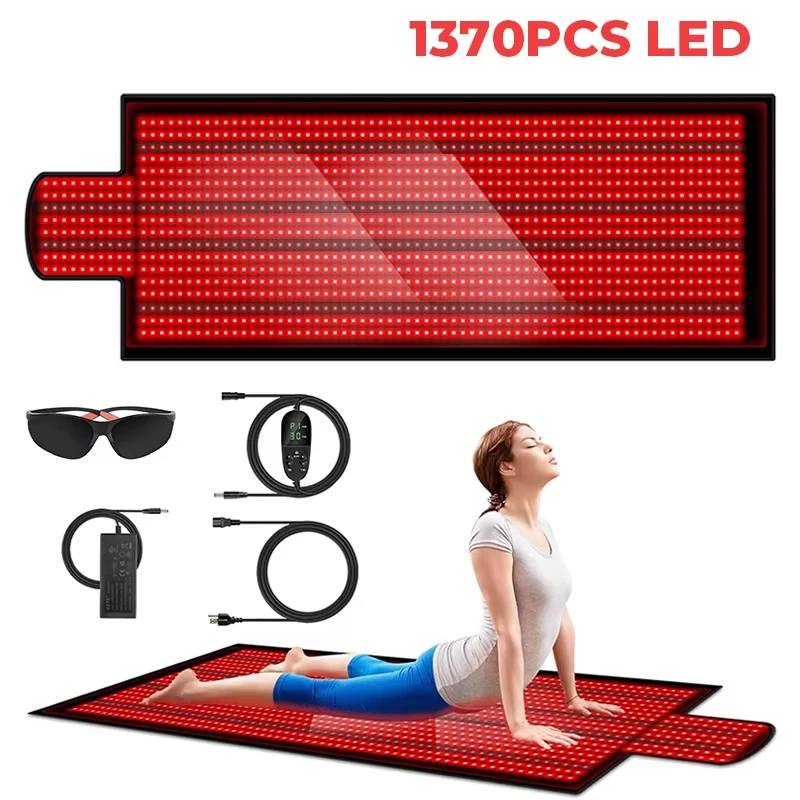
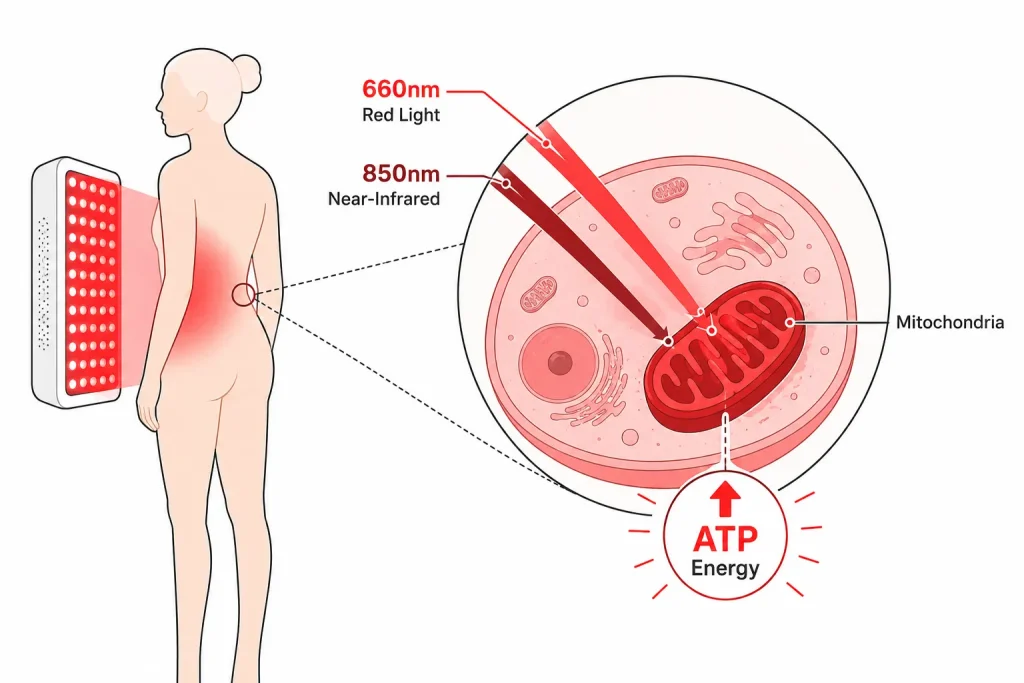
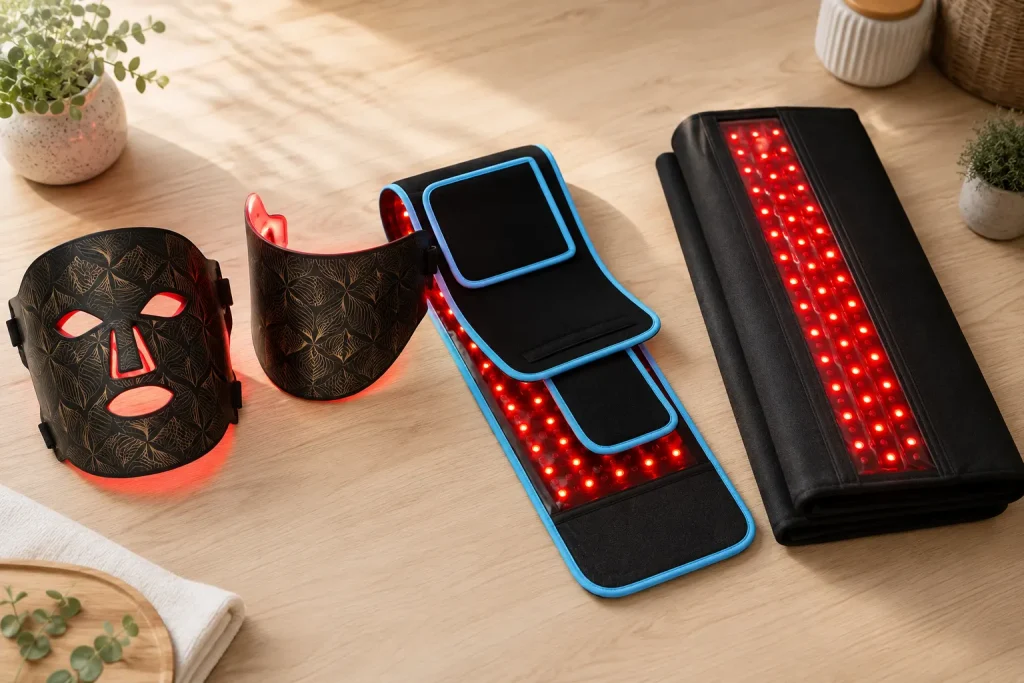
The "red" in red light therapy usually refers to visible red light in the 630–660nm range, while near-infrared light (roughly 810–850nm) sits just outside what the human eye can see and is known for reaching slightly deeper into tissue. Many devices — including panels, belts, mats, and face masks — combine both.
It's worth being clear about what red light therapy is not: it isn't a registered medical treatment, and at-home consumer devices are generally sold as general wellness products rather than TGA-registered medical devices in Australia. That distinction matters when you're comparing products — our Medical Grade Red Light Therapy Devices Australia guide breaks down what "medical grade" actually means and why it's not the same as "TGA-registered."
How Does Red Light Therapy Work?
At a basic level, red and near-infrared light is absorbed by cells in the skin and underlying tissue. Researchers believe this light interacts with mitochondria — the part of the cell responsible for energy production — which is why you'll often see red light therapy described as working "at the cellular level."
A simple way to think about it: light goes in, cells respond, and over repeated sessions, some people notice changes in how their skin looks or how their body feels after activity. Results vary significantly from person to person, and the strength of the evidence differs depending on what you're hoping to get out of it — skin appearance research is generally further along than research into other uses.
Three things determine how much light your cells actually receive in a session:
- Wavelength — red and near-infrared are the two most commonly used and studied ranges for at-home devices.
- Irradiance — how much light output the device delivers, usually measured in mW/cm².
- Session time and distance — how close you sit or stand to the device, and how long you stay there.
Get these three roughly right and consistent, and you're using the device as intended. This is really the whole idea behind a "dosage" in red light therapy — it's not about intensity alone, it's about the combination.
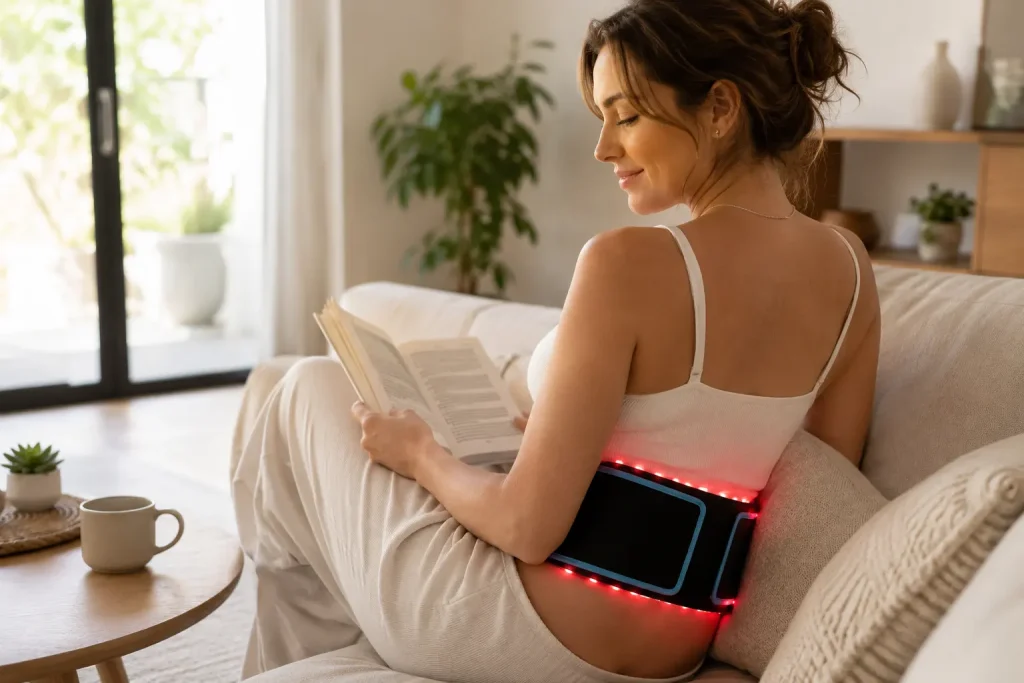
What Does a Session Actually Look Like?
Most at-home red light therapy sessions follow a similar pattern, whether you're using a panel, a wearable belt, a full-body mat, or a face mask:
- Set up the device at the recommended distance (check your product's user guide — this varies by device).
- Expose bare skin to the light where possible (through clothing generally reduces how much light reaches your skin).
- Sit or lie still for the recommended session length — typically 10–20 minutes depending on the device and area.
- Some people use eye protection depending on the device and its intensity — check your specific product's guidance.
- Repeat consistently. Most people build red light therapy into a regular at-home routine (for example, a few times a week) rather than using it once and expecting a change.
If you're deciding between a wearable, a mat, or a panel for a larger-area session, our Full Body Red Light Therapy at Home guide and Red Light Blanket vs Mat comparison walk through which format suits different goals and body areas.
Who Should Be Cautious?
Red light therapy devices are generally considered low-risk for a general wellness routine, but a few groups should check with a health professional before starting:
- People who are pregnant
- People with photosensitivity or a diagnosed skin condition
- Anyone taking light-sensitising medication
- Anyone with an existing diagnosed health condition they're managing
This isn't a red light therapy-specific quirk — it's standard advice any time you're introducing a new light-based product into a routine, and it's worth five minutes with your GP or dermatologist if any of the above applies to you.
Red Light vs Near-Infrared vs Other Wavelengths
You may also come across devices that include blue, green, or yellow LEDs alongside red and near-infrared. These target different depths and are generally aimed at different skin concerns — blue is typically paired with surface-level skin routines, for example, while red and near-infrared are the two most established wavelengths for broader at-home use. If you're specifically comparing devices for facial use, our LED Face Mask Australia Buyer's Guide covers how mask-style devices differ from panels.
Choosing Your First Device
If you're completely new to red light therapy, the format you choose matters more than the brand. A few starting questions worth asking yourself:
- Am I mainly interested in facial/skin routines, or larger body areas?
- Do I want something hands-free (mat, panel) or wearable (belt, wrap) so I can move around during a session?
- What's a realistic space and budget for this in my home?
Our Red Light Therapy at Home Australia: What to Buy guide is a good next stop if you're ready to compare specific product types before buying.
Is It Worth Trying?
That depends entirely on what you're hoping for and how consistent you're willing to be. Red light therapy isn't a quick fix, and results vary — some people build it into a long-term at-home routine and notice changes over weeks to months of regular use; others don't notice much at all. If you're curious and comfortable starting with realistic expectations, an at-home device can be a low-effort addition to an existing wellness routine.
FAQs
Is red light therapy the same as an infrared sauna? No — they use light and heat differently. If you're weighing up the two, see our Infrared Sauna vs Red Light Therapy comparison for a full breakdown.
How long before I'd notice anything? This varies a lot by person and by what you're using it for. There's no fixed timeline, and results vary — consistency matters more than any single session.
Can I use red light therapy every day? Many people do build it into a daily or near-daily at-home routine, but always follow your specific device's user guide for recommended frequency and session length.
Do I need a TGA-registered device? Not necessarily — most at-home consumer devices, including Alpha's range, are positioned as general wellness devices rather than registered medical devices. See our Medical Grade Devices guide for what that distinction actually means.
Standard Disclaimer (footer, every article): This device is a general wellness product and is not intended to diagnose, treat, cure, or prevent any disease. Individual results vary. If you are pregnant, photosensitive, taking light-sensitising medication, or have a diagnosed health condition, check with a health professional before use.