Last updated: July 2026 · Reading time: ~10 minutes
Quick answer: A good LED face mask for the Australian market combines clearly stated red (around 630–660nm) and near-infrared (around 800–850nm) wavelengths with a comfortable, flexible fit and honest marketing. Coverage matters as much as wavelength — some masks charge extra for a separate neck piece, others include it. Skip anything leaning on quantified "reduces wrinkles by X% in Y weeks" claims without a published study behind them, and check whether "TGA" or "medical grade" claims are backed by an actual ARTG listing.
Search "LED face mask Australia" and you'll land in one of the most claim-heavy corners of the wellness market. Nearly every result promises a specific percentage improvement in a specific number of weeks, alongside a before-and-after photo. Some of that is backed by real testing. A lot of it is marketing doing the heavy lifting the science hasn't earned yet.
This buyer's guide skips the hype and focuses on what actually separates a well-built LED mask from an overpriced novelty: wavelengths, coverage, fit, and honesty. We'll also walk through where our own LED Face & Neck Mask fits into that picture — including where it doesn't.
What an LED Face Mask Actually Does
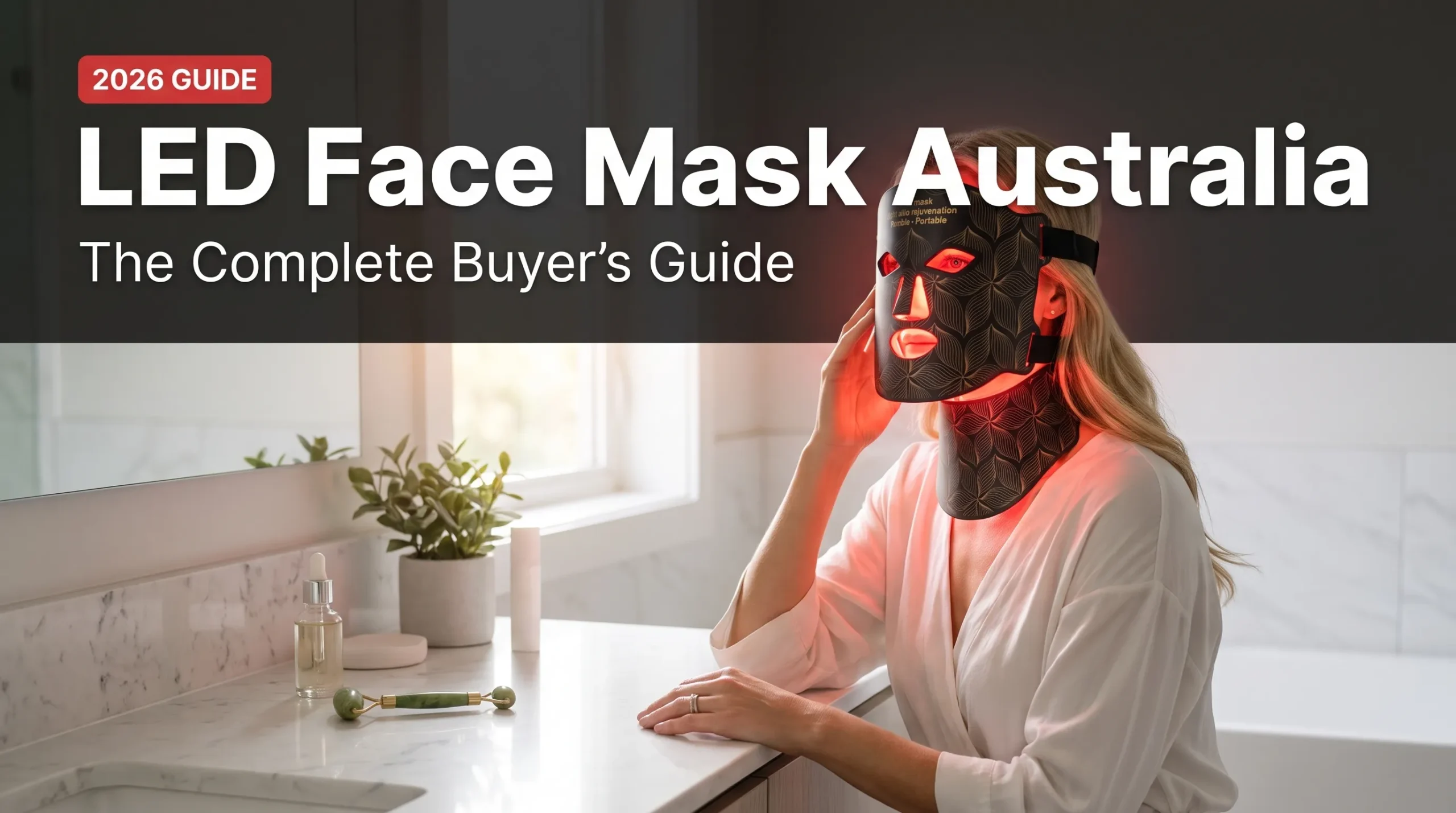
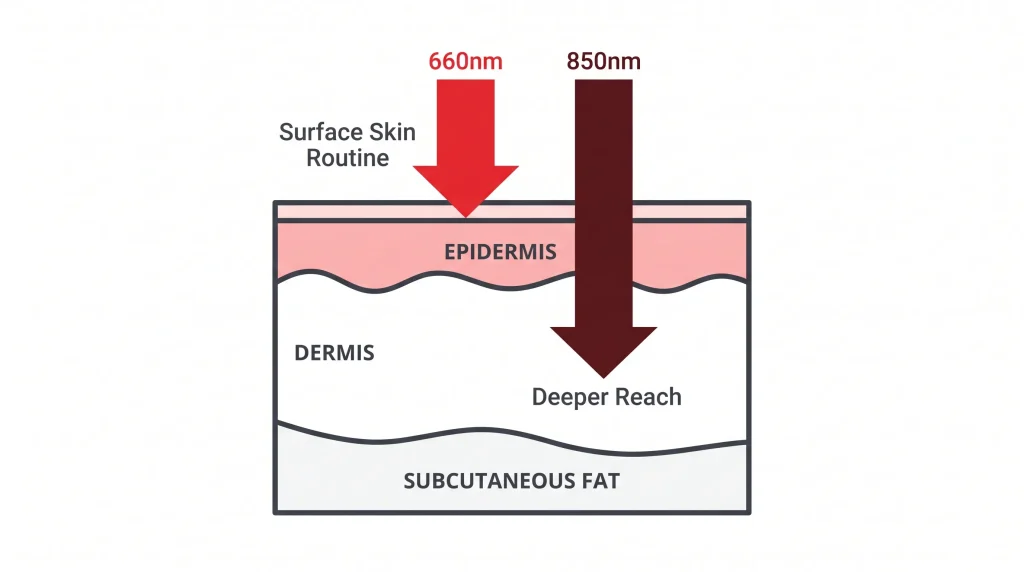
An LED face mask is a wearable panel of light-emitting diodes, shaped to sit against the face (and sometimes the neck), delivering specific wavelengths of light as part of an at-home skin routine. The two wavelengths with the most consistent backing across the category are:
- Red light (roughly 630–660nm) — works at and near the skin's surface.
- Near-infrared light (roughly 800–850nm) — invisible to the eye, reaches somewhat deeper than red alone.
Some masks add blue, yellow, or additional colour modes on top of that base pairing. These can be a reasonable extra, but the two wavelengths above are the ones with the most consistent research behind them — everything else is a bonus, not the main event.
An LED mask is a general wellness and beauty device, built for a consistent at-home skin routine — not a clinical treatment, and not a substitute for a dermatologist if you have a diagnosed skin condition.
Common Marketing Claims Worth Questioning
"Reduces wrinkles by 35% in 4 weeks." Specific percentages sound authoritative, but the honest question is: whose study, how many participants, and was it independently reviewed? A brand confident in its data will usually link the actual study. A brand that just prints the number is asking you to take it on faith.
"Medical grade" or "TGA-cleared." These are regulatory terms with real definitions, not adjectives — we've written a full breakdown of what "medical grade" actually requires in Australia and how to check a specific claim yourself in our guide to medical grade red light therapy devices. The short version: search the product or seller's name on the TGA's ARTG database before taking the label at face value.
"More colour modes means a better mask." A longer colour list looks impressive on a spec sheet, but what actually matters is whether the core red and near-infrared wavelengths are accurately dosed and evenly delivered across the panel. Extra colours are a nice-to-have. They're not a substitute for getting the two core wavelengths right.
Wavelengths to Look For
| Wavelength | Approx. Range | What It's Generally Used For |
|---|---|---|
| Red | 630–660nm | Surface-level skin routines |
| Near-infrared | 800–850nm | Deeper-reaching routines, often paired with red |
| Blue (optional) | ~415nm | Sometimes included as an extra mode |
| Yellow (optional) | ~590nm | Sometimes included as an extra mode |
For more detail on why 660nm and 850nm specifically show up so often across the category — not just in masks — see our 660nm and 850nm buyer's guide.
The Alpha LED Face & Neck Mask runs on the 660nm red and 850nm near-infrared pairing, with 8 additional colour modes available through the controller for people who want to experiment beyond the core two.
Face-Only vs Face-and-Neck Coverage
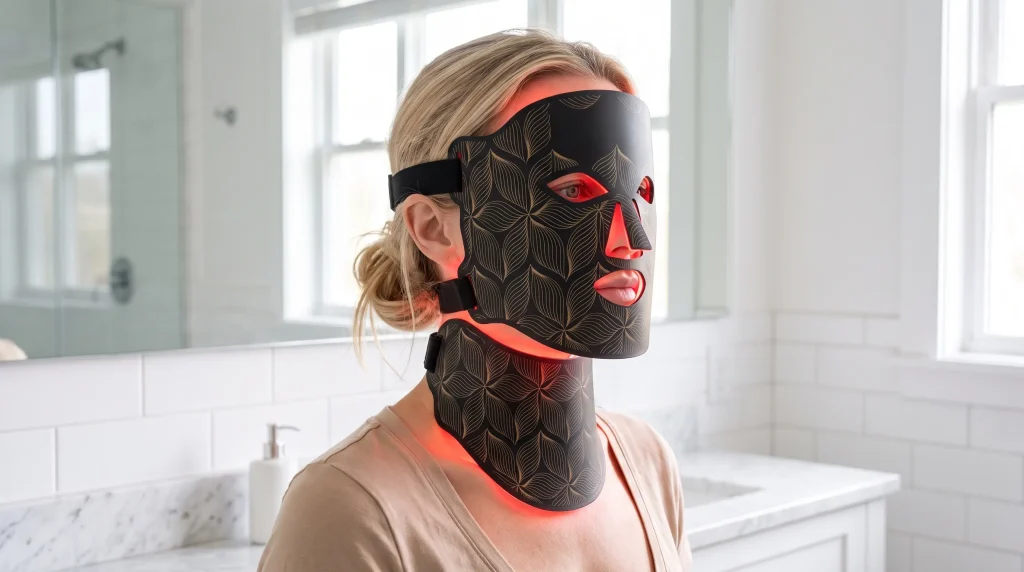
This is the part that's easy to miss when you're comparing prices at a glance: some masks only cover the face, with a matching neck piece sold as a separate add-on. If you're comparing a $250 face-only mask against a $300 combined face-and-neck set, the combined set is often the better value once you account for what you'd actually pay to add neck coverage later.
Questions worth asking before you buy:
- Does the listed price include neck coverage, or is that a separate purchase?
- Does the mask fit snugly enough to keep the LEDs close to your skin across your whole face, or does it gap at the jaw and cheeks?
- Is the design rigid or flexible? A flexible, contoured fit generally maintains more consistent contact than a rigid shell.
Does LED Count Actually Matter?
You'll see LED counts advertised everywhere — anywhere from around 130 to well over 200 individual diodes. More LEDs generally means more even coverage across the face, with fewer gaps between light sources. It's a reasonable data point, but it's secondary to wavelength accuracy: a mask with fewer, correctly-dosed LEDs at the right wavelengths will generally serve you better than one with a higher count at unclear or unverified wavelengths. Use LED count as a tiebreaker between two otherwise-comparable masks, not as the headline spec.
What to Check Before You Buy
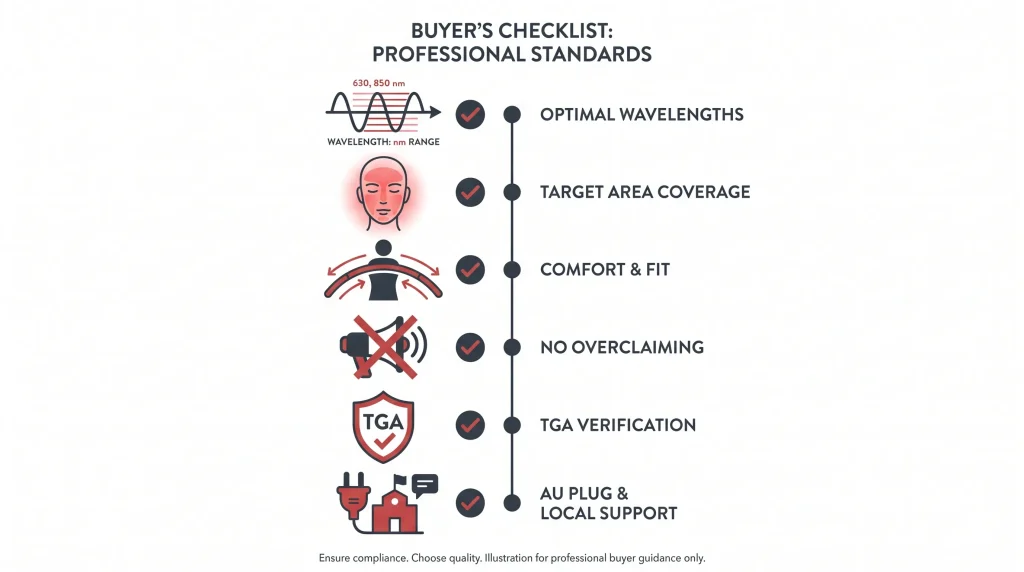
- Specific wavelength numbers, not vague phrases like "clinically proven light therapy." If a listing won't tell you the nanometre figures, that's worth noting.
- What's actually covered — face only, or face and neck together — and whether that matches the price you're comparing.
- Comfort and fit. A mask that's heavy, stiff, or awkward ends up in a drawer. Flexible, adjustable designs tend to get used consistently, which matters more than any single spec.
- Realistic marketing. Sellers who stick to general skin-routine language, and are upfront that results vary person to person, are generally more trustworthy than ones leading with a specific percentage and a before-and-after photo.
- A genuine ARTG listing, if "TGA" or "medical grade" is mentioned at all. Check it yourself rather than taking the label as given.
- Local AU support, a published warranty, and a proper quick-start guide for product setup — session length, distance from skin, and frequency — rather than being left to guess.
Where Alpha Fits In
The Alpha LED Face & Neck Mask combines face and neck coverage in one flexible unit, running on the 660nm red and 850nm near-infrared pairing with 8 additional colour modes, a simple controller, and a choice of two colourways. It's built for a consistent at-home skin routine, not a clinical treatment — we don't market it as TGA-listed or medical grade, and we're not going to start now just because a lot of the category does.
What we can point to plainly: stated wavelengths, combined face-and-neck coverage in a single product rather than a paid add-on, AU-wide delivery with Gold Coast-based support, and a proper quick-start guide before you use it for the first time. You can find more on where this fits alongside our other devices on our skin health and beauty page.
If a dermatologist has you on a specific treatment plan for a diagnosed skin condition, that's a conversation for them — not a general at-home beauty device like this one.
Frequently Asked Questions
What does an LED face mask actually do?
It delivers specific wavelengths of light — typically red around 630–660nm and near-infrared around 800–850nm — to the skin as part of an at-home routine. It's a general wellness and beauty device, not a clinical treatment, and results vary between individuals.
What wavelengths should I look for in an LED face mask?
Red light in the 630–660nm range and near-infrared in the 800–850nm range are the two with the most consistent backing across the category. Additional colour modes like blue or yellow can be a reasonable extra, but shouldn't be the main reason you choose one mask over another.
Does an LED face mask need to be TGA-listed?
Not necessarily. TGA/ARTG listing applies when a seller makes specific therapeutic claims about a product. Many LED masks, including general wellness and beauty devices, are sold without that listing. If a seller does claim "TGA" or "medical grade," it's worth checking the ARTG yourself rather than taking the label at face value.
How often should I use an LED face mask?
Most manufacturers suggest a short daily or near-daily session — commonly somewhere in the 10–15 minute range — as part of an ongoing routine, rather than occasional long sessions. Follow the specific guidance included with your device, and start conservatively if you're new to it.
Should I check with a dermatologist before starting?
If you have a diagnosed skin condition, are pregnant, are photosensitive, or are using medication that increases light sensitivity, check with a dermatologist or health professional before adding an LED mask to your routine.
Does Alpha's mask cover the neck as well as the face?
Yes — the Alpha LED Face & Neck Mask includes neck coverage as part of the one unit, rather than as a separate purchase.
The Bottom Line
An LED face mask is a genuinely simple purchase once you cut through the marketing: check the actual wavelength numbers, work out whether neck coverage is included or an extra cost, prioritise a comfortable fit you'll actually use consistently, and treat any specific percentage claim or "medical grade" label as something to verify rather than accept. The rest — colour count, packaging, influencer endorsements — is decoration.
This article is for general information only. The products discussed are general wellness and beauty devices and are not intended to diagnose, treat, cure or prevent any disease or medical or skin condition. Results vary between individuals. If you are pregnant, photosensitive, using medication that increases light sensitivity, or have a diagnosed skin condition, please check with a qualified health professional or dermatologist before use.