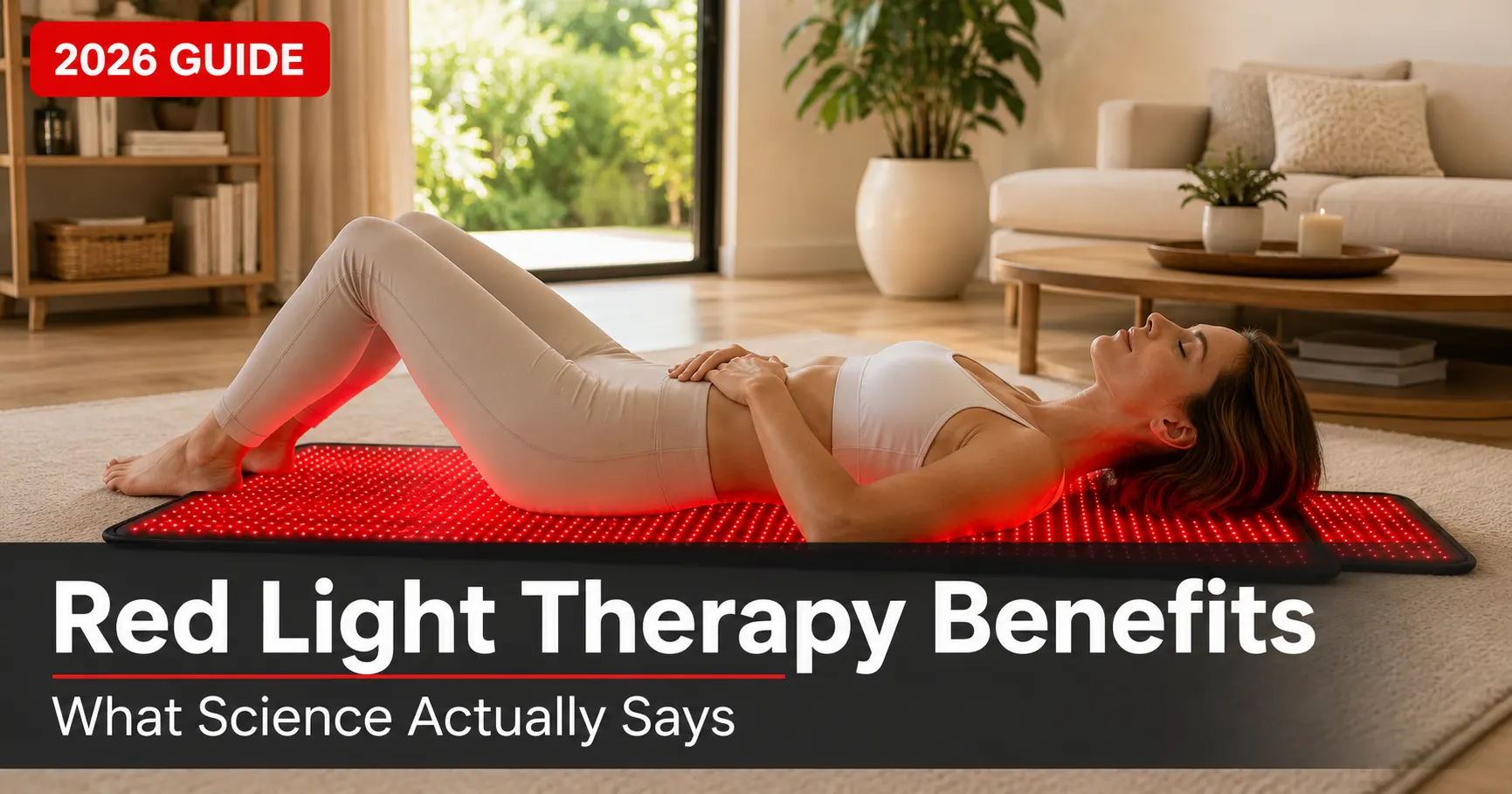
Red light therapy shows up in wellness routines everywhere now — skin devices, recovery mats, wearable belts, face masks. But when a topic gets this popular, the claims tend to outrun the evidence. This guide separates what's actually well-supported by research from what's still early-stage or anecdotal, so you can set realistic expectations before you start.
How Red Light Therapy Is Thought to Work
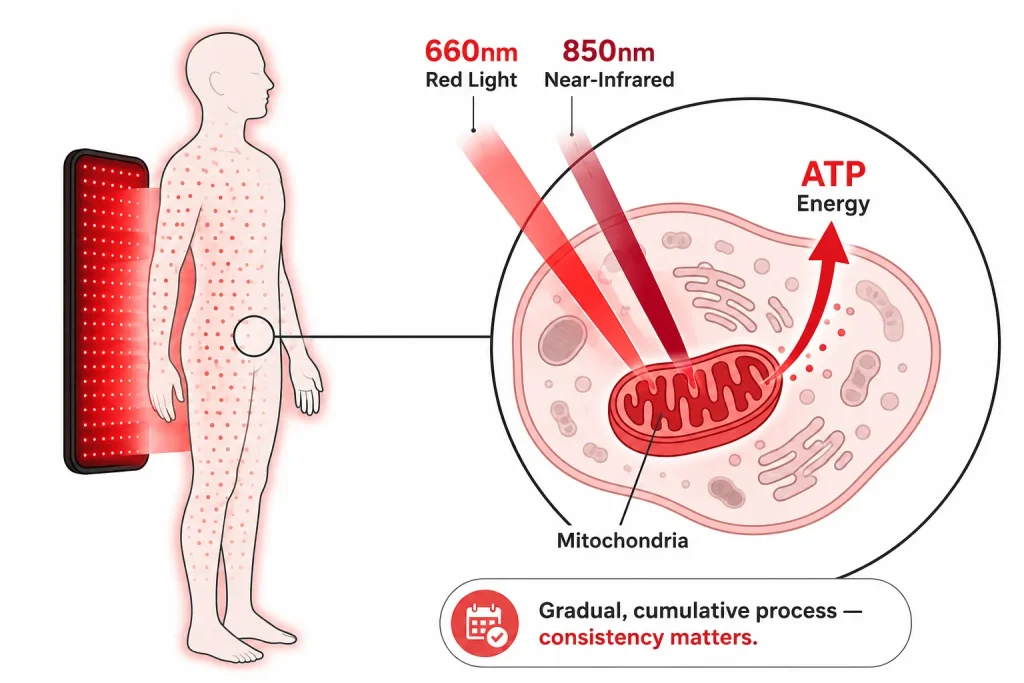
Before getting into specific benefits, it helps to understand the basic mechanism. Red and near-infrared light is absorbed by cells — particularly by mitochondria, the energy-producing part of the cell. This is believed to support ATP (cellular energy) production, which researchers think is behind most of the effects people report, from skin appearance changes to how muscles feel after activity.
It's a gradual, cumulative process — not something that happens in a single session. That's why consistency (a regular at-home routine over weeks) matters more than any one exposure.
Skin Health and Appearance
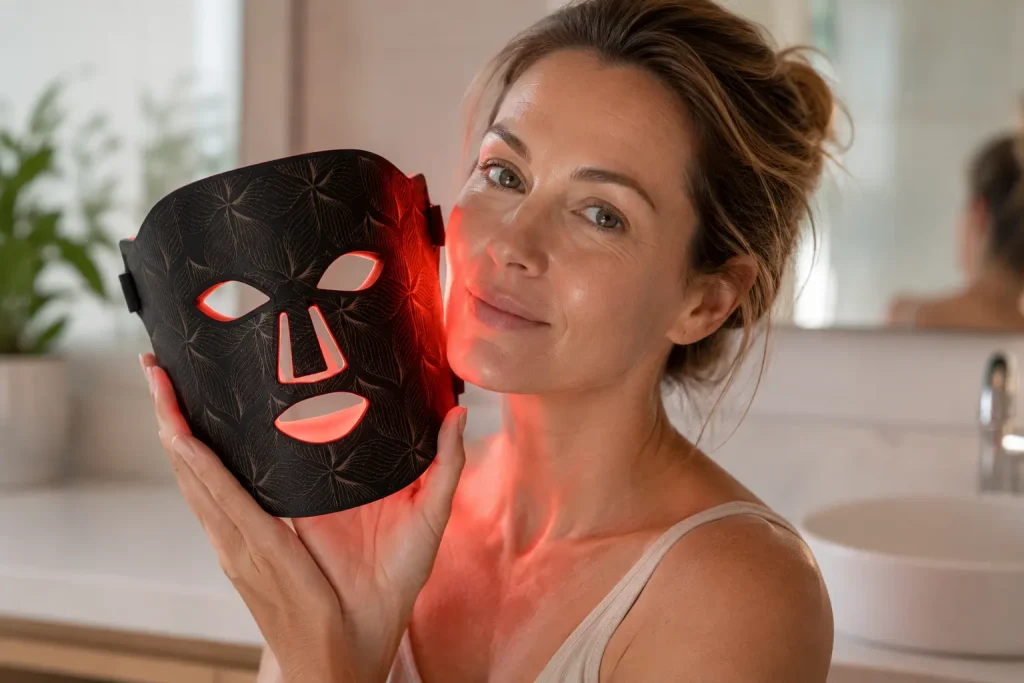
This is where the research base is strongest. Several clinical studies have looked at red and near-infrared light for skin texture, tone, and the appearance of fine lines, generally through mechanisms tied to collagen and circulation support. Results in these studies vary in size and consistency, and effects are typically described as modest and gradual rather than dramatic — usually visible only after weeks to months of a regular routine, not days.
If skin is your main focus, our LED Face Mask Australia Buyer's Guide covers device options specifically built for facial use.
Muscle and Post-Activity Comfort
A common reason people add red light therapy to a fitness routine is how they feel after a workout — some report their muscles feel less tight or fatigued the next day when they use a device as part of their post-exercise routine. This is an area with a reasonable amount of sports-science interest, largely centred on circulation and how the body responds to physical exertion.
It's worth being precise with language here: this isn't a "cure" for soreness or an injury treatment — it's a comfort routine some people build into recovery, alongside things like stretching, sleep, and hydration. For a full walkthrough of full-body recovery setups, see our Full Body Red Light Therapy at Home guide.
Joint and Comfort Routines
People managing everyday joint stiffness sometimes use red light therapy as part of a broader comfort routine, often alongside movement and other self-care habits. We've covered this specific topic in more depth — including what the research does and doesn't support — in Red Light Therapy for Joint Comfort: What the Research Actually Shows, which is worth reading directly if this is your main interest.
Sleep and General Wellbeing
Some early research has looked at light exposure timing and its relationship to circadian rhythms and sleep quality, though this area is less developed than the skin and recovery research. If better sleep is your goal, treat red light therapy as one small input alongside the fundamentals — consistent sleep schedule, light exposure in the morning, reduced screen time before bed — rather than a standalone fix.
What the Evidence Does NOT Support
It's just as important to be clear about limits. At-home consumer red light therapy devices are not a substitute for medical care, are not TGA-registered treatments in Australia, and shouldn't be relied on for diagnosing or managing any health condition. If you're dealing with a specific diagnosed condition, that's a conversation for your GP or specialist — a wellness device sits alongside that care, not in place of it. Our Medical Grade Devices guide explains this distinction in more detail, since "medical grade" marketing language often gets confused with actual medical registration.
Getting the Most From an At-Home Routine
Three factors matter more than any specific claimed benefit:
- Consistency — most reported effects come from regular use over weeks, not a single session.
- Correct distance and exposure time — following your device's specific user guide matters more than sitting closer or longer than recommended.
- Realistic expectations — results vary significantly between individuals, and no device guarantees a specific outcome.
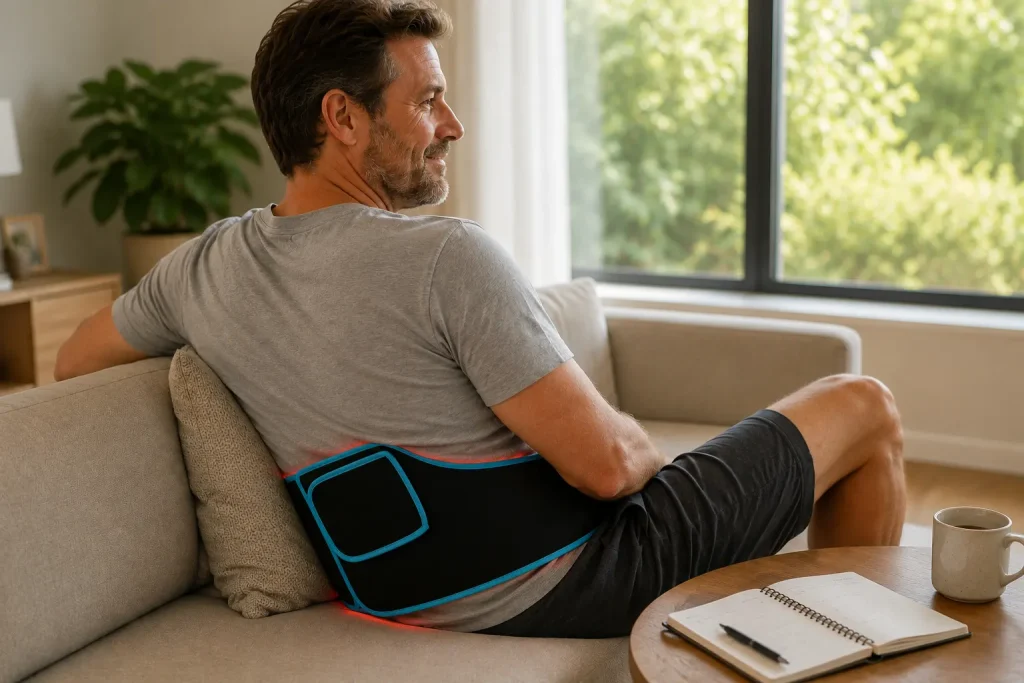
If you're deciding what format suits your goals — panel, mat, belt, or mask — our Red Light Therapy at Home Australia buying guide and Blanket vs Mat comparison are good next steps. And if you're brand new to the topic altogether, start with What Is Red Light Therapy? for the fundamentals.
FAQs
Is red light therapy backed by real research? Yes, in varying degrees depending on the use case — skin health and post-activity comfort have the most established research base, while other areas are earlier-stage. Results vary and effects are generally described as modest rather than dramatic.
How long until I'd notice a difference? Most people who notice changes report them after several weeks of a consistent at-home routine, not after one or two sessions.
Does red light therapy replace medical treatment? No. It's a general wellness device, not a registered medical treatment, and shouldn't replace advice or care from a health professional — especially for a diagnosed condition.
Which benefit has the strongest evidence? Skin appearance and texture tend to have the most consistent research support among the benefits people commonly ask about, though study sizes vary.
Standard Disclaimer (footer): This device is a general wellness product and is not intended to diagnose, treat, cure, or prevent any disease. Individual results vary. If you are pregnant, photosensitive, taking light-sensitising medication, or have a diagnosed health condition, check with a health professional before use.