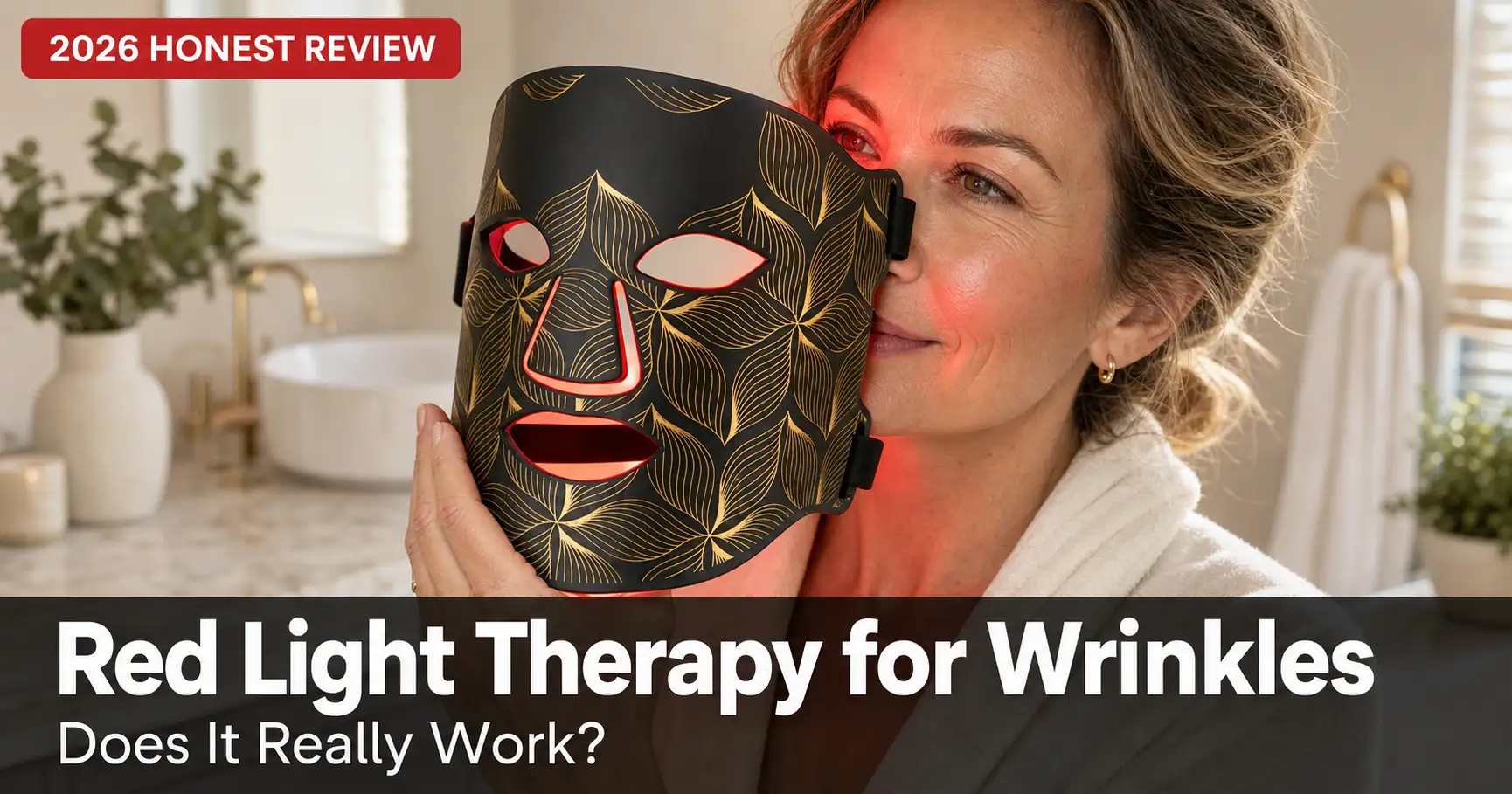
Of all the claims made about red light therapy, "reduces wrinkles" is one of the most searched — and one of the more genuinely researched. This is actually the area with the strongest evidence base compared to most other red light therapy uses, but "strongest evidence" still comes with real caveats worth understanding before you build a routine around it.
What's Actually Been Studied
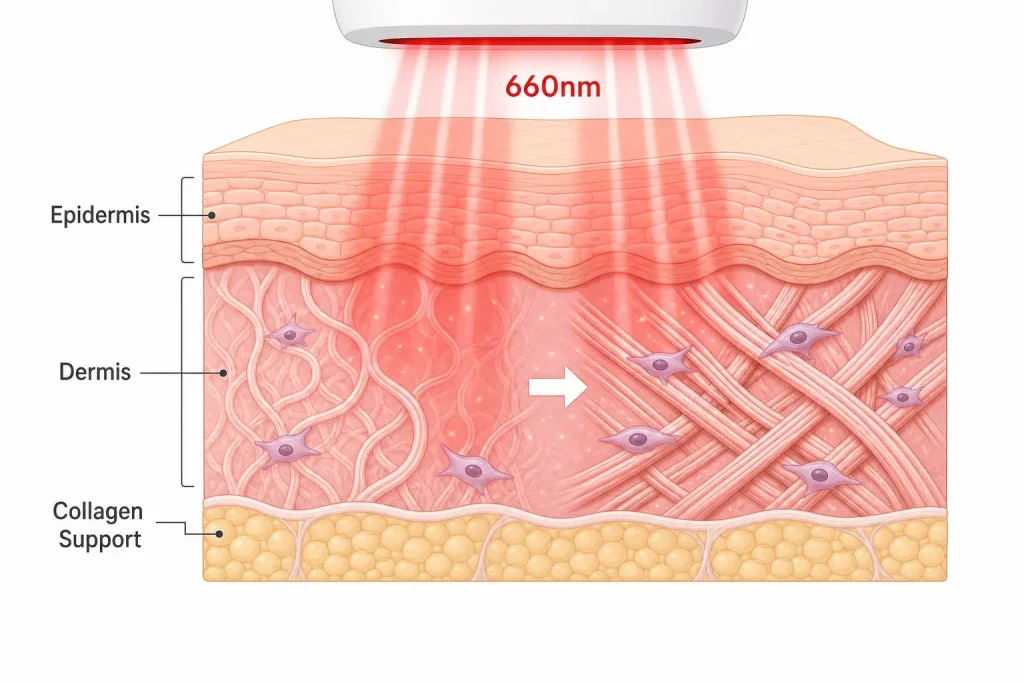
Red and near-infrared light in the 630–850nm range has been looked at in a number of clinical studies for skin texture, fine lines, and collagen-related measures. The general mechanism researchers point to: this light is absorbed by skin cells and is thought to support collagen and elastin activity over time, which are the structural proteins that keep skin looking firm.
Some studies have used objective measures (like intradermal collagen density) rather than just participant self-reporting, which is a meaningfully stronger form of evidence than a testimonial. That said, study sizes in this space are often small, results vary between studies, and "improvement" in these papers is usually described as modest and gradual — not dramatic.
If you're new to the mechanism itself, our What Is Red Light Therapy? guide covers the wavelength and dosage basics this all builds on.
What Results Actually Look Like
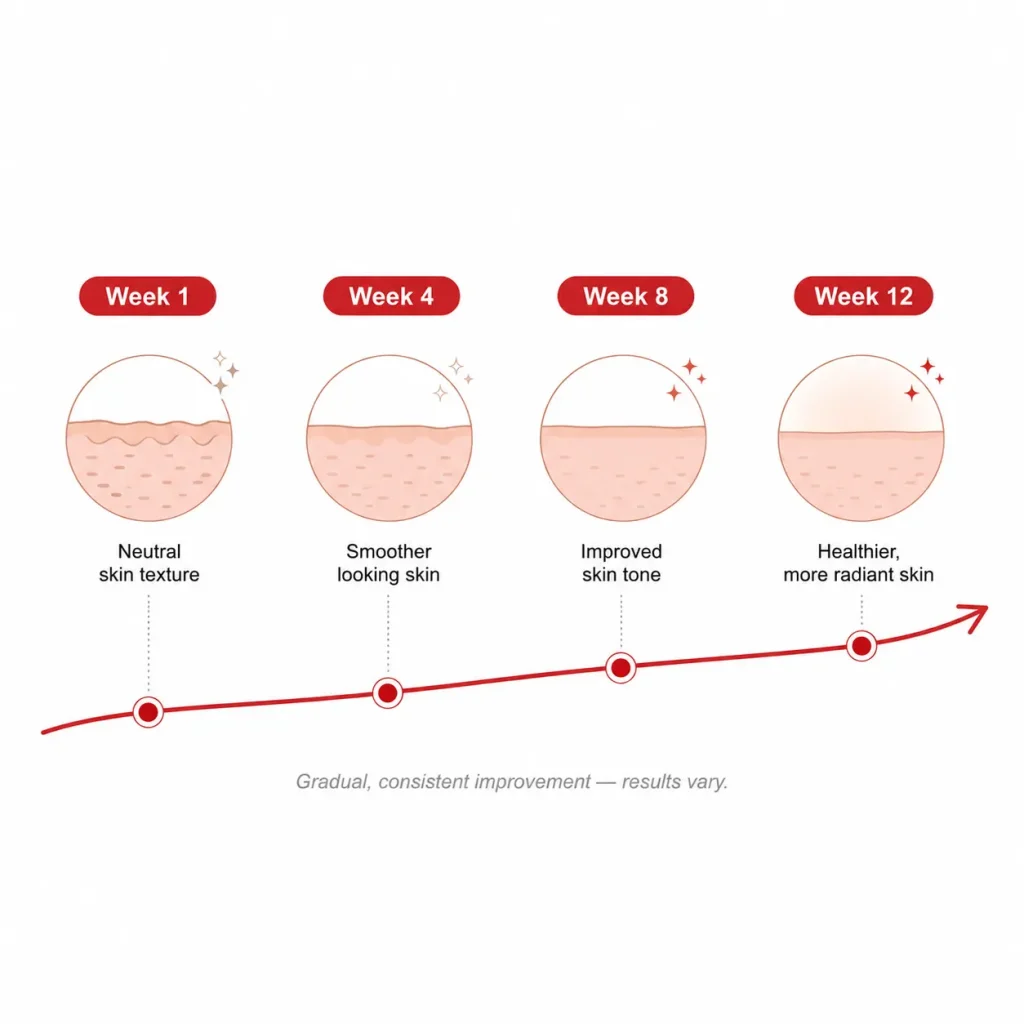
This is the part marketing tends to skip: nobody using an at-home LED device is going to see a dramatic transformation. What the research generally supports is a gradual, cumulative softening in the appearance of fine lines and a change in skin texture over consistent use — typically discussed in terms of weeks to months, not days. Results vary significantly from person to person, and skin type, age, consistency of use, and device quality all play a role.
If your expectation going in is "smoother-looking skin over time, with consistent use, results not guaranteed" rather than "wrinkles gone," you're set up to judge your own results fairly.
Red Light vs Near-Infrared for Skin
Red light (roughly 630–660nm) is generally considered the more surface-level of the two, working closer to the skin's outer layers — which is why it's the wavelength most associated with skin-appearance research specifically. Near-infrared light penetrates further and is more often discussed in the context of deeper tissue rather than surface skin appearance. Many face devices combine both, on the logic that surface and deeper-layer support work together.
Setting Up a Skin-Focused Routine
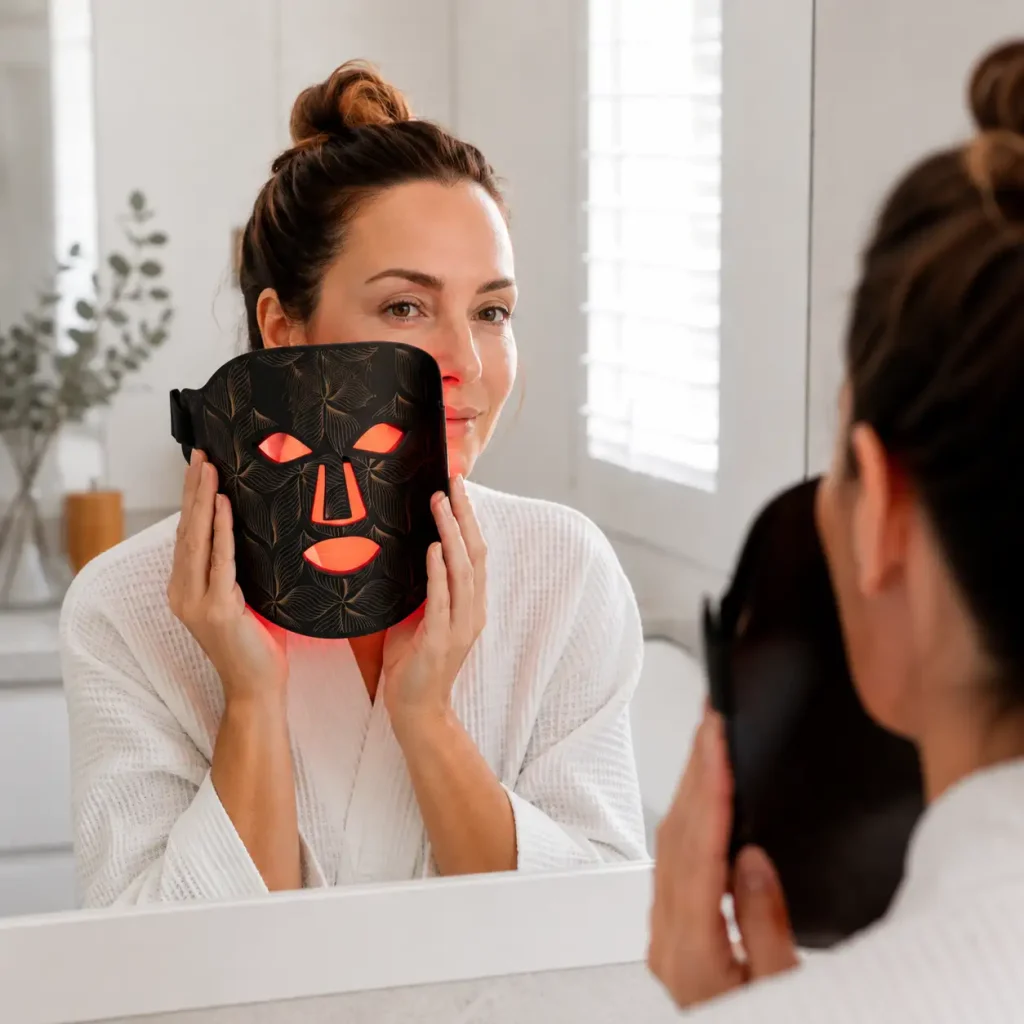
A few practical points if wrinkles and skin texture are your main goal:
- Consistency over intensity. A shorter, more consistent routine (say, most days of the week) tends to be what's reflected in the research — not occasional long sessions.
- Clean skin, no product barrier. Heavy skincare products or makeup between your skin and the light source can reduce how much light actually reaches your skin.
- Distance matters. Follow your specific device's recommended distance — closer isn't automatically better, and can be uncomfortable or unnecessary.
- Patience. Because collagen-related changes are gradual, judging results at the two-week mark is generally too early. Most routines are evaluated over 8–12 weeks.
If you're comparing face-specific devices, our LED Face Mask Australia Buyer's Guide is the direct next read — it covers how mask-style devices differ from full panels for this exact use case.
Is It Worth Adding to a Skincare Routine?
Red light therapy isn't positioned to replace a skincare routine — it's generally used alongside one, as an added-on wellness habit rather than a substitute for sunscreen, moisturiser, or dermatologist-recommended actives. If you already have a skincare routine you're happy with, red light therapy sits comfortably as an extra step rather than a replacement for anything in it.
For the bigger picture on what red light therapy can and can't do beyond skin, our Red Light Therapy Benefits guide covers the full range honestly.
FAQs
How long before I'd see a difference in wrinkles? Most research and user routines are evaluated over 8–12 weeks of consistent use, not days or a couple of weeks. Results vary and are generally described as gradual.
Does red light therapy replace anti-aging skincare products? No — it's typically used alongside a skincare routine, not instead of one.
Which wavelength is better for wrinkles, red or near-infrared? Red light (around 630–660nm) has the most research specifically tied to surface skin appearance; many devices combine it with near-infrared for a broader effect.
Do face masks work as well as larger panels for this? Both can work for facial use — the difference is mainly convenience and coverage, not effectiveness. See our LED Face Mask Buyer's Guide for a direct comparison.
Standard Disclaimer (footer): This device is a general wellness product and is not intended to diagnose, treat, cure, or prevent any disease. Individual results vary. If you are pregnant, photosensitive, taking light-sensitising medication, or have a diagnosed health condition, check with a health professional before use.