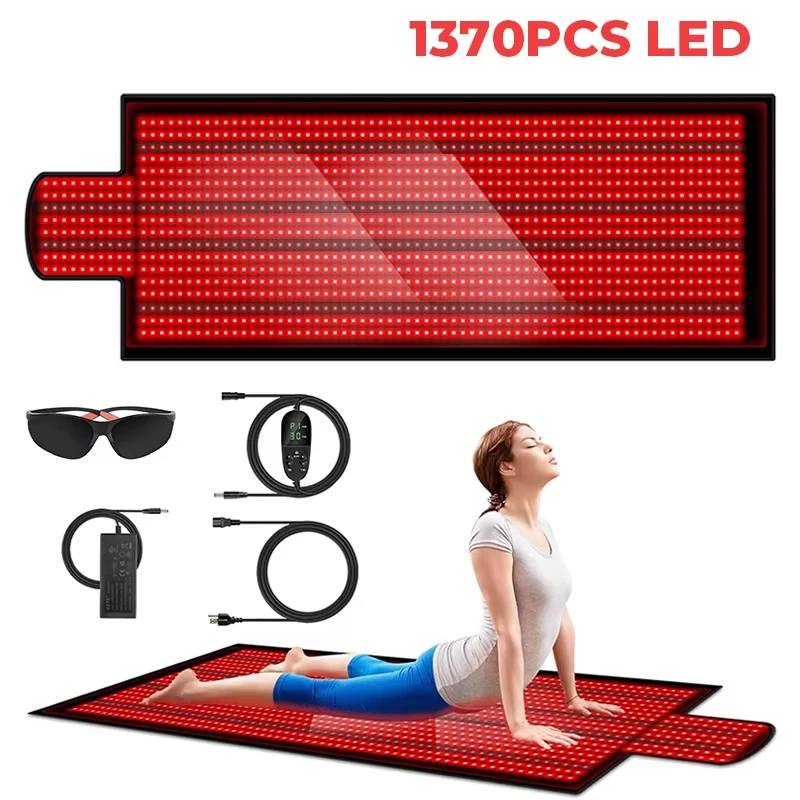

If you've just bought a red light therapy device, one of the first questions is usually the same: how often am I actually supposed to use this?
And this is where the internet gets messy.
You'll see everything from “ten minutes every day” to “three times a week” to routines that combine multiple sessions in the same day. The problem is that those numbers are often repeated without mentioning the device, its output, the area being used or the manufacturer's instructions.
There isn't one universal schedule that applies to every red light device.
Here's a more useful way to think about it.
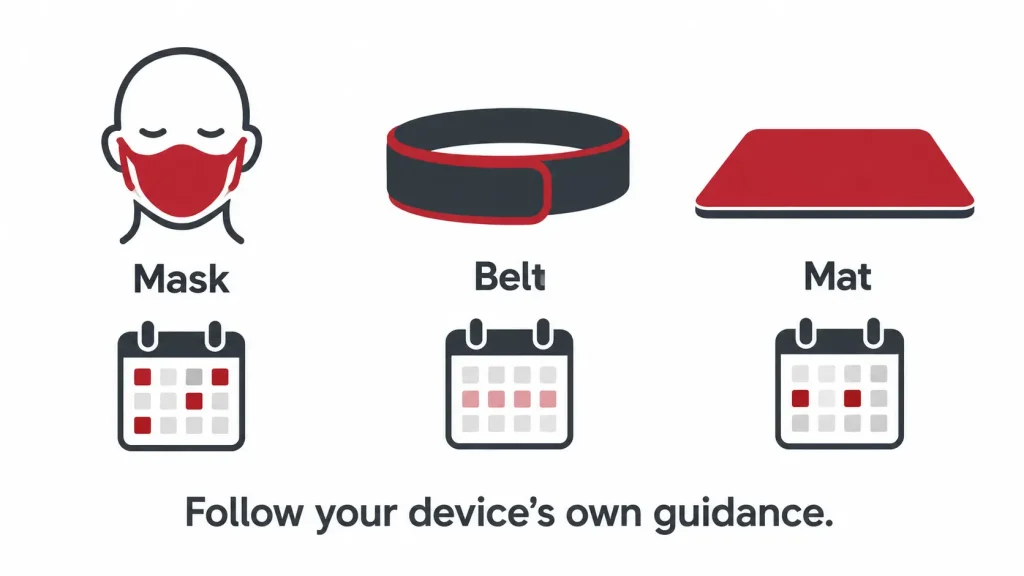
Start with the device, not a generic schedule
Two devices can both use red and near-infrared light and still have completely different recommended routines.
A flexible face mask sits close to the skin. A belt covers one targeted area. A full-body mat spreads LEDs across a much larger surface.
Their output, distance from the skin, coverage and session timers can all differ.
That's why the instructions supplied with your specific device should come before a frequency you found in a forum, video or social media post.
If you're completely new to using a device at home, start with our step-by-step guide to using red light therapy at home.
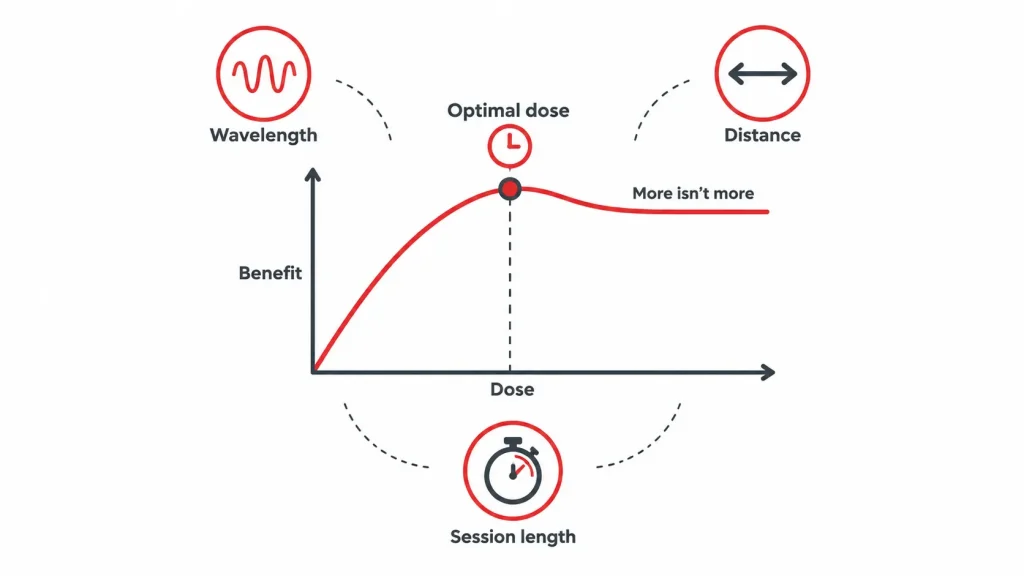
Why more isn't automatically better
Red light therapy isn't something where doubling your session automatically doubles the result.
Light exposure involves several variables at once:
- wavelength
- light output
- distance from the LEDs
- session length
- area being covered
- number of sessions
That means “20 minutes” on one device doesn't necessarily equal “20 minutes” on another.
It also explains why extending a ten-minute session to thirty minutes just because you have spare time isn't a sensible way to use a device.
Use the timer and frequency the manufacturer has designed the product around.
How often should you use a face mask?
Face masks are usually the easiest devices to build into a regular routine because sessions are short and the device covers the same area each time.
The right frequency depends on the mask.
Some manufacturers design their devices for use several times per week; others allow more frequent use. Start with the instructions supplied with yours rather than assuming a daily routine is required.
What matters in practice is finding a schedule you can repeat.
A routine you consistently follow for several weeks makes more sense than using the mask aggressively for four days and then leaving it in a drawer.
Alpha's Face & Neck LED Mask combines face and neck coverage in one session, with a built-in timer and adjustable brightness.
For the full setup process, see our face and neck red light therapy mask routine.
How often should you use a red light therapy belt?
A belt is different because it's designed for focused coverage rather than your whole body.
That makes it tempting to move it around and do several areas back-to-back.
Before doing that, check the device instructions.
Using a belt on one area for the recommended session and then immediately repeating the session on the same area isn't automatically more useful.
For most people, the practical advantage of a belt is convenience. You can fit a targeted session into your normal day without setting up a full-body device.
Alpha's Red Light Therapy Belt is designed for that kind of focused at-home routine.
If you're deciding whether targeted coverage is enough or whether a larger device makes more sense, our belt vs full-body mat guide breaks down the difference.
How often should you use a full-body mat?
A full-body mat covers much more skin in one session, so don't assume it needs the same routine as a smaller device.
Start conservatively, follow the timer and frequency supplied with the mat, and pay attention to how practical the routine actually is.
The biggest advantage of a mat isn't that you need to use it constantly. It's that you can cover a large area without repositioning a small device several times.
Our Red Light Therapy Mat uses 660nm red and 850nm near-infrared LEDs with adjustable timer and intensity controls.
If you're still choosing a full-body device, read our red light therapy mat Australia buying guide.
Can you use red light therapy every day?
Possibly — if your specific device is designed for that schedule.
But “can I?” and “do I need to?” are different questions.
Daily use isn't a requirement shared by every device, and using something more often than its instructions recommend isn't a shortcut.
Check:
- the manufacturer's recommended frequency;
- the recommended session length;
- whether the instructions suggest building up gradually;
- whether you've changed intensity or distance from the device.
If your device recommends several sessions per week, adding extra sessions simply because you want faster results isn't the same as following the intended routine.
Do you need rest days?
Not every device manual specifically calls them “rest days”.
What matters is staying within its recommended schedule.
If the manufacturer suggests three or four sessions per week, the gaps between sessions are already part of that routine. There's no reason to squeeze all of them into consecutive days unless the instructions say that's appropriate.
This is another reason a weekly schedule is more useful than thinking about one session in isolation.
What if you use more than one red light device?
This is increasingly common.
Someone might own a face mask for their skincare routine and a belt or mat for larger-area sessions.
You don't necessarily need to use every device every day.
Think in terms of coverage, not device count.
A face mask and a belt used on completely different areas are not the same situation as repeatedly exposing the same area with two different devices.
If your devices overlap significantly, check their instructions before stacking sessions.
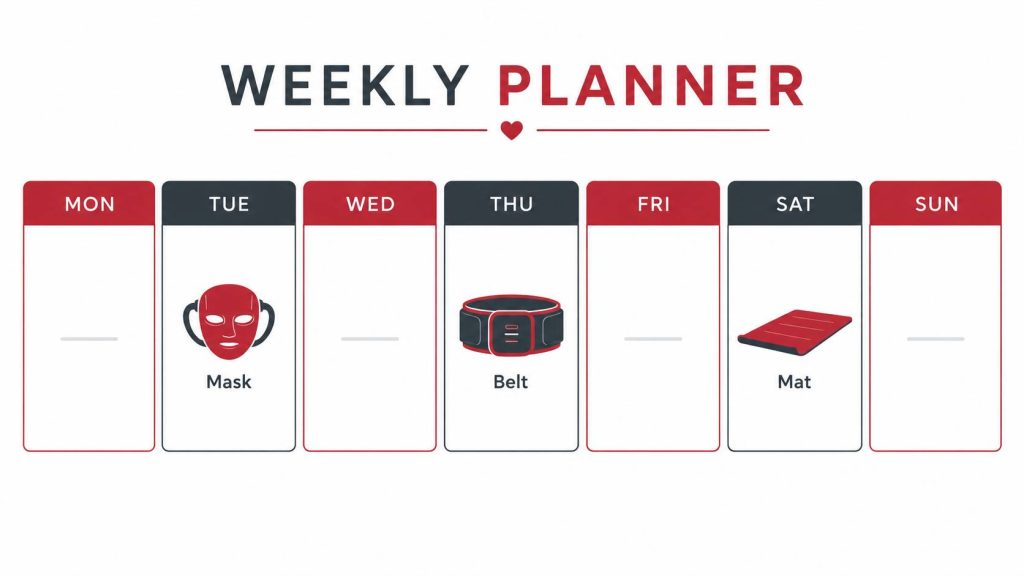
A simple way to build your weekly routine
Don't begin by trying to create the “maximum” routine.
Start with the minimum routine you'll actually keep.
For example:
Face-focused:
Choose the recommended mask days and use it at roughly the same point in your skincare routine.
Targeted body use:
Keep the belt somewhere easy to reach and attach sessions to something you already do — reading, watching TV or sitting at your desk.
Full-body:
Choose specific days when you realistically have time to lie on the mat without rushing.
The easier the routine is to repeat, the less likely the device becomes another piece of equipment sitting unused.
Three frequency mistakes to avoid
1. Copying somebody else's exact routine
Their device may have a completely different output, timer, coverage area and recommended frequency.
2. Assuming longer sessions are better
More exposure isn't automatically more useful. Follow the intended session time.
3. Changing everything at once
If you're new to a device, don't immediately increase intensity, frequency and session length together. Start with the supplied guidance so you actually know what routine you're following.
What about wavelength?
Frequency is only one part of the equation.
Red and near-infrared devices commonly list wavelengths such as 660nm and 850nm. The wavelength tells you what light the device emits; it doesn't tell you by itself how frequently the device should be used.
Output and session design still matter.
We've explained the wavelength side separately in our 660nm and 850nm red light therapy buyer's guide.
Setting realistic expectations
Red light therapy works better as a routine than as something you try to cram into a weekend.
Don't judge the entire experience from one or two sessions, but don't compensate by ignoring the device instructions either.
Choose the right device for the area you actually want to cover, follow its recommended schedule and give yourself a routine that's realistic enough to maintain.
If you have a diagnosed condition, are pregnant, take medication that increases light sensitivity, or have concerns about whether light exposure is appropriate for you, speak with your GP or another qualified health professional before starting.
FAQ
How many times a week should you use red light therapy?
There isn't one number that applies to every device. Recommended frequency depends on the device's output, design and intended use. Follow the instructions supplied by the manufacturer rather than copying a generic online schedule.
Can you use red light therapy every day?
Some devices may be designed for frequent or daily use, while others recommend fewer sessions per week. Check your device manual. Using it more often than recommended isn't necessarily better.
How often should I use a red light therapy mask?
Follow the schedule provided with your mask. Face masks vary in output and session design, so a routine that applies to one model may not apply to another.
How often should I use a red light therapy mat?
Use the frequency recommended for your specific mat. Because a full-body mat covers a much larger area than a mask or belt, don't assume all device formats should follow the same schedule.
Should I take days off from red light therapy?
Follow the schedule supplied with your device. If it recommends several sessions per week rather than daily use, the days between sessions naturally form part of that routine.
Can I use a mask and red light therapy belt on the same day?
That depends on where you're using them and the instructions for each device. If the devices cover different areas it is a different situation from repeatedly exposing the same area. Check both manuals before combining overlapping sessions.
Disclaimer
Alpha Red Light Therapy devices are general wellness and cosmetic products. They are not intended to diagnose, treat, cure or prevent any disease. Information on this page is general in nature and is not medical advice. Individual results vary. If you have a diagnosed condition, are pregnant, or take photosensitising medication, speak with a qualified health professional before starting any light-based routine.