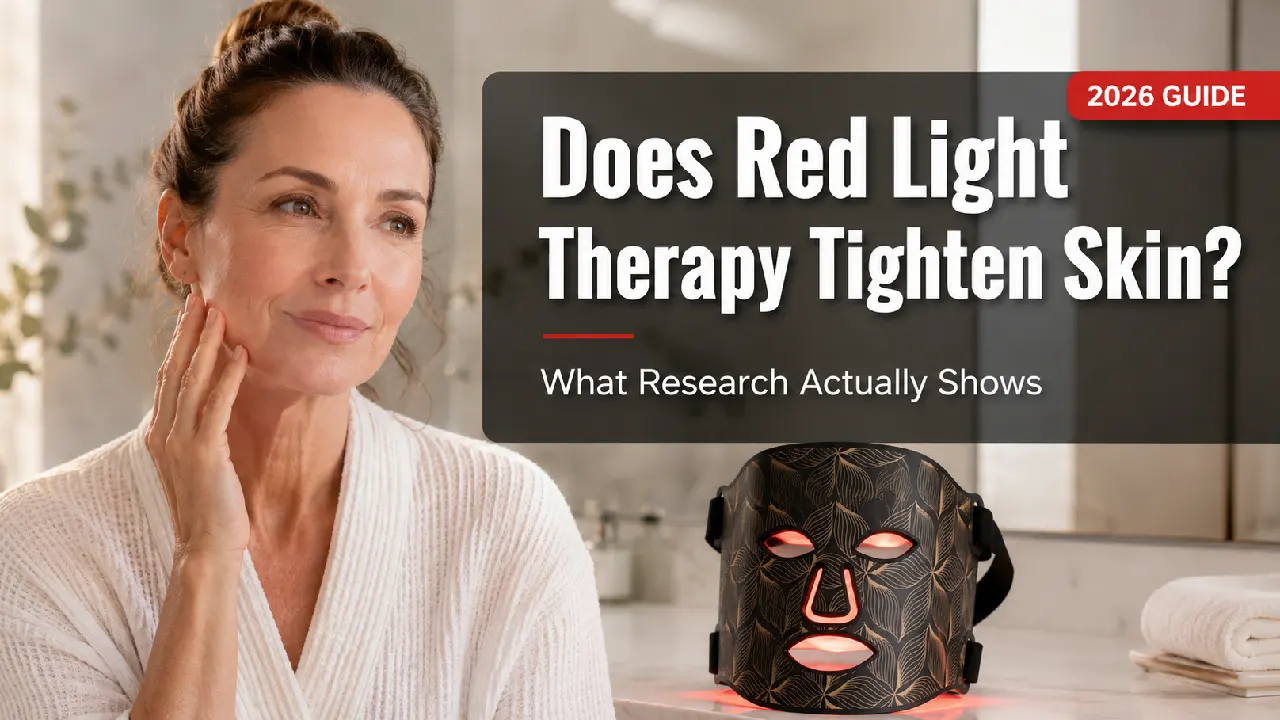
"Skin tightening" is one of the most common things people search for alongside red light therapy — usually after noticing early sagging or looser-feeling skin around the jawline, neck, or under the eyes. It's a fair question, and it deserves a straight answer rather than a marketing one.
The Short Answer
Red light therapy is not a substitute for surgical or clinical skin-tightening procedures, and no at-home LED device should be expected to produce that level of change. What the research more realistically points to is a supporting role: consistent use may be associated with firmer-feeling, more elastic-looking skin over time, tied to the same collagen-related mechanisms discussed in skin research generally. That's a meaningfully different claim than "tightens skin" in the dramatic sense the phrase implies, and it's worth going in with that distinction clear.
Why Collagen Is the Real Story Here
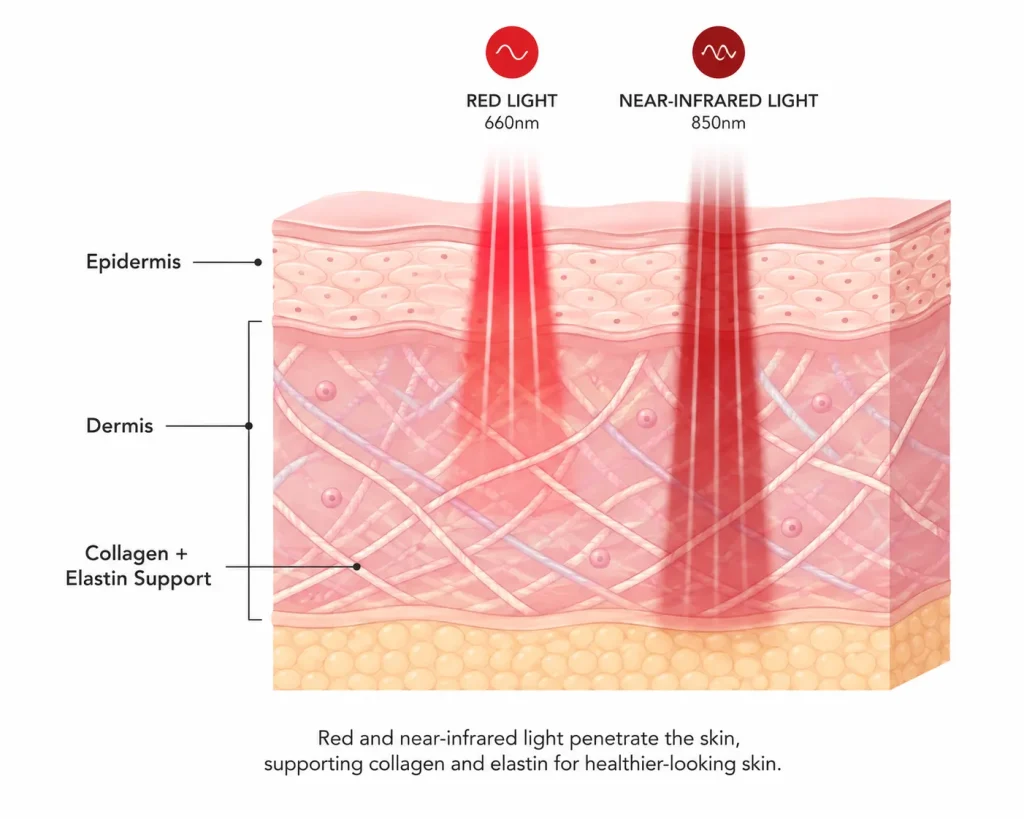
Skin firmness is largely a function of collagen and elastin — the structural proteins that keep skin looking supported rather than loose. As skin ages, natural collagen production slows, which is part of why looser-feeling skin becomes more common over time regardless of what routine someone follows.
Red and near-infrared light is thought to interact with cells in a way that supports the body's own collagen-related activity, rather than adding collagen directly or working instantly the way a cosmetic filler might. This is a slow, cumulative process, and it's the mechanism behind most legitimate skin-appearance claims tied to red light therapy — for more on this mechanism, see our Red Light Therapy for Wrinkles article, which covers the same underlying research from a fine-lines angle.
What a Realistic Routine Looks Like
If skin firmness is your main goal, here's what a reasonable approach looks like:
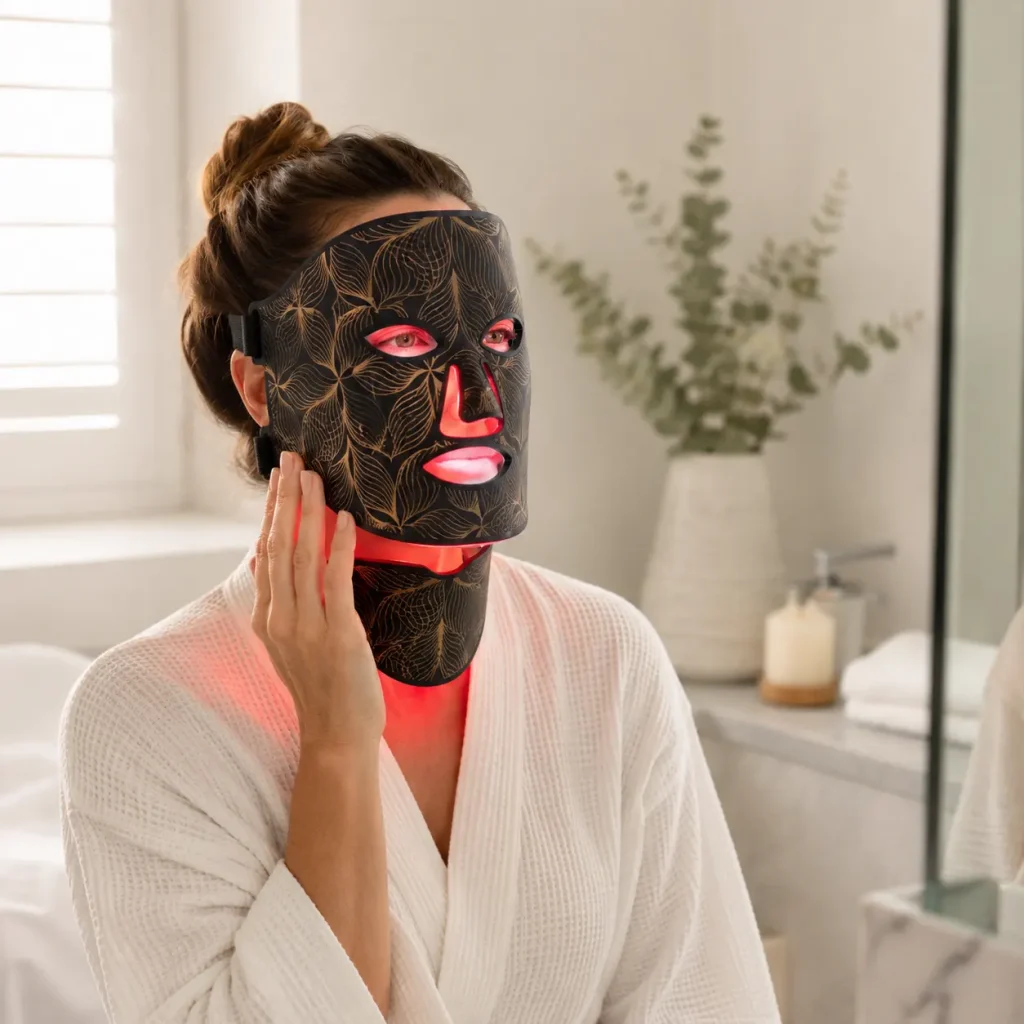
- Target the area directly. Devices designed for facial or neck use (like an LED mask) allow more direct, consistent exposure to the areas people are usually asking about.
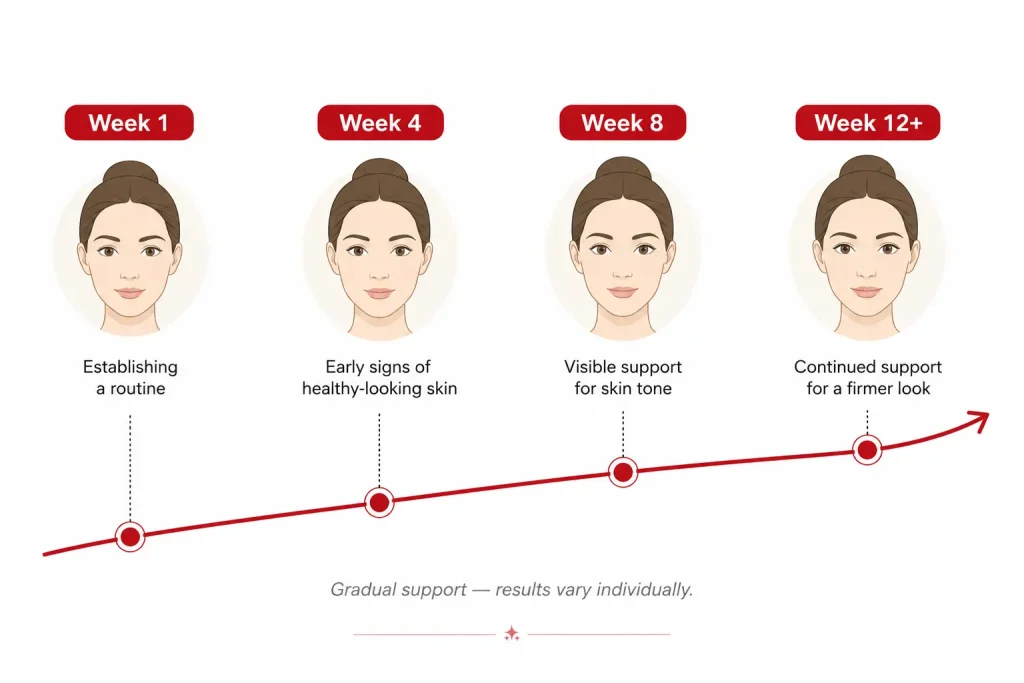
- Commit to weeks, not days. Collagen-related changes take time — most routines are evaluated over 8-12+ weeks, not a single week.
- Keep the skin clean and product-free during sessions. Thick creams or makeup between skin and light source reduce how much light actually reaches the skin.
- Pair it with the basics. Sun protection, hydration, and sleep all affect skin firmness independently of any device — red light therapy works best as an addition to those fundamentals, not a replacement for them.
Our LED Face Mask Australia Buyer's Guide is the natural next stop if you're comparing devices specifically for facial and neck use.
Setting Expectations Honestly
It's worth repeating: this is a gradual-support tool, not a tightening procedure. If someone is looking for the kind of dramatic change associated with clinical or surgical options, an at-home LED device isn't the right comparison point, and no honest article should suggest otherwise. Where red light therapy fits well is as a low-effort, long-term addition to a skin routine for someone comfortable with modest, gradual results.
For the wider picture of what's genuinely well-supported across all red light therapy benefits — not just skin — our Red Light Therapy Benefits guide is a good companion read.
FAQs
Can red light therapy replace a skin-tightening procedure? No. It's a gradual, supportive wellness routine, not a substitute for clinical or surgical skin-tightening treatments.
How long before skin might feel firmer? Most routines are judged over 8-12+ weeks of consistent use. Results vary significantly and aren't guaranteed.
Does it work on sagging skin under the eyes or jawline? These are commonly targeted areas for facial devices, though results (like all red light therapy skin effects) are gradual and vary by individual.
Is an LED mask better than a panel for this? Masks offer more direct, hands-free exposure to the face and neck specifically, which some people find easier to use consistently. See our LED Face Mask Buyer's Guide for a full comparison.
Standard Disclaimer (footer): This device is a general wellness product and is not intended to diagnose, treat, cure, or prevent any disease. Individual results vary. If you are pregnant, photosensitive, taking light-sensitising medication, or have a diagnosed health condition, check with a health professional before use.