If you're searching whether red light therapy belts actually work, you've probably already noticed the problem: almost everyone answering the question sells one.
We sell one too. So here's the version that includes the parts a sales page usually leaves out.
The Short Answer
Partly, for some things, with real caveats.
The underlying mechanism — red and near-infrared light being absorbed by cells and supporting energy production — is genuinely researched and reasonably well established. What's much less settled is whether a wearable LED belt, used at home, delivers enough of that effect to produce the outcomes people buy them for.
The honest position: the science behind the light is real; the evidence for at-home belts specifically is thinner than the marketing suggests.
What a Belt Actually Is
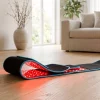
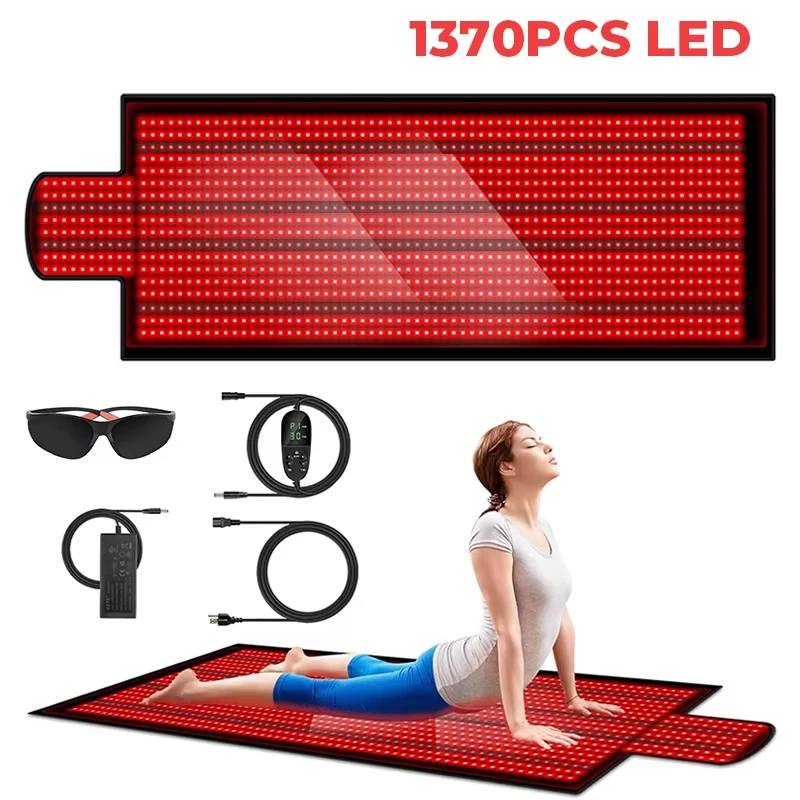
A red light therapy belt is a flexible wrap with LEDs on the inner surface, worn in direct contact with bare skin — usually around the waist, lower back, or wrapped around a limb. Sessions typically run 10 to 20 minutes.
The appeal is straightforward: it's hands-free, targets a specific area, and you can move around during a session. That's a genuine practical advantage over a panel you have to sit still in front of. Our belt review covers the format in more detail.
The Laser vs LED Gap Nobody Mentions
This is the single most important thing to understand before you buy, and it's why so much belt marketing is misleading.
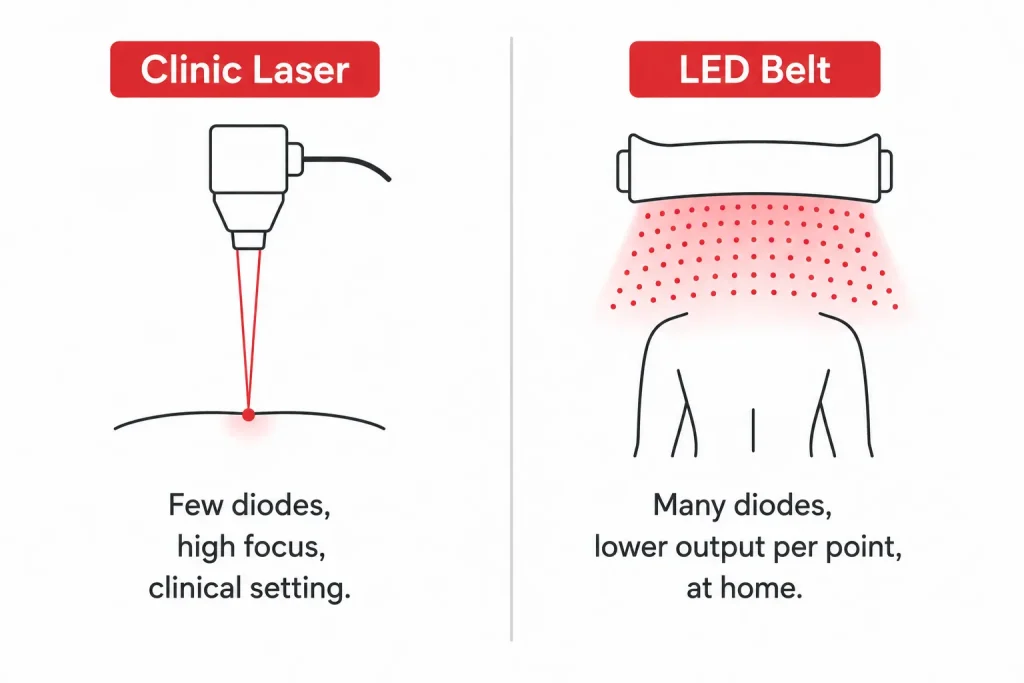
A large share of the promising research people cite for belts was conducted using clinic-grade lasers, not consumer LED devices. These are meaningfully different delivery methods: a laser concentrates a small number of diodes into a tight, focused beam at a set intensity, operated by trained staff. An LED belt spreads a wide, soft light from many small diodes at much lower output per point.
Same wavelength range, very different delivery. When a product page cites a study to support a claim, it's worth checking whether that study used a laser in a clinic or an LED device at home — because the results don't automatically transfer between the two.
This doesn't mean LED belts do nothing. It means the strength of evidence behind a specific claim depends heavily on which device type was actually tested.
What the Evidence Reasonably Supports
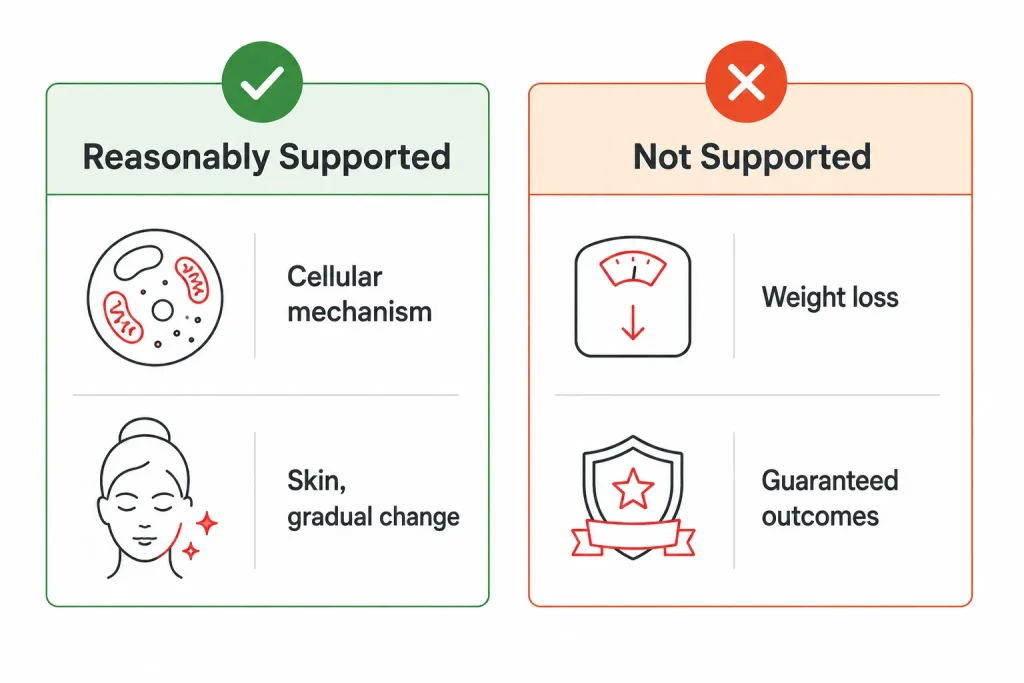
The cellular mechanism itself has decent support: red and near-infrared light is absorbed by mitochondria and appears to support cellular energy processes. This is covered properly in our photobiomodulation guide.
Skin-related applications have the most established research base of any red light use case — more than muscle, joint, or body-composition applications. That research generally describes modest, gradual changes over consistent use.
For everything else, the honest framing is "emerging" rather than "established."
What the Evidence Does NOT Support
Being direct about this, because plenty of belt marketing isn't:
Weight loss and fat reduction. This is the most aggressively marketed belt claim and the least supported. A review of the low-level laser research found that after more than a decade of small trials, there still isn't sufficient evidence that the therapy works for this on its own. Most of the more promising studies used clinic-grade lasers rather than LED belts. Any product implying a belt will cause weight loss is going beyond what the evidence shows.
Guaranteed outcomes of any kind. Cleveland Clinic's position on red light therapy generally is that it remains an emerging area, and that there isn't yet enough evidence to support most of its claimed uses. That applies to belts as much as anything else.
Medical outcomes. At-home consumer belts, including ours, are general wellness devices — not registered medical devices in Australia, and not a substitute for medical care. Our medical grade devices guide explains what that distinction actually means, since "medical grade" gets used loosely in marketing.

So Who Are Belts Actually Good For?
Based on what the format does well rather than what it's claimed to do:
- You want to target one specific area rather than treat your whole body
- You want to move around during a session instead of sitting in front of a panel
- You want a lower entry price than a full-body mat or panel
- You'll actually use it consistently — this matters more than any specification
Belts are less suited to whole-body coverage. If that's your goal, a mat covers far more area per session — see our blanket vs mat comparison or the full body guide.
What Separates a Decent Belt From a Poor One
If you do buy one, three specs matter:
Stated wavelengths. Red around 660nm and near-infrared around 850nm are the ranges with the most research behind them. A belt that won't tell you its wavelengths is a warning sign.
Irradiance disclosed at a real distance. This is output actually reaching skin, in mW/cm². Some manufacturers quote it measured at the LED surface rather than at treatment distance, which inflates the number. A belt sits directly against skin so this is less variable than with panels — but it should still be published.
LED count in context. "500 LEDs" means nothing on its own. Low-output LEDs in large numbers don't add up to a useful dose. Count without power density is a marketing number.
More on this in our how to choose a device guide and best red light therapy device Australia.
The Bottom Line
Do red light therapy belts work? The mechanism is real and reasonably well studied. The format is genuinely convenient. But the evidence base for at-home LED belts specifically is thinner than most marketing implies, much of the supporting research used clinic lasers rather than consumer LEDs, and the weight-loss claims in particular aren't supported.
If you go in expecting a convenient way to run a consistent at-home light routine on a specific area — with modest, gradual, uncertain results — that's a reasonable purchase. If you're expecting a guaranteed outcome, no belt on the market can honestly promise that.
FAQs
Do red light therapy belts really work? The underlying mechanism is well studied, but evidence for at-home LED belts specifically is limited compared to clinic-grade research. Results vary and aren't guaranteed.
Do red light therapy belts work for weight loss? The evidence doesn't support this. Reviews of the research have found insufficient evidence that the therapy causes weight loss on its own, and the more promising studies used clinic lasers rather than LED belts.
What does a red light therapy belt do? It delivers red and near-infrared light to a targeted area of the body through LEDs worn in direct contact with the skin, typically for 10 to 20 minute sessions.
How long before I'd notice anything? Most red light routines are assessed over 8 to 12 weeks of consistent use, not days. Results vary significantly between individuals.
Is a belt better than a mat or panel? Not better — different. Belts target a specific area and let you move around; mats and panels cover much more area per session. It depends on what you're trying to do.
Are red light therapy belts safe? They don't emit UV and are generally considered low-risk as wellness devices. Anyone pregnant, photosensitive, on light-sensitising medication, or managing a diagnosed condition should check with a health professional first.
This device is a general wellness product and is not intended to diagnose, treat, cure, or prevent any disease. Individual results vary. If you are pregnant, photosensitive, taking light-sensitising medication, or have a diagnosed health condition, check with a health professional before use.