Most LED masks sold in Australia are built for one thing: the face. The neck and décolletage — the areas people usually notice first — get left to a second device, bought separately and used in a separate session. That's the gap most buyers run into once they start comparing.
If you've been searching for an "LED neck mask" and finding mostly face masks with a neck attachment bolted on, this guide breaks down what actually matters: coverage, wavelengths, fit, session length, and the Australian-specific things worth checking before you buy.
Why people look for a neck-specific device
The skin on the neck and chest is thinner and moves more than the skin across the cheeks and forehead. It also tends to get skipped in daily routines. When people start looking at at-home LED devices, the neck is usually the second question — and often the reason a face-only mask feels like an incomplete purchase a few weeks in.
Red and near-infrared LED devices are general wellness and cosmetic devices. They are not a replacement for professional skincare advice, and outcomes vary from person to person. What a well-designed device can do is make a consistent routine easy enough that you actually stick to it — which matters far more than any single specification on a product page.

The four things that actually matter
1. Coverage — where does the light actually land?
This is the first thing to check and the easiest to get wrong from photos alone.
There are three formats on the Australian market:
- Face-only masks. Coverage stops at the jawline. Neck is not addressed at all.
- Separate neck/décolletage devices. A second silicone panel worn across the neck and upper chest, used in its own session.
- Combined face-and-neck masks. One device, one session, light across both areas.
If you're going to use it most days, a combined device removes the biggest friction point — a second session you'll skip when you're tired. If you already own a face mask you like, a dedicated neck panel is the sensible add-on.
Look at the product photos on a real person, not the flat product render. Check where the silicone actually ends relative to the collarbone.
2. Wavelengths — red, near-infrared, or a colour wheel?
Most of the research attention in this space sits on red light in the roughly 630–660nm range and near-infrared around 810–850nm. Plenty of masks also advertise blue, green, yellow, cyan and purple settings — a "7-colour" device.
More colours is not automatically better. What matters is whether the wavelengths you actually plan to use are clearly stated in nanometres on the product page. A device that lists "red light" with no number is telling you less than one that lists 660nm.
If you want the longer explanation of why 660nm and 850nm come up so often, we've covered it here: 660nm and 850nm red light therapy buyer's guide.
3. Fit and comfort — the spec nobody lists
A neck device that slides down, pinches, or forces you to lie flat is a device you'll use twice.
Things worth checking:
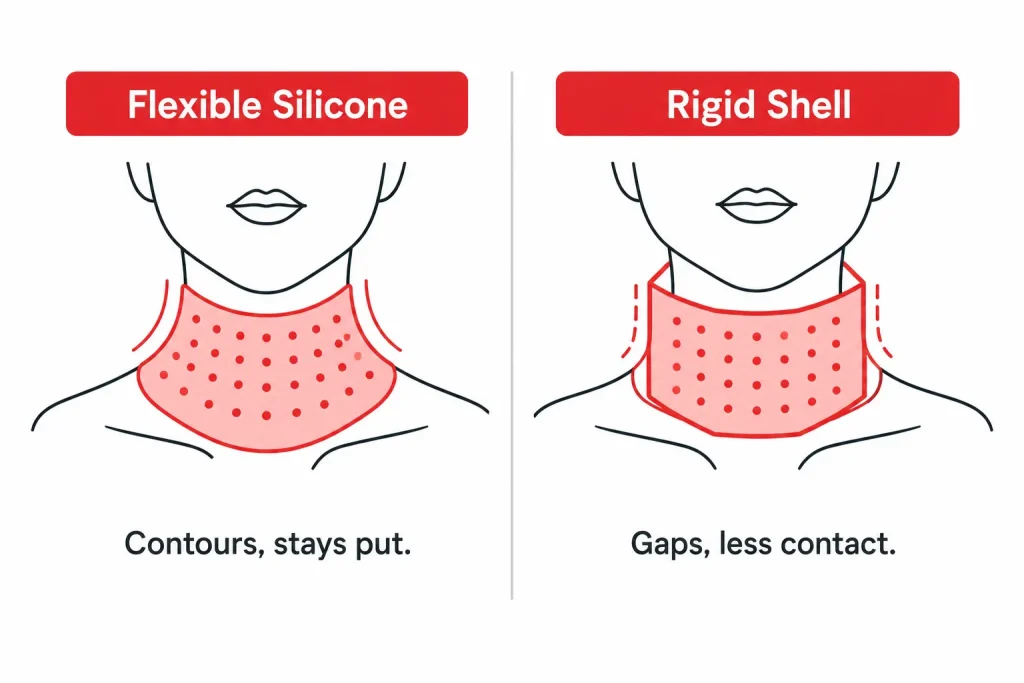
- Flexible silicone vs rigid shell. Silicone contours to the neck and stays put through small movements. Rigid shells are usually cheaper and usually don't sit well below the jaw.
- Strap or adjustable fastening. Necks vary a lot more than faces do.
- Cable and controller placement. A short cable means you're anchored to a power point for the whole session.
- Weight. Heavier devices with attached cables often need you to lie down, which limits when you can realistically fit a session in.
4. Session length and how the timer works
Most at-home LED devices run sessions in the 10–20 minute range with a built-in timer that shuts the device off. Longer is not better — follow the manufacturer's instructions for your specific device rather than a number you read on a forum.
Consistency over weeks is what people generally report mattering most. A ten-minute routine you do four or five times a week beats a thirty-minute one you do twice.
The Australian-specific checks
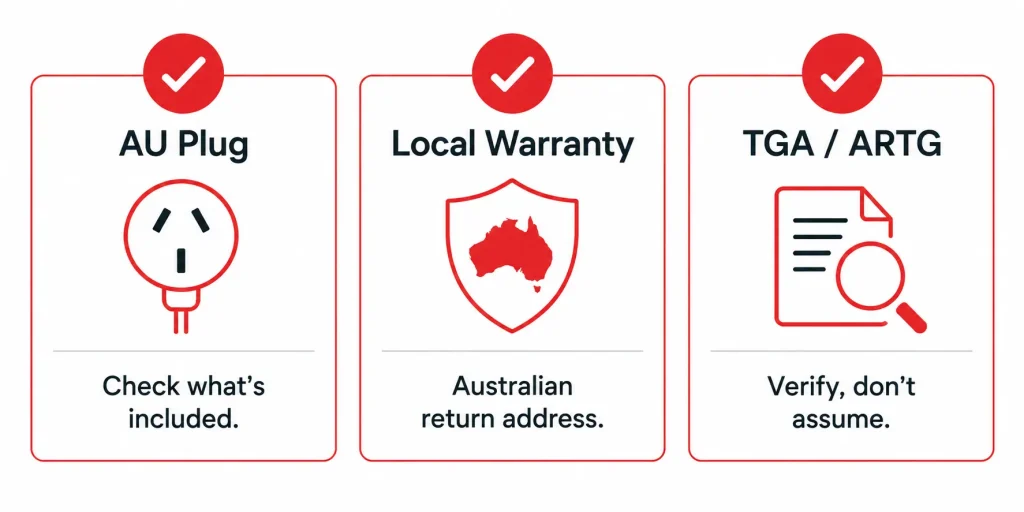
Plug and electrical compliance. A lot of the cheapest listings ship from overseas with an adapter in the box rather than a proper AU plug. Check what's actually included.
Warranty and local support. If something fails in month four, who do you contact, and where does the device go? An Australian return address is worth more than a longer warranty period on paper.
"TGA approved" claims. This one comes up constantly in LED mask marketing and it's frequently misused. A device is either included on the Australian Register of Therapeutic Goods (ARTG) or it isn't — and most at-home cosmetic LED devices are sold as general wellness or beauty products rather than as registered medical devices. If a listing claims TGA approval, you can check it yourself on the TGA's ARTG search. We've explained how that works in detail here: Medical grade red light therapy devices Australia — what does it mean?
To be clear about our own position: Alpha's devices are sold as general wellness and cosmetic devices. We don't make medical-grade claims about them.
Price ranges. Combined face-and-neck LED masks in Australia sit roughly between $150 and $700 depending on build, wavelength count and brand. Above that you're generally paying for brand and clinical-study marketing rather than a materially different device.
Three mistakes buyers make
Assuming "LED count" equals quality. A device with 324 LEDs isn't automatically better than one with 132. Spread, spacing and the wavelengths those LEDs emit matter more than the raw number, and LED count is the easiest number for a seller to inflate.
Buying separate face and neck devices without checking session time. Two devices means two sessions. Work out honestly whether you'll do both.
Reading US and UK reviews as if they apply here. Pricing, plug standards, warranty terms and regulatory status are all different in Australia. A glowing UK review tells you little about what happens if the device fails in Brisbane.
Where Alpha's mask sits
Our Face & Neck LED Mask is a combined device — face and neck in one session, with a built-in timer and adjustable brightness. It's positioned as a general wellness and cosmetic device, shipped locally within Australia.
If you're still deciding between a mask and something that covers a larger area, our LED face mask Australia buyer's guide walks through the full device comparison.
Setting expectations
At-home LED devices are a slow, cumulative routine, not a one-session change. Results vary between individuals, and the neck in particular tends to respond gradually. If you have a diagnosed skin condition, are pregnant, or take medication that affects light sensitivity, check with your GP or dermatologist before starting any light-based routine.
For a step-by-step routine once your device arrives: face and neck red light therapy mask routine at home.
FAQ SECTION
What is an LED neck mask? It's a light therapy device — usually flexible silicone — worn across the neck and sometimes the upper chest, using red and near-infrared LEDs. Some are standalone; others are built into a combined face-and-neck mask.
Do I need a separate device for my neck? Not necessarily. Combined face-and-neck masks cover both areas in one session. A separate neck panel makes sense mainly if you already own a face mask you're happy with.
How long should a neck session be? Most at-home devices are designed around 10–20 minute sessions with an automatic timer. Follow the instructions supplied with your specific device rather than a generic number.
Are LED neck masks TGA approved in Australia? Most at-home LED masks are sold as general wellness or cosmetic devices, not as registered medical devices. If a seller claims TGA approval, you can verify it on the TGA's ARTG search tool.
Can I use an LED neck mask every day? That depends on the device. Manufacturers set their own recommended frequency — check the manual. Consistency over several weeks generally matters more than session length.
DISCLAIMER
Alpha Red Light Therapy devices are general wellness and cosmetic products. They are not intended to diagnose, treat, cure or prevent any disease. Information on this page is general in nature and is not medical advice. Individual results vary. If you have a diagnosed condition, are pregnant, or take photosensitising medication, speak with a qualified health professional before starting any light-based routine.