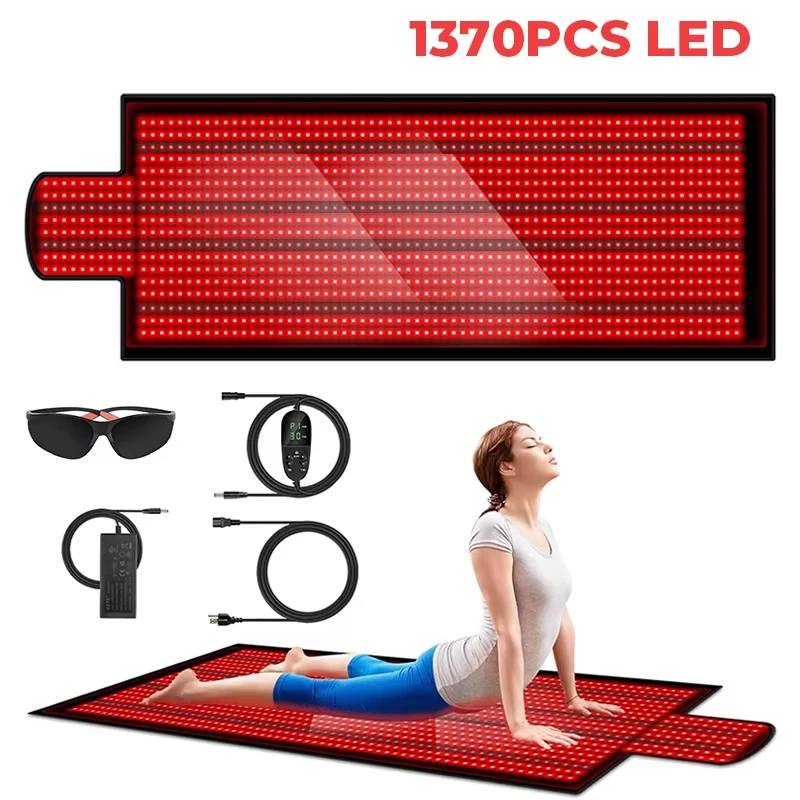
A lot of red light therapy content jumps straight into scientific terms — mitochondria, ATP, photobiomodulation, cytochrome c oxidase — without ever slowing down to explain what any of it actually means. This is the plain-English version: no assumed science background, just what's actually happening when you sit in front of a red light device.
(If you want the fuller beginner's guide — wavelengths, session basics, safety — that's covered in What Is Red Light Therapy?. This article focuses specifically on the "what does it actually do" question.)
The One-Sentence Version
Red and near-infrared light gets absorbed by your cells and is thought to give them a small energy boost, which is believed to help them do their normal jobs — repair, renewal, and everyday maintenance — a little more efficiently.
That's it. Everything else is detail on top of that basic idea.
Breaking It Down, Without the Jargon
Your cells run on energy, just like anything else. Every cell in your body needs energy to function — to repair itself, produce proteins, and do whatever its specific job is (skin cells maintaining skin, muscle cells recovering after use, and so on). That energy is produced inside a part of the cell often nicknamed the cell's "powerhouse."
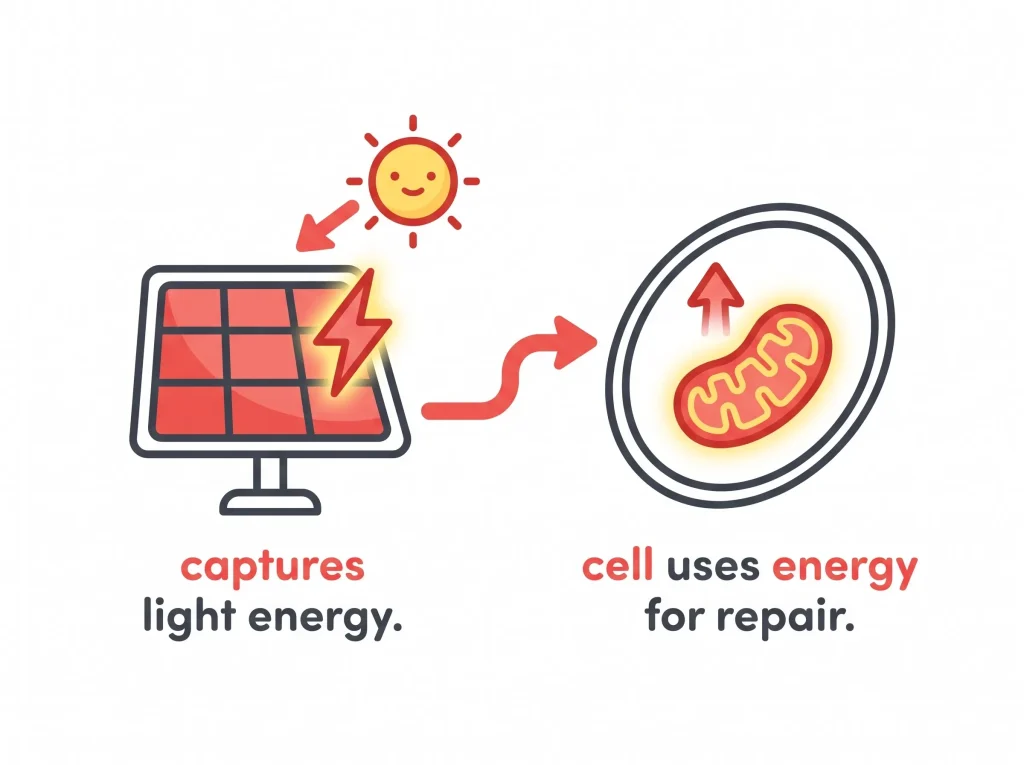
Red and near-infrared light is absorbed by that powerhouse. When red and near-infrared light reaches your cells, it's absorbed by a component inside this energy-producing part of the cell. Think of it a bit like a solar panel — it's not converting light into food, but it is capturing that light energy and using it to support the cell's own energy-production process.
More available energy = cells can do their normal jobs slightly better. The working theory is that this extra readily-available energy helps cells carry out their existing repair and maintenance processes a bit more efficiently — not that the light does the repairing itself. Your body is still doing the work; the light is thought to support the conditions for that work to happen.

This is a slow, cumulative effect — not an instant one. A single session isn't expected to produce a noticeable change. It's the buildup of many sessions, done consistently, that's associated with visible or felt differences over time — and even then, results vary a lot between people.
Why Different Colours (Wavelengths) Matter
You'll notice red light therapy devices are almost always red or a red/infrared combination — rarely other colours, even though LED devices can technically produce blue, green, or yellow light too. That's because red and near-infrared wavelengths are the ones best able to reach deep enough into skin and tissue to interact with cells in this way, while still being gentle enough for regular, non-invasive use. Other colours interact more with the very surface of the skin and are used for different, more surface-level purposes.
This Isn't a New or Fringe Idea
The scientific term for this — photobiomodulation — has been studied for decades, not invented for a wellness trend. It became significant enough as a research area that the U.S. National Library of Medicine added "photobiomodulation" as an official indexing term (MeSH) for medical research literature in 2015, reflecting a steady increase in published studies on the topic since. That doesn't mean every claim made about it is proven — plenty still isn't — but it does mean the underlying mechanism (light interacting with cellular energy production) is a genuinely studied area of biology, not a marketing invention.
What This Explanation Does NOT Mean
It's worth being precise about the limits of this explanation:
- It doesn't mean red light therapy "heals" or "cures" anything on its own — the framing is supporting normal cellular processes, not replacing the body's own repair systems or medical care.
- It doesn't mean more light or longer sessions automatically means more benefit — following your device's recommended session length and distance matters more than maximising exposure.
- It doesn't mean results are guaranteed or the same for everyone — individual response varies significantly.
Where to Go From Here
If this explanation answered your "how does this actually work" question, the natural next step is understanding what a session should actually look like — covered step by step in our upcoming [how-to-use guide] — or exploring the specific Red Light Therapy Benefits people commonly ask about once they understand the mechanism.
FAQs
Does red light therapy actually do anything, or is it just light? The working understanding is that it supports normal cellular energy production, which is believed to help cells carry out their own repair and maintenance processes — it's not simply light with no biological interaction, but it's also not a treatment that does the work for your body.
Why is it always red or red/infrared, not other colours? Red and near-infrared wavelengths reach deep enough into skin and tissue for this cellular interaction while remaining gentle for regular use — other colours tend to interact mainly with the skin's surface.
Do I need to understand the science to use a device properly? No — this explanation is background context. For practical use, following your specific device's recommended distance, session length, and frequency matters more than understanding the underlying mechanism.
Is one long session better than several shorter ones? No — consistency over time is generally understood to matter more than session length. Follow your device's recommended session guidelines rather than extending sessions.
Standard Disclaimer (footer): This device is a general wellness product and is not intended to diagnose, treat, cure, or prevent any disease. Individual results vary. If you are pregnant, photosensitive, taking light-sensitising medication, or have a diagnosed health condition, check with a health professional before use.