Last updated: August 2026 · Reading time: ~11 minutes
Quick answer: Both use infrared — but different parts of it. Infrared saunas use far-infrared (roughly 3,000–10,000nm), which is absorbed by water in your tissue and turns into heat, making you sweat. Red light therapy uses red and near-infrared (roughly 630–850nm), which passes through tissue without meaningful heating and interacts with cells directly. Same broad spectrum, opposite ends, completely different experience. Neither replaces the other.
Search this comparison and you'll find the two lumped together constantly — often under a single "wellness recovery" umbrella with a long list of shared claims attached. In reality, they sit at opposite ends of the infrared spectrum, and confusing the two leads people to spend thousands on the wrong thing.
This guide covers the actual physics of the difference, what each session feels like, how the costs compare, how to use both without wasting your time, and how to spot the marketing overlap that makes this so confusing in the first place.
They're Both Infrared — Here's the Actual Difference
This is the part most comparisons skip, and it's the thing that makes everything else make sense.
Infrared isn't one thing. It's a broad slice of the electromagnetic spectrum running from roughly 700nm to 1,000,000nm, and it's conventionally divided into three bands:
- Near-infrared (NIR) — roughly 700–1,400nm. This is where red light therapy devices operate, typically around 810–850nm.
- Mid-infrared — the middle band, sometimes used in full-spectrum sauna cabins.
- Far-infrared (FIR) — commonly discussed in the 3,000–10,000nm range for consumer saunas, extending much further up the spectrum. This is the workhorse band in most infrared sauna heaters.
So why does one produce heat and the other doesn't? Water absorption.
Your body is mostly water. As infrared wavelengths get longer, water absorbs them more and more strongly — and absorbed energy becomes heat. Far-infrared, sitting far up the spectrum, is absorbed almost immediately by the water in your tissue, which is exactly why an infrared sauna warms you and makes you sweat.
Red and near-infrared wavelengths sit in what researchers call the optical window — a range where water and haemoglobin absorb relatively little, so light can pass into tissue rather than being converted to heat at the surface. That's the whole reason red light therapy devices use these specific wavelengths and not others: they're the ones that actually reach cells. We cover the cellular side of this in more depth in our photobiomodulation explained guide.
Put simply: a sauna's infrared is designed to be absorbed. A red light device's infrared is designed to get through.
What Is an Infrared Sauna?
An infrared sauna uses far-infrared heating elements — usually carbon or ceramic panels — to warm your body directly, rather than heating the surrounding air the way a traditional steam or wood-fired sauna does. You sit or lie inside an enclosed cabin (or use a portable infrared blanket) for a session, typically working up a sweat as your core temperature rises.
Because the heat is generated by absorption in tissue rather than hot air, infrared cabins generally run at lower air temperatures than traditional saunas while still producing a strong sweat.
What it delivers: whole-body heat exposure, sweating, and a warming, relaxing ritual — similar in spirit to a traditional sauna, just with a different heating method.
What Is Red Light Therapy?
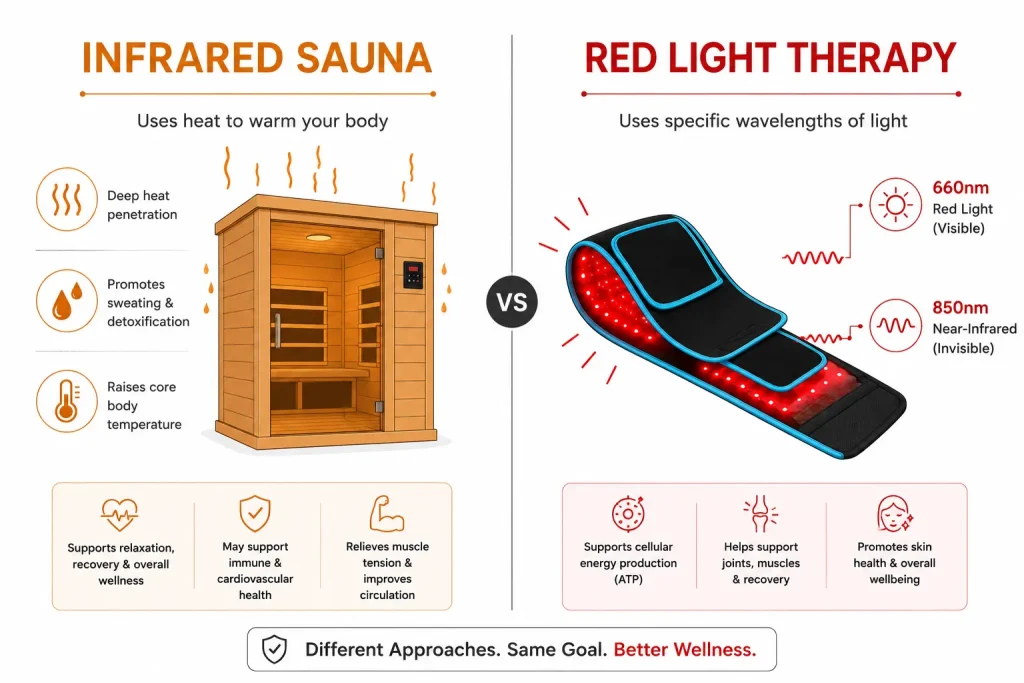
Red light therapy uses LEDs — typically 660nm red and 850nm near-infrared — held or worn close to the skin. There's no meaningful heat involved, and no sweating. The light itself, not warmth, is the point of the session.
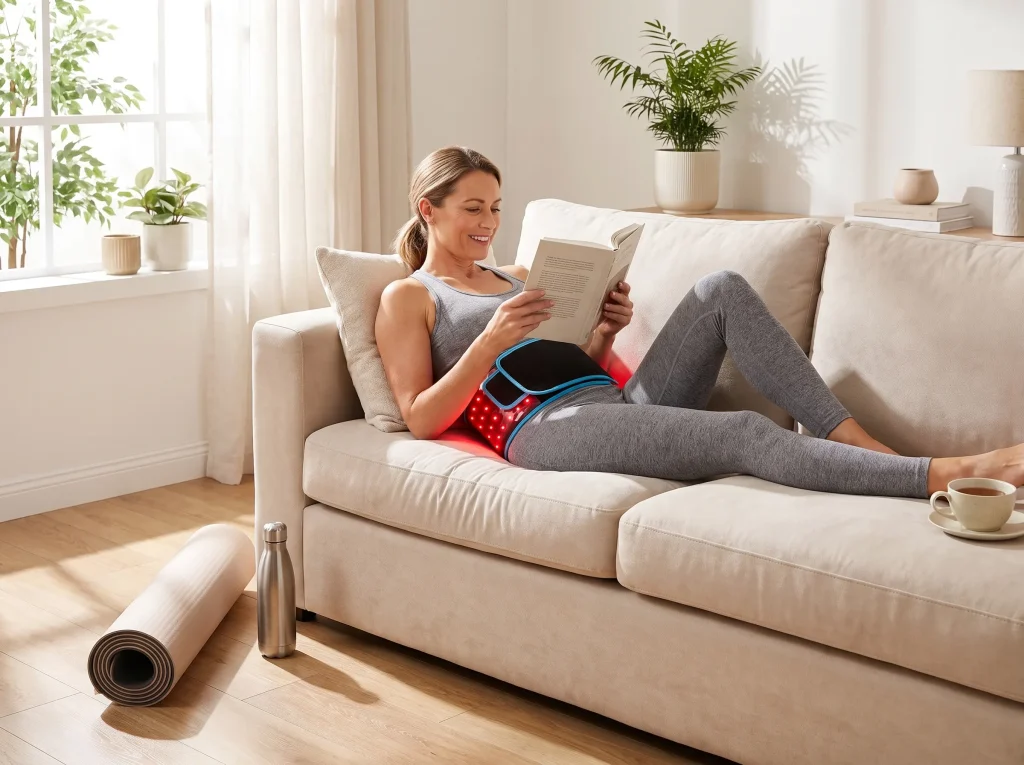
Because there's no heat load, sessions are shorter, require no cooldown, and can be done while you sit, work, or relax. Formats range from wearable belts and wraps through to full-body mats, panels, and face masks. If you're new to it, our beginner's guide to red light therapy covers the basics from scratch.
What it delivers: a focused-coverage or larger-area light session, generally described by users as a mild, pleasant warmth from the LEDs themselves rather than the deep heat of a sauna, as part of an at-home comfort routine.
The Core Difference, Side by Side
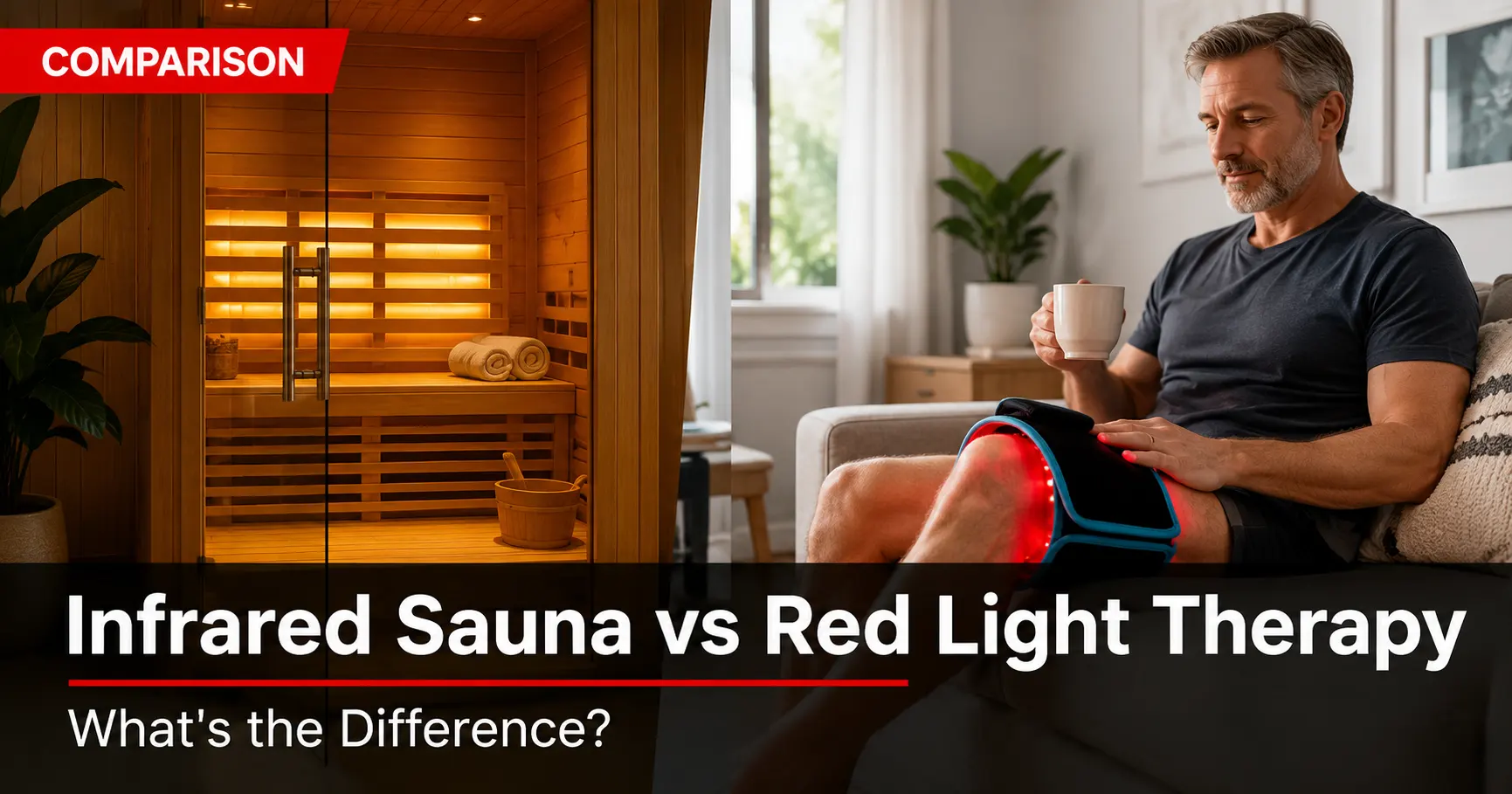
| Infrared Sauna | Red Light Therapy | |
|---|---|---|
| Spectrum band | Far-infrared (~3,000–10,000nm) | Red + near-infrared (~630–850nm) |
| Mechanism | Absorbed by water in tissue → heat | Passes through the optical window → cellular interaction |
| Sensation | Warm to hot, sweating | Mild warmth from the LEDs, no sweating |
| Typical session | 15–30 minutes | 10–20 minutes |
| Cooldown needed | Usually yes | No |
| Equipment | Cabin or portable heated blanket | Belt, mat, blanket, panel, or mask |
| Space required | Dedicated floor space (cabin) | Minimal — most formats store away |
| Portability | Low to moderate | High (belt), moderate (mat/blanket) |
| Running cost | Higher — heating draws more power | Lower — LEDs draw relatively little |
| Upfront cost (AUD) | Typically thousands for a cabin | Entry-level to premium, depending on format |
Neither is an upgraded version of the other — they're genuinely different tools built around different physics.
What About Penetration Depth?
This comes up constantly in comparisons, usually with very confident numbers attached. It's worth treating those numbers with some caution — penetration depth varies with wavelength, device output, skin tone, tissue type, and how the measurement was taken, and published figures differ quite a bit between sources.
What's reasonably consistent across sources is the general pattern:
- Visible red (~630–660nm) works closest to the surface — which is why it's the wavelength most associated with skin routines.
- Near-infrared (~810–850nm) reaches further into tissue than visible red, which is why most quality devices pair the two.
- Far-infrared in a sauna isn't really a "penetration" story at all — it's absorbed close to the surface and its effect comes from raising your body temperature, not from reaching deep tissue directly.
If a sauna is marketed on "deep penetrating far-infrared," that framing is doing more work than the physics supports. The heat is real; the depth claim is largely marketing.
A Common Source of Confusion: "Red Light Saunas"
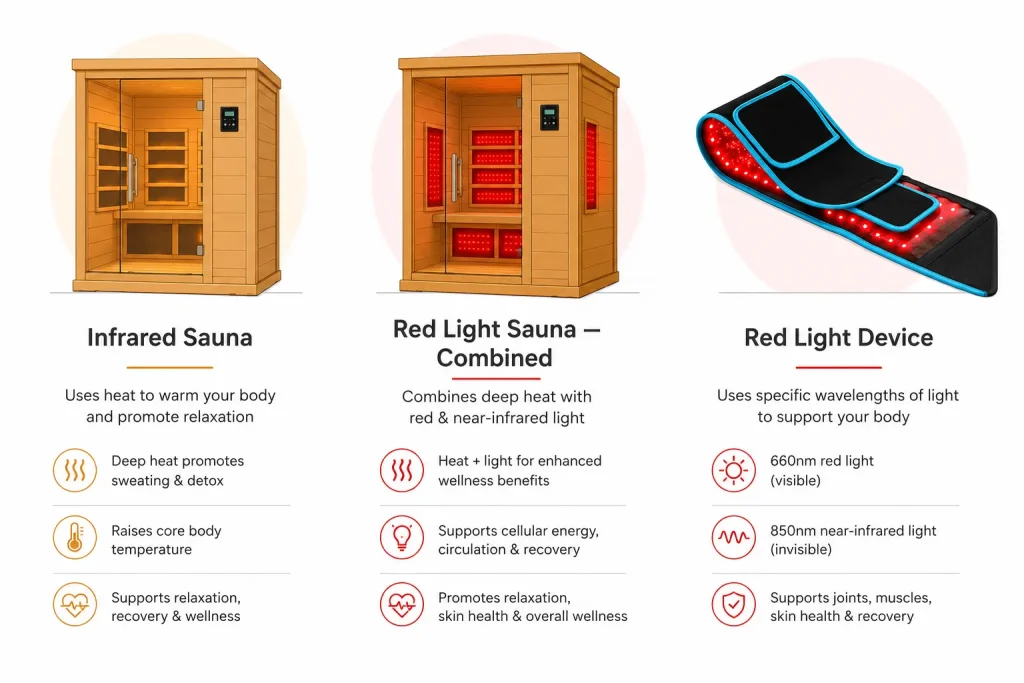
Some products on the market combine both — an infrared sauna cabin or blanket with red and near-infrared LED panels built in. These "red light saunas" or "combo" units genuinely do both jobs in one session, which is where a lot of the category confusion comes from.
If you're comparing products, it's worth being clear about which of three things you're actually looking at:
- A standalone red light device — belt, mat, blanket, panel, or mask. Light only, no heat.
- A standard infrared sauna — heat only, no dedicated red/near-infrared LEDs.
- A combined "red light sauna" — both heat and dedicated LEDs in one unit, usually at a higher price point than either alone.
The near-infrared heat lamp catch
Here's a distinction worth knowing before you spend money. Some sauna cabins add near-infrared heat lamps — incandescent bulbs rather than LEDs — and market the result using red light therapy language. The wavelengths those bulbs emit can genuinely overlap with the red and near-infrared range, which is why the marketing sounds convincing.
The catch is irradiance — how much light output actually reaches your skin, usually measured in mW/cm². A heat lamp scatters its output across a wide area and a broad range of wavelengths, most of it producing heat. A dedicated LED device concentrates output at specific target wavelengths at close range. So a sauna with NIR lamps isn't necessarily delivering a comparable light session to a purpose-built device, even though both can accurately say "near-infrared."
Not a reason to avoid combo units — just a reason to check the specifications rather than the marketing copy.
Can You Use Both? And In What Order?
Yes — plenty of people build a routine that includes both, and there's no reason to treat it as an either-or choice unless budget, space, or time genuinely only allows for one.
Should you do red light before or after a sauna? There's no established rule here, and anyone stating one definitively is going beyond the evidence. That said, a few practical considerations most people land on:
- Red light first, sauna after — you're doing the light session on clean, dry skin, and finishing with the sauna as a wind-down. Sweat, oils, and moisture on the skin can sit between the LEDs and you, so doing light first avoids that entirely.
- Sauna first, red light after — works fine too, provided you shower and dry off properly before the light session rather than going straight from one to the other.
- Separate sessions entirely — the most common approach in practice. A red light session on a specific area in the morning, a sauna in the evening, for example.
The one thing that matters more than order: with red light therapy specifically, consistency over weeks does more than any single session. Our step-by-step guide to using red light therapy at home covers session length, distance, and frequency in detail.
Cost, Space, and Practicality
For most Australian households this ends up being the deciding factor rather than the science.
Infrared sauna: a cabin is a significant purchase, typically running into the thousands, plus dedicated floor space and in some cases electrical considerations. Portable infrared blankets bring the entry price down considerably but change the experience. Running costs are higher, since heating draws real power.
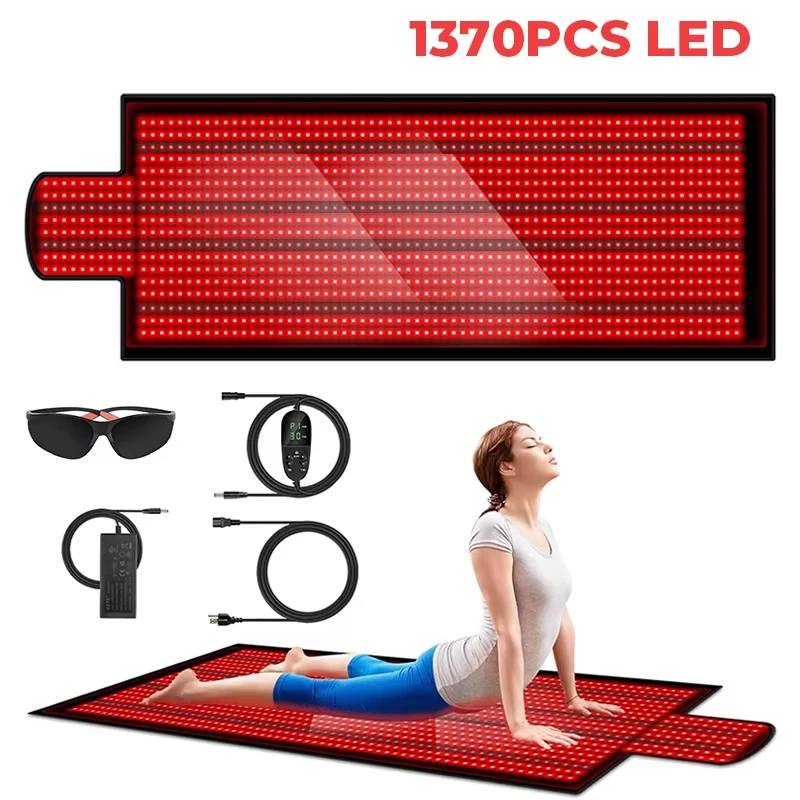
Red light therapy: entry point is much lower, particularly for wearable formats like a belt. Nothing needs installing, most formats store in a cupboard, and LEDs draw comparatively little power. A full-body mat sits higher in price than a belt but still well below a sauna cabin.
If you're weighing formats within red light specifically, our best red light therapy devices in Australia guide compares belt, mat, panel, and mask side by side.
Which One Should You Choose?
Lean toward an infrared sauna if: you want a whole-body heat-and-sweat experience, enjoy the ritual of a sauna session, and have the space and budget for a cabin or blanket setup.
Lean toward red light therapy if: you want a focused-coverage or larger-area light routine without heat, want something portable and usable while sitting or relaxing, prefer shorter sessions with no cooldown, or are working within a smaller budget or space.
Consider both if: you're building a broader at-home wellness routine and have the budget and space for each — they serve different parts of a routine rather than competing for the same slot.
Where Alpha Fits In
We'll be upfront: Alpha doesn't sell infrared saunas. Our range is built around red and near-infrared light devices — the Red Light Therapy Belt for focused coverage on a specific area, and the Red Light Therapy Mat for larger-area sessions — both running on the 660nm red and 850nm near-infrared pairing described above.
If a heat-based sauna routine is specifically what you're after, that's a different product category than anything we make, and we'd rather tell you that plainly than blur the line. You can read more on how the light itself works on our how it works page, and more on the wavelengths specifically in our 660nm and 850nm buyer's guide.
Frequently Asked Questions
Is red light therapy the same as an infrared sauna?
No. Both use infrared, but different bands of it. An infrared sauna uses far-infrared (roughly 3,000–10,000nm), which is absorbed by water in tissue and becomes heat. Red light therapy uses red and near-infrared (roughly 630–850nm), which passes into tissue without meaningful heating. Different mechanism, different experience.
Are infrared saunas a form of red light therapy?
Not in the usual sense. A standard far-infrared sauna doesn't emit the red and near-infrared wavelengths used in photobiomodulation. Some cabins add near-infrared lamps or LED panels, which is a different product again — check the specifications rather than assuming.
Should I do red light therapy before or after a sauna?
There's no established rule. Many people prefer red light first on clean, dry skin, then the sauna as a wind-down — sweat and moisture can sit between the LEDs and your skin. Doing the sauna first works too, provided you shower and dry off before the light session.
Why doesn't red light therapy make you sweat?
Because its wavelengths sit in a range where water absorbs relatively little energy, so the light passes into tissue rather than converting to heat at the surface. Far-infrared sits much further up the spectrum, where water absorption is strong — which is what generates the heat and sweat in a sauna.
Which is better for relaxation?
Both are commonly used for relaxation, just through different sensations — the deep warmth and sweating of a sauna session versus the calmer, no-heat light exposure of a red light session. Which one feels more relaxing is a personal preference, not a settled fact.
Can I use an infrared sauna and red light therapy on the same day?
Many people do, usually as separate sessions rather than combined. There's no strict rule against using both in the same day as part of a broader routine — just listen to how your body responds and adjust if needed.
What's a "red light sauna"?
It's a combined product — an infrared sauna cabin or blanket with red and near-infrared LED panels built in, delivering both heat and light in one session. It's a distinct category from either a standalone sauna or a standalone red light device.
Does Alpha sell infrared saunas?
No — Alpha's range is red and near-infrared light devices only (belt, mat, and LED mask). If you're specifically after a heat-based sauna routine, that's a different product category than what we offer.
Which one should I buy first if I can only afford one?
It depends on your goal. If you want a focused, portable routine for a specific area at a lower price point, a red light belt is usually the more accessible entry point. If a whole-body heat-and-sweat ritual is the priority, an infrared sauna or blanket is the more direct route to that experience.
The Bottom Line
Infrared saunas and red light therapy get grouped together because they share a spectrum — but they use opposite ends of it, and that changes everything downstream. One is designed to be absorbed and become heat; the other is designed to pass through and reach cells. Heat versus light, sweating versus none, whole-body ritual versus focused or larger-area coverage.
Neither replaces the other, and plenty of people use both as separate parts of the same at-home routine. Choose based on which experience and goal you're actually after — and if you're comparing combo products, check the specifications rather than the marketing.
This article is for general information only. The products discussed are general wellness devices and are not intended to diagnose, treat, cure or prevent any disease or medical condition. Results vary between individuals. If you are pregnant, photosensitive, have a cardiovascular or heat-related condition, or are using medication that increases light or heat sensitivity, please check with a qualified health professional before use.