Last updated: July 2026 · Reading time: ~9 minutes
Quick answer: Red and near-infrared light (photobiomodulation) is a genuinely active area of academic research, including studies looking at joints. But the quality and consistency of that research varies a lot, and home wellness devices are not the same equipment used in clinical studies. A home device like a belt or mat can be a reasonable part of an at-home joint comfort routine — it isn't a treatment for any diagnosed condition, and it won't match a number you saw on a marketing page.
Search for red light therapy and joints and you'll run into some very specific numbers very fast — a particular percentage improvement, a particular study, a particular comparison to medication. This buyer's guide takes a more cautious path: what the research field genuinely looks like, why we're not going to hand you a percentage, and what a home device can realistically offer as part of a joint comfort routine.
What Photobiomodulation Research Actually Looks At
Photobiomodulation (PBM) is the academic term for using specific red and near-infrared wavelengths to influence cellular activity. It's been studied across a wide range of applications for years, including some looking at joint comfort and mobility.
Here's the honest, unglamorous summary: it's a real and active research field, but study quality varies enormously — different wavelengths, different doses, different devices, different session protocols, and different ways of measuring outcomes. Some studies are well-designed. Others are small, short, or use equipment that bears little resemblance to a consumer belt or mat. Treat any single study, or any brand's summary of a study, as one data point rather than a settled conclusion.
Why We're Not Going to Quote You a Percentage
Look around this category and you'll see numbers like "up to 86% improvement" or "70% reduction compared to placebo" attached to red light therapy and joints. Some of these trace back to real published research. Many are stretched, cherry-picked, or describe a specific laser protocol in a lab setting — not a home LED belt used for fifteen minutes before bed.
We're not going to hand you a number here, and we'd treat any seller who leads with one — without linking the actual study and matching your exact device to it — with a healthy dose of scepticism. A specific percentage is a strong claim. Strong claims deserve a strong source, not a marketing page.
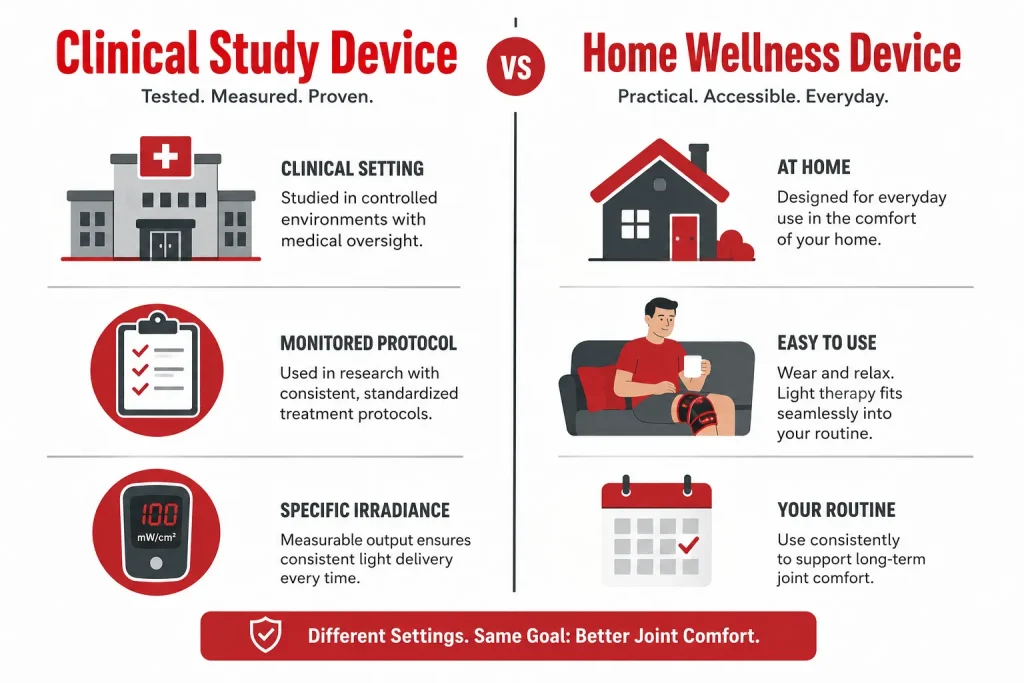
Home Devices vs Clinical Study Devices
This is the gap that most marketing pages skip over entirely. A device used in a published study is typically:
- A specific make and model, at a specific measured irradiance
- Used at a specific distance, for a specific duration, a specific number of times per week
- Sometimes operated under supervision, as part of a broader, monitored plan
A general wellness device you buy for home use — a belt, a mat, a blanket — is built for a personal, ongoing at-home routine, not a replicated study protocol. It may use similar wavelengths, but "similar wavelengths" isn't the same as "the same device, dose, and supervision used in the research." We've written more on this distinction, including how to check what a "medical grade" or TGA-listed claim genuinely means, in our guide to medical grade red light therapy devices.
What a Home Device Can Realistically Offer
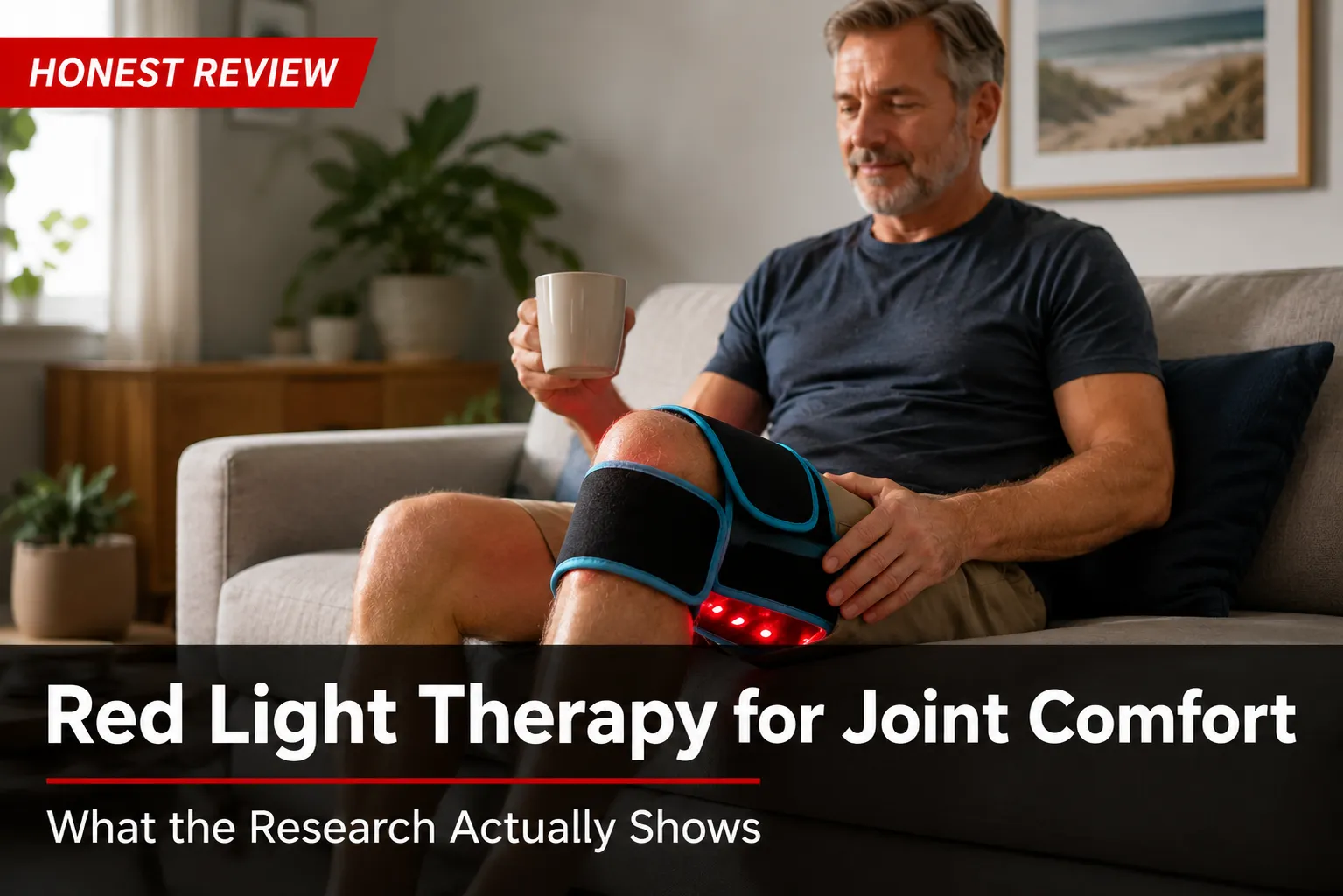
For most people, a home red or near-infrared light device fits into daily life as a repeatable, low-effort comfort routine — a few focused-coverage sessions a week on a specific area, or a larger-area session with a mat. That's a genuinely different proposition from "this treats my joint condition," and it's worth being honest about the difference:
- Consistency matters more than intensity. A short, regular session as part of an established routine is a more realistic goal than an occasional long one.
- Results vary significantly between individuals. Anyone promising a specific, guaranteed outcome is promising something no honest seller can actually deliver.
- It's a routine, not a replacement. A home device sits alongside whatever your health professional has already recommended — it doesn't substitute for it.
What to Check Before You Buy
- Stated wavelengths. 660nm red and 850nm near-infrared is the standard pairing across the category (see our 660nm and 850nm buyer's guide for more detail) — look for the actual numbers, not just "therapeutic light."
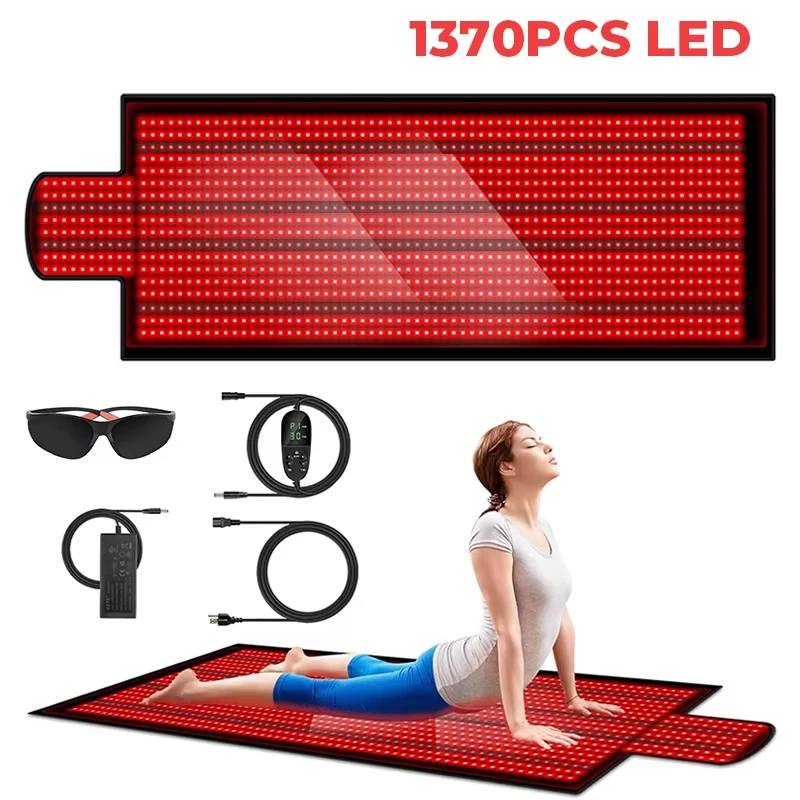
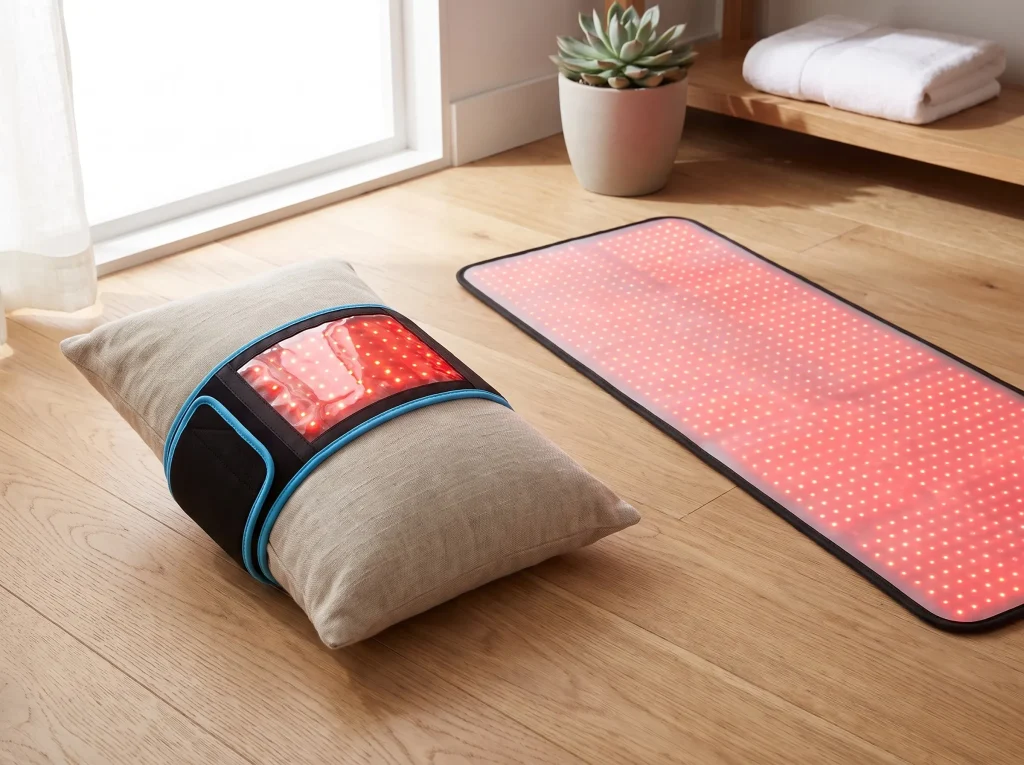
- Coverage that matches your use case. A focused-coverage belt suits one area at a time; a mat suits larger-area sessions across the back or whole body.
- Realistic marketing. Sellers who describe a general wellness routine and are upfront that results vary are more trustworthy than ones quoting a specific percentage with no source attached.
- A quick-start guide for proper product setup — session length, distance, and frequency — rather than guesswork.
- Local AU support and a published warranty and returns policy you can read before buying.
When to Talk to a Health Professional First
A home wellness device is not the right starting point if you have a diagnosed joint condition, are managing it under a treatment plan, are pregnant, are photosensitive, or are taking medication that increases light sensitivity. In all of these cases, talk to your doctor or physiotherapist before adding any new device to your routine — they can tell you whether it makes sense alongside what you're already doing.
Where Alpha Fits In
The Alpha Red Light Therapy Belt and Red Light Therapy Mat are general wellness devices built around the 660nm red and 850nm near-infrared pairing — the belt for focused coverage on one area, the mat for larger-area sessions. They're designed for a consistent at-home comfort routine, not as a treatment for any diagnosed joint condition, and we're not going to attach a percentage or a study to them that we can't stand behind. We've covered the belt's comfort-routine fit in more depth in our full belt review.
If you're building a joint comfort routine around a specific area — like the lower back — our back comfort guide walks through that use case in more detail.
Frequently Asked Questions
Does red light therapy help with joint comfort?
Photobiomodulation research on joints exists and is ongoing, but study quality varies significantly, and home devices differ from the equipment used in clinical studies. A home device can be a reasonable part of a personal at-home comfort routine, but it isn't a treatment for a diagnosed joint condition.
Why won't you tell me a specific percentage improvement?
Because the numbers circulating in this category often trace back to specific lab protocols, small studies, or unverifiable sources — not a home LED device used for a short daily session. We'd rather be honest about that gap than repeat a number we can't stand behind.
What wavelengths are used for joint comfort routines?
660nm red and 850nm near-infrared is the standard pairing across the home device category. Look for these specific numbers stated clearly by any seller you're considering.
Should I use a belt or a mat for joint comfort?
A belt gives focused coverage for one specific area at a time — useful if you're targeting somewhere like the lower back or a knee. A mat covers larger areas at once, which suits a broader, whole-body routine.
Can I use a home device instead of seeing a health professional?
No. A general wellness device is a routine you add alongside professional care, not a replacement for it — especially if you have a diagnosed condition or are currently under a treatment plan.
Are Alpha's devices medical treatments for a diagnosed joint condition?
No — Alpha's belt and mat are general wellness devices for at-home comfort routines. They are not registered medical devices and are not marketed as a treatment for any diagnosed joint condition.
The Bottom Line
Photobiomodulation research on joints is real, ongoing, and genuinely mixed in quality — which is exactly why any seller quoting you a specific percentage improvement deserves a skeptical second look. A home red light device can be a reasonable, low-effort addition to a personal comfort routine. It isn't a treatment, and it isn't a replacement for your own health professional's advice.
This article is for general information only and isn't medical advice. The products discussed are general wellness devices and are not intended to diagnose, treat, cure or prevent any disease or medical condition. Results vary between individuals. If you have a diagnosed joint condition, are pregnant, photosensitive, or using medication that increases light sensitivity, please check with a qualified health professional before use.