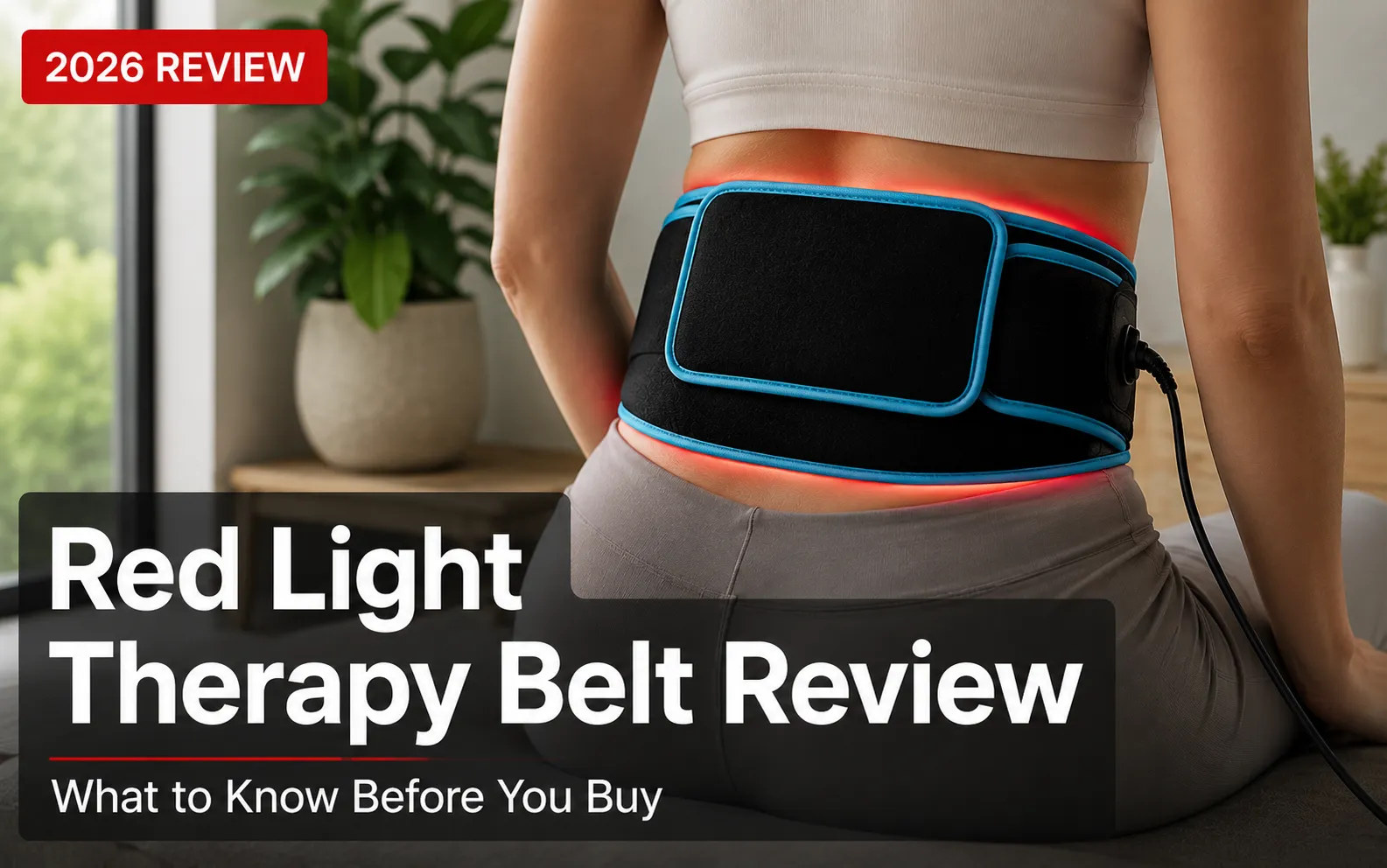
Quick answer: A red light therapy belt is a flexible, wearable wrap fitted with LEDs that emit red (around 660nm) and near-infrared (around 850nm) light. It is designed for targeted use on areas like the lower back, waist, shoulders and knees as part of a home wellness and recovery routine. Before buying, check five things: the wavelengths used, the actual light coverage area, corded vs cordless design, plug type and local support, and the warranty and returns policy.
Red light therapy belts are everywhere right now — TikTok, Instagram, Amazon listings promising everything short of a miracle. Some of that hype is justified. A lot of it isn't.
This guide cuts through the noise. We'll cover what a red light therapy belt actually is, what it can realistically be used for, the exact specs to check before you spend your money, and the marketing claims you should treat with healthy scepticism. We'll also review our own Alpha Red Light Therapy Belt honestly — including who it's not for.
What Is a Red Light Therapy Belt?
A red light therapy belt is a wearable LED device shaped like a wide, flexible strap. Instead of standing in front of a rigid panel or lying on a full-body mat, you wrap the belt around a specific area — lower back, waist, hip, thigh, shoulder or knee — and let the LEDs deliver light directly to that spot.
Most quality belts combine two wavelengths:
- 660nm red light — visible red light that works closer to the surface of the skin.
- 850nm near-infrared light — invisible to the eye, this wavelength reaches deeper beneath the skin than visible red light.
This dual-wavelength combination has become the standard across the category, and it's the first thing worth confirming on any product page. If a listing doesn't state its wavelengths clearly, that's your first red flag.
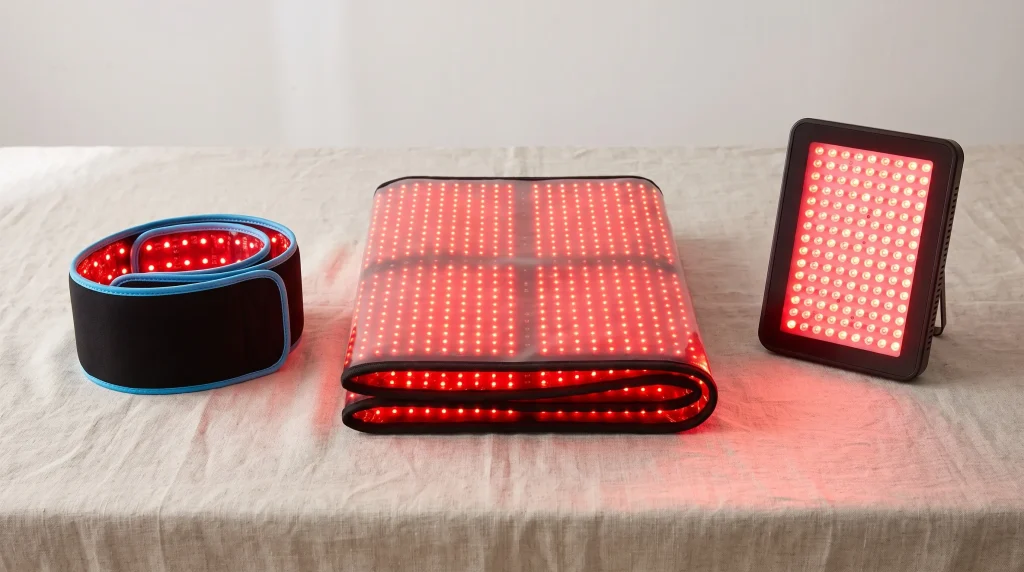
Belt vs Mat vs Panel: Which One Do You Actually Need?
| Feature | Belt | Full-Body Mat | Panel |
|---|---|---|---|
| Best for | One targeted area at a time | Whole-body sessions | Face, torso, larger zones |
| Hands-free use | Yes — wear it while sitting or relaxing | Yes — but you must lie down | No — you sit or stand in front of it |
| Portability | Excellent | Low | Low to medium |
| Typical price (AUD) | $150–$400 | $800–$1,500+ | $300–$2,000+ |
| Coverage | Small, focused | Large | Medium |
The honest takeaway: if your main interest is one recurring area — say, your lower back after long desk days, or your knees after training — a belt gives you the most practical, affordable entry point. If you want head-to-toe sessions, a belt will frustrate you and a full-body mat is the better fit.
What Are Red Light Therapy Belts Used For?
Let's be straight with you, because this category is full of overblown promises.
Red light therapy belts are wellness devices. People typically build them into routines for:
- Lower back and waist comfort routines — especially after long periods of sitting or physical work.
- Post-training recovery support — gym-goers and runners often use a belt on worked muscle groups as part of a wind-down routine.
- General muscle relaxation — many users describe sessions as gently warming and calming, similar to a low-key ritual before bed.
- Targeted use without a big device — covering one problem area without investing in a mat or panel.
What they are not: a treatment, cure or substitute for professional care. A quality brand will say this plainly on its own product pages. If a listing promises to "melt fat," "cure back pain" or "reverse ageing," walk away — those claims tell you more about the seller's ethics than the device's ability.
Research into red and near-infrared light is genuinely interesting and ongoing, but home wellness belts are consumer devices, and individual results vary. Anyone selling certainty is selling something else.
What to Check Before You Buy a Red Light Therapy Belt
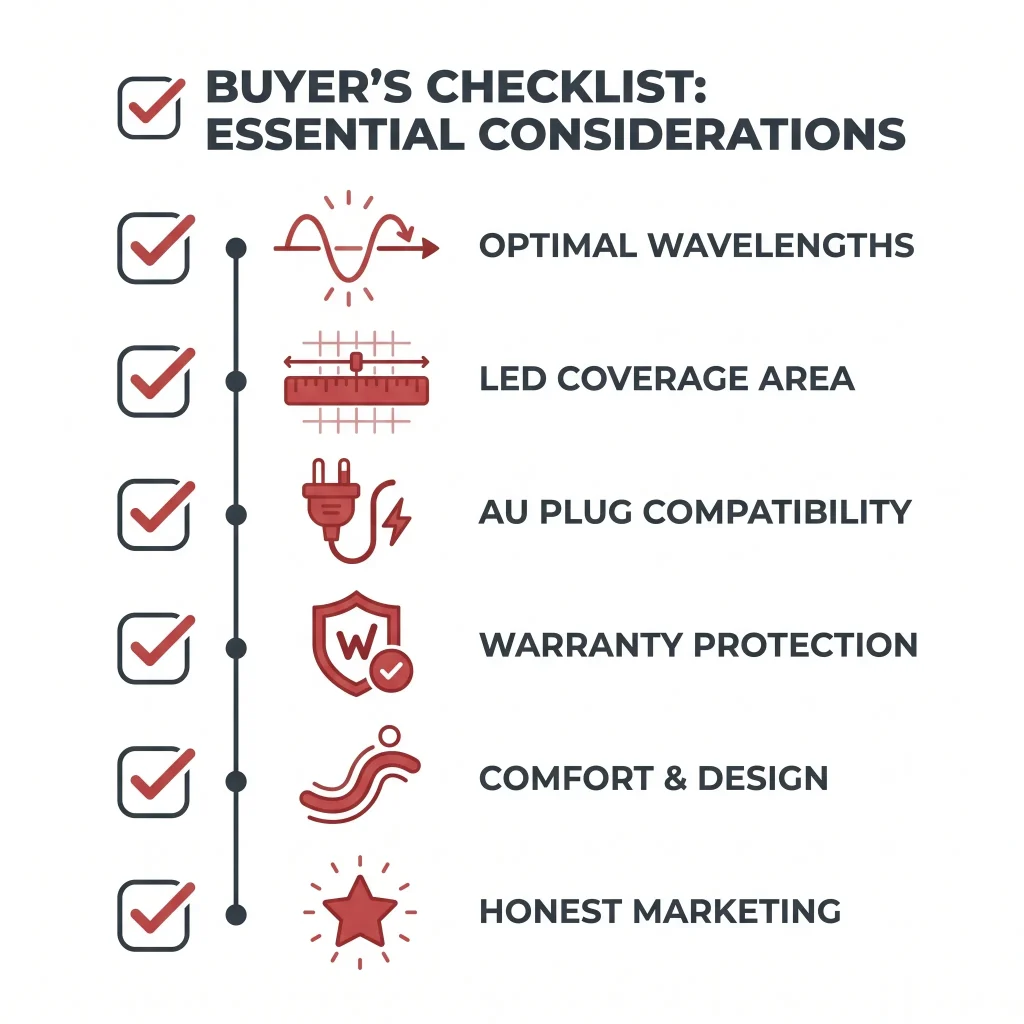
This is the part most "review" articles skip so they can rush you to an affiliate link. Here are the seven checks that actually matter.
1. Wavelengths (660nm + 850nm Is the Benchmark)
The combination of 660nm red and 850nm near-infrared is the most widely used pairing in home devices, and it's what the bulk of consumer red light products are built around. Belts that only offer a single visible red wavelength are usually cheaper — and usually cheaper for a reason.
Check for: both wavelengths listed explicitly, ideally with the option to run them together.
2. Actual Light Coverage Area
Belt listings love quoting the total belt length (including straps) to make the device sound bigger. What matters is the LED panel area — the section that actually emits light. A "120cm belt" with a 30cm LED strip covers far less than the photos imply.
Check for: the LED panel dimensions stated separately from the strap length.
3. Corded vs Cordless
- Corded belts are lighter, usually cheaper, and never die mid-session — but you're tethered to a wall socket or power bank.
- Cordless (battery) belts offer freedom of movement but add weight, cost, and a battery that degrades over the years.
Neither is "better." If your sessions happen on the couch or at a desk, corded is the sensible, durable choice.
4. Comfort and Flexibility
You'll only stay consistent with a device that's comfortable to wear. A stiff, heavy belt ends up in a drawer within a month. Look for a flexible wrap design that curves around the lower back or a knee without gaps, with adjustable straps that fit your body.
5. Plug Type and Local Compatibility
This one catches Australian buyers constantly. Many belts sold through global marketplaces ship with US or EU plugs and an adapter as an afterthought. Buying a device designed with AU plug options and sold by a local seller means no adapter juggling and no voltage second-guessing. We've written a full breakdown of buying locally in our guide to red light therapy at home in Australia: what to buy in 2026.
6. Warranty, Returns and Reachable Support
Before you click buy, find the actual warranty policy and returns page — not a vague "satisfaction guaranteed" badge. Questions worth answering:
- Is there a published warranty policy you can read before purchasing?
- Are returns and order tracking explained clearly?
- Is support based somewhere you can realistically reach, in your time zone?
An overseas marketplace seller who vanishes after 90 days makes even a cheap belt expensive.
7. Honest Marketing
Ironically, one of the strongest buying signals is a seller who limits their claims. A product page that includes clear usage disclaimers, mentions who should check with a health professional first (pregnancy, photosensitivity, light-sensitising medication), and avoids medical promises is a seller taking compliance — and you — seriously.
How to Use a Red Light Therapy Belt
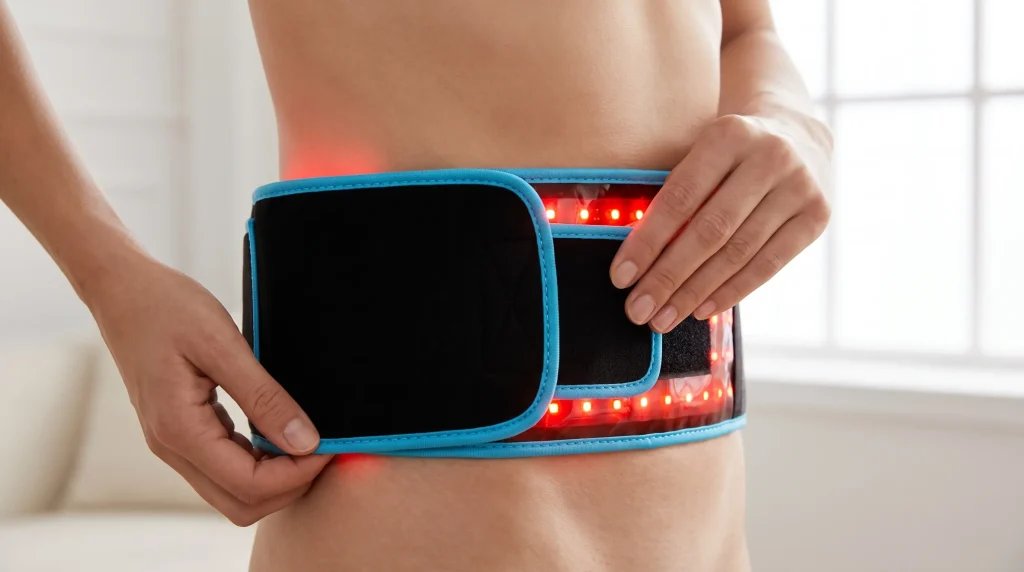
Using a belt is simple, but a few habits make sessions more effective and comfortable:
- Use it on clean, bare skin. Clothing, lotions and oils sit between the LEDs and your skin.
- Wrap it snugly, not tightly. The panel should sit flat against the target area without restricting circulation.
- Start with short sessions. Most brands suggest somewhere in the 10–20 minute range per area. Begin at the lower end and see how your skin responds.
- Don't stare at the LEDs. These aren't lasers, but there's no reason to look directly into bright light. Keep eyes away or closed if using it near the upper body.
- Be consistent. Whatever you're hoping to get out of a belt, a few weeks of regular short sessions beats occasional marathon ones.
- Wipe it down after use. A soft cloth keeps the panel surface clean and the device hygienic.
Setting Realistic Expectations
Home red light devices are a slow-burn routine, not a light switch. Most experienced users describe the first sessions as simply pleasant and warming, with any perceived benefits building gradually over weeks of consistent use. If a seller promises visible transformation in days, revisit point 7 above. For a deeper, dedicated look at the comfort-and-relief question specifically, read our full review: does a red light therapy belt really relieve discomfort?
Who Should Talk to a Professional First
Red light therapy belts are generally considered low-risk wellness devices, but a few groups should check with a qualified health professional before use:
- Anyone who is pregnant
- People with photosensitivity or conditions triggered by light
- Anyone taking medication that increases light sensitivity
- Anyone currently under medical care for the area they intend to use the belt on
This isn't legal fine print for the sake of it — it's genuinely the right order of operations.
Alpha Red Light Therapy Belt: Our Honest Review
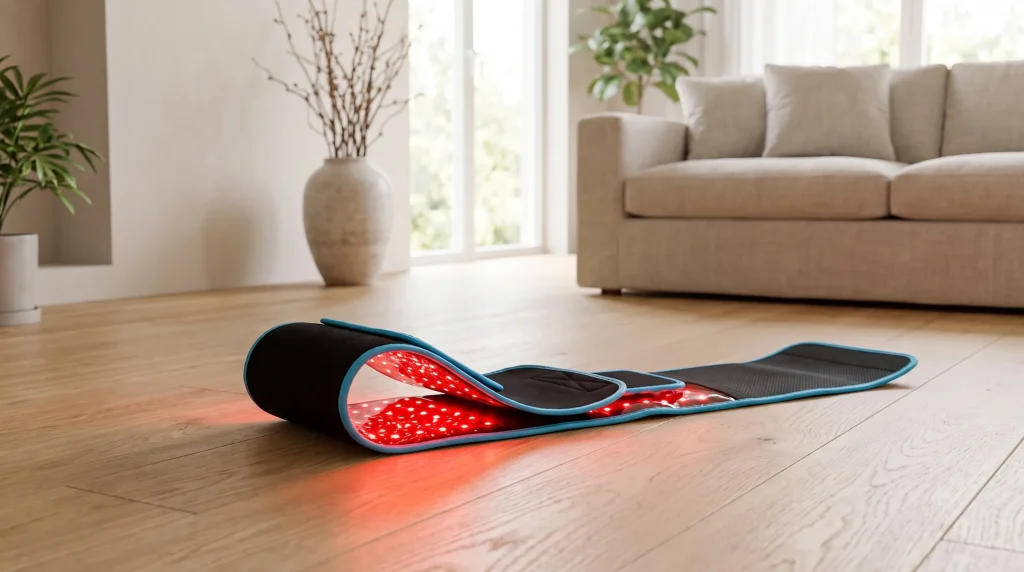
Now, the review part. We make the Alpha Red Light Therapy Belt, so read this section knowing exactly who is writing it — and judge us on how straight we're being.
The Specs
| Spec | Alpha Red Light Therapy Belt |
|---|---|
| Wavelengths | 660nm red + 850nm near-infrared |
| Design | Flexible wearable wrap for targeted use |
| Target areas | Lower back, waist, shoulders, knees, legs |
| Plug | AU plug options for Australian customers |
| Colours | Black or blue (subject to supplier stock) |
| Price | $249 AUD (down from $299) |
| Support | Australia-based support from the Gold Coast, QLD |
| Extras | Quick-start video and PDF guide where available; published warranty and returns policies |
What We Got Right
- The wavelength pairing is the industry benchmark. 660nm + 850nm, the same dual-wavelength approach used across the credible end of this category.
- It's built for the belt use case. Flexible wrap design that conforms to the lower back and waist — the areas people actually buy belts for.
- It's genuinely local. AU plugs, Australian checkout and delivery, and support staffed from the Gold Coast. No adapter roulette, no 2am time-zone emails.
- Our claims are boring on purpose. We position this as a wellness device for comfort and recovery routines, with clear guidance on who should check with a professional first. If you've read this far, you know why we think that matters.
What to Consider Before Choosing Ours
- It's a targeted device. If you want full-body coverage, this is the wrong product — our mat exists for that, and we'd rather tell you now than process your return later.
- Colour availability varies with supplier stock, so you may not always get your first pick between black and blue.
- It's not the cheapest belt on the internet. Marketplace belts exist for less. What you're paying for is the dual-wavelength design, local plug and delivery, published warranty and returns policies, and support you can actually reach.
Who It's For
The Alpha belt suits Australians who want a targeted red light device for lower back, waist or post-training routines, prefer buying from a local seller with reachable support, and value honest positioning over hype. If that's you, it's a strong pick at $249. If you want whole-body sessions or the absolute lowest price regardless of support, it isn't — and we'd rather you buy the right device.
Frequently Asked Questions
What does a red light therapy belt do?
A red light therapy belt delivers red (660nm) and near-infrared (850nm) light to a targeted area of the body through a flexible, wearable LED wrap. People use them as part of home wellness routines focused on muscle comfort, relaxation and post-training recovery. They are wellness devices, not medical treatments.
How long should I wear a red light therapy belt?
Most manufacturers recommend sessions in the range of 10–20 minutes per area. Start at the shorter end, follow your device's included guide, and build consistency over weeks rather than extending individual sessions.
Are red light therapy belts safe?
They are generally considered low-risk when used as directed. Avoid looking directly at the LEDs, don't exceed recommended session times, and check with a health professional first if you're pregnant, photosensitive, taking light-sensitising medication or under medical care.
Is a red light therapy belt better than a mat or panel?
Neither is better — they serve different jobs. A belt is best for one targeted area at a time and costs the least. A mat covers the whole body but costs significantly more. A panel sits in between but isn't hands-free. Choose based on the areas you actually plan to use it on.
Do red light therapy belts help with weight loss?
Be sceptical of any belt marketed primarily for fat loss or "slimming." Body composition comes down to diet, exercise and lifestyle. A red light belt can be part of a broader recovery and wellness routine, but it is not a weight-loss device, and sellers claiming otherwise are overreaching.
Why does the plug type matter for Australian buyers?
Many belts sold through global marketplaces ship with US or EU plugs, requiring adapters and creating compatibility annoyances. Devices offered with proper AU plug options and Australian delivery remove that friction entirely.
The Bottom Line
A red light therapy belt is the most practical, affordable way to add targeted red and near-infrared light to a home wellness routine — if you buy the right one. Confirm the 660nm + 850nm wavelengths, check the real LED coverage area, decide between corded and cordless honestly, and never buy from a seller without a published warranty, a clear returns policy and claims modest enough to trust.
The Alpha Red Light Therapy Belt ($249 AUD) was built around exactly that checklist: dual wavelengths, a flexible targeted design, AU plugs, and Gold Coast-based support. Use code ALPHA5 for 5% off eligible single products, and visit our Product Training hub for setup videos and guides before your first session.
This article is for general information only. The products discussed are wellness devices and are not intended to diagnose, treat, cure or prevent any disease or medical condition. Results vary between individuals. If you are pregnant, photosensitive, using medication that increases light sensitivity, or under medical care, please check with a qualified health professional before use.