Red light therapy is good for skin rejuvenation, easing everyday muscle and joint discomfort, supporting post-exercise recovery, encouraging hair growth, and helping the body wind down for sleep. It works by delivering red (around 660nm) and near-infrared (around 850nm) light that your cells absorb to produce more energy — a process called photobiomodulation. The strongest evidence is for skin; other uses are promising but still emerging.
If you've seen red light masks, panels, belts and mats everywhere lately and wondered what they're actually for, this guide breaks it down benefit by benefit — what the research shows, how strong that evidence is, and how to use red light therapy at home to get the most from it.
Last updated: 3 July 2026 · Written by the Alpha Red Light Therapy team, Gold Coast, Queensland.
Red light therapy benefits at a glance
| Benefit | What the research suggests | Strength of evidence |
|---|---|---|
| Skin: wrinkles, texture, glow | May boost collagen, smooth fine lines, improve tone | Strong |
| Skin: acne & redness | May calm breakouts and inflammation (often with blue light) | Moderate |
| Muscle recovery | May reduce post-exercise soreness and support faster bounce-back | Moderate |
| Joint & everyday aches | May ease discomfort by calming inflammation and lifting circulation | Moderate |
| Hair growth | May stimulate follicles in pattern hair loss | Moderate |
| Sleep & mood | May support circadian rhythm and a calmer wind-down | Emerging |
| Wound healing | May speed tissue repair | Moderate |
| Body contouring / fat | Small, temporary circumference changes reported | Weak |
This article is general information, not medical advice. Red light therapy isn't a replacement for professional care. If you have a health condition, are pregnant, or take photosensitising medication, speak with your doctor first.
What is red light therapy?
Red light therapy (RLT) is a non-invasive treatment that exposes your skin to low levels of red and near-infrared light to support your cells' natural energy and repair processes. You'll also see it called photobiomodulation (PBM), low-level laser therapy (LLLT), or LED light therapy.
It's delivered by LED devices — masks, panels, wands, belts, mats and full-body beds — that emit specific wavelengths of light, usually between about 630nm and 880nm. Sessions are short (typically 10–20 minutes), painless, and produce no heat or downtime.
What red light therapy is not: it is not a tanning bed. Red and near-infrared light are too short-wavelength to generate heat, so they do not burn the skin when used correctly, and unlike UV light, red light doesn't carry the same skin-damage risk. It's a fundamentally different technology from the tanning beds it can visually resemble.
Curious about the physics? Our How It Works page walks through each wavelength with linked clinical references.
How does red light therapy work?
Red light therapy works at the level of your mitochondria — the tiny "power plants" inside your cells.
Here's the simple version:
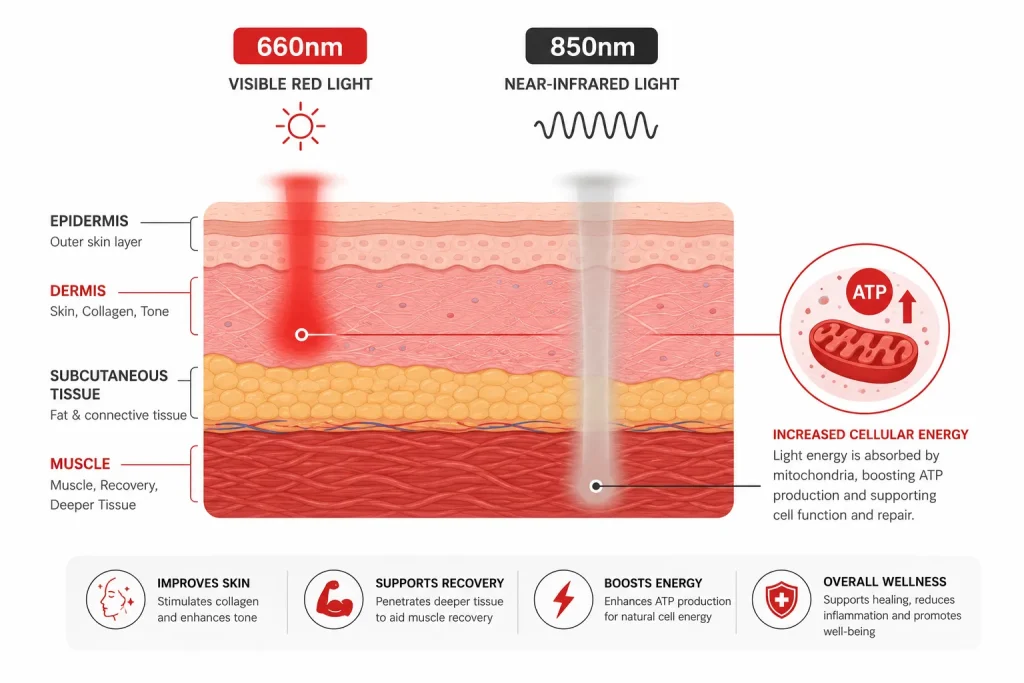
- Light goes in. Red and near-infrared light penetrate the skin and are absorbed by an enzyme in your mitochondria called cytochrome c oxidase.
- Energy goes up. This absorption enhances ATP production, reduces oxidative stress, and triggers downstream signalling cascades that promote tissue repair and reduce inflammation. ATP is the fuel your cells run on.
- Cells do their job better. With more energy, other cells can do their work more efficiently, doing things like repairing skin, boosting new cell growth and enhancing skin rejuvenation.
The key detail most people miss is wavelength. Different wavelengths reach different depths, which is why red and near-infrared light are often combined:
| Wavelength | Colour | How deep it reaches | Best for |
|---|---|---|---|
| 630–660nm | Visible red | Surface layers of skin | Skin tone, fine lines, glow, redness |
| 830–880nm | Near-infrared (invisible) | Deeper — dermis, muscle, tissue | Recovery, deeper tissue, larger-area sessions |
Wavelength selection matters critically. The 630 to 660 nm range (visible red) penetrates superficial tissues, while near-infrared reaches further down. Alpha devices use a 660nm red + 850nm near-infrared combination so you get both the surface and the deeper wavelengths in one session.
What is red light therapy good for? The benefits, one by one
1. Skin health, wrinkles and anti-ageing (strongest evidence)
This is where the science is most convincing. Red light appears to stimulate the cells that make collagen — the protein that keeps skin firm and elastic.
A randomized controlled trial published in Photomedicine and Laser Surgery found that participants receiving red light treatments at 633 nm showed significant improvements in skin complexion, skin roughness, and collagen density measured by ultrasound after 30 sessions over 12 weeks. In that study, intradermal collagen density increased by approximately 20% compared to baseline.
Research also points to benefits for texture and sun damage. Research shows red light therapy may smooth your skin and help with wrinkles. Researchers think it does this by stimulating collagen production, which helps improve skin elasticity.
Real-world timeline: most people using a quality at-home device 3–5 times a week notice a healthier glow within a few weeks, with collagen changes building gradually over 8–12 weeks. Consistency matters more than intensity.
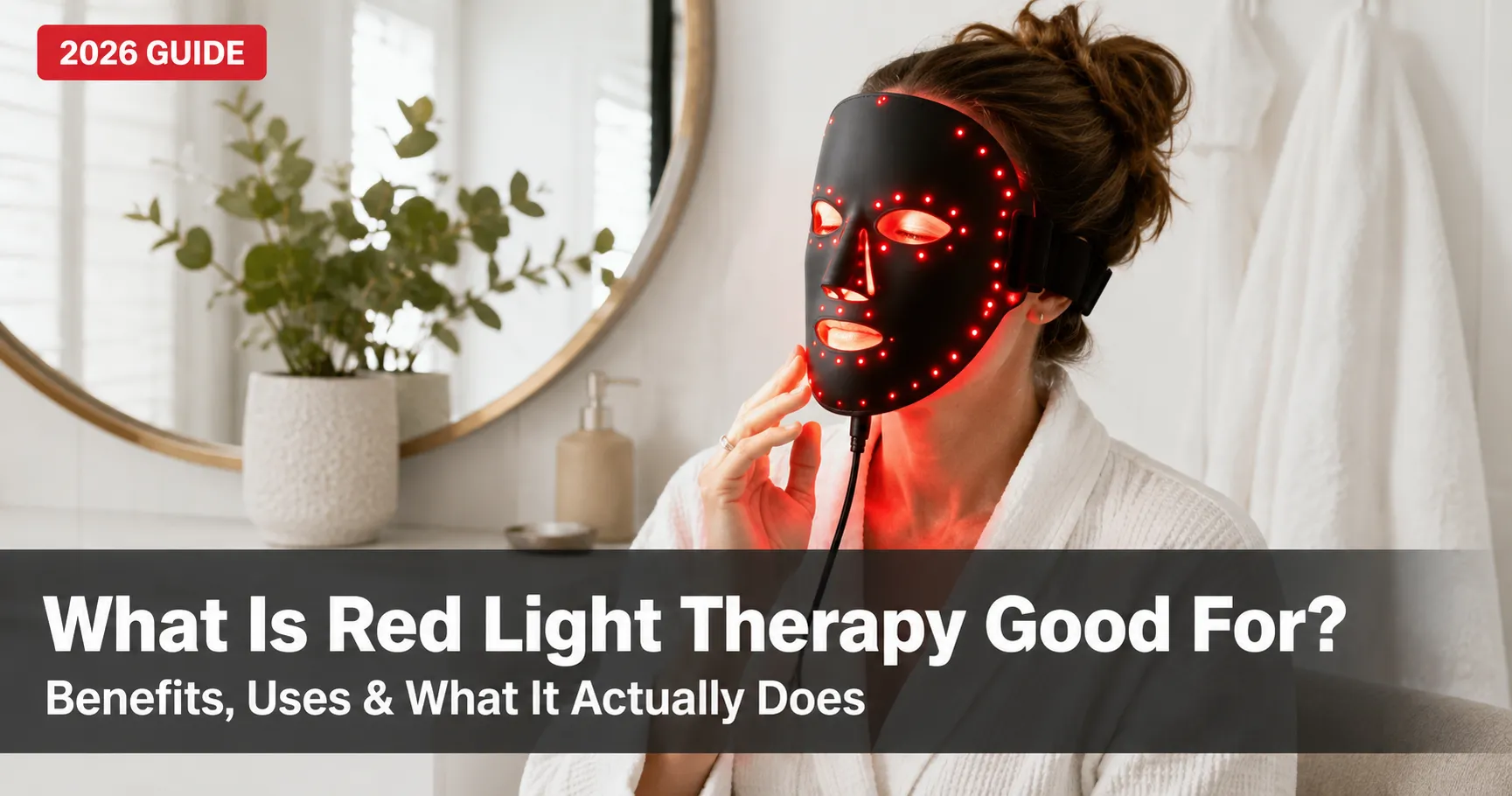
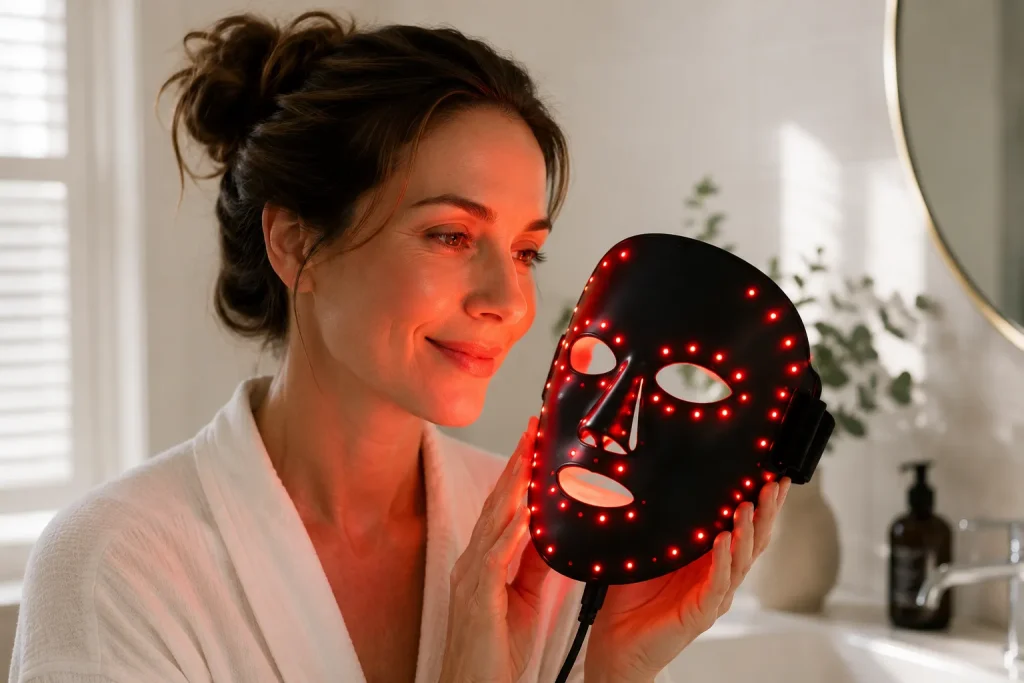
Good for: fine lines, dullness, uneven tone, an evening glow step. 👉 Explore the LED Face & Neck Red Light Therapy Mask or read more on Skin Health & Beauty.
2. Acne, redness and blemishes
Red light — often paired with blue light — is used as a gentle, non-drug approach to breakouts. Research has found that red light therapy can be effective for acne treatment. This may have to do with its ability to help reduce inflammation. Blue light targets acne-causing bacteria on the surface, while red light calms redness and supports repair underneath.
Good for: occasional breakouts, redness, post-blemish marks. Best results come from consistent use over several weeks.
3. Muscle recovery and post-exercise comfort
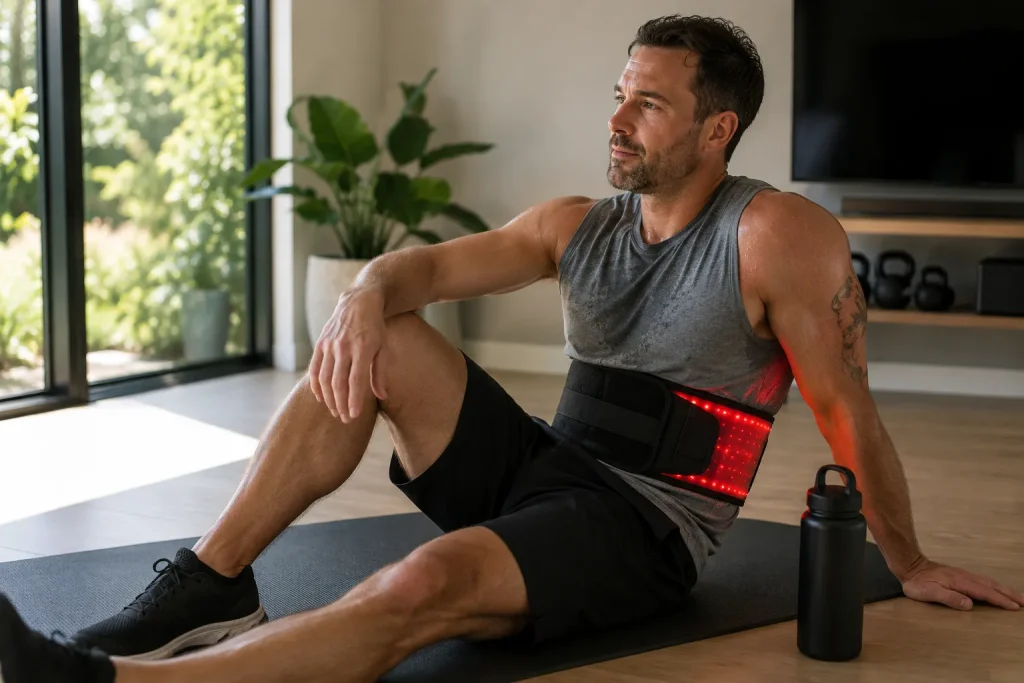
Active people use red and near-infrared light to bounce back after training. Muscle and joint stiffness and soreness have been demonstrated to be significantly reduced while muscle contractile function was simultaneously improved by using red and infrared light. The deeper-reaching near-infrared wavelength is the workhorse here.
These benefits are achievable with just 10-15 minutes of regular exposure, which is why athletes often fit a quick session in after a hard workout.
Good for: post-workout soreness, general muscle fatigue, a wind-down after an active day. 👉 A Red Light Therapy Belt wraps larger muscle groups for focused sessions; a Red Light Therapy Mat covers larger areas at once. See Recovery & Wellness.
4. Joint and everyday aches
Some of the most-cited research looks at light therapy for discomfort. Research shows that red light therapy may be useful for relieving some types of pain, particularly pain due to inflammation. A review of 11 studies looking at the effect of red light therapy on pain found mostly positive results, though the authors said that more studies are needed.
The proposed mechanisms are improved circulation, calmed inflammation, and modulated nerve signalling. Evidence is encouraging but not conclusive — think of it as supportive comfort, not a cure.
Good for: stiff, tired areas and everyday niggles. Learn more on Pain Relief.
5. Hair growth
If you're dealing with thinning, red light is one of the better-studied non-drug options. The FDA has also cleared several at-home red light devices, including combs, caps and helmets, for hair regrowth. Near-infrared light may stimulate hair follicles to encourage hair growth and reduce hair loss. Notably, one study suggests that low-level light therapy may be as effective as minoxidil, a medication commonly used to treat pattern hair loss.
Good for: hereditary and hormonal thinning, hair density and thickness over 3–6 months of consistent use.
6. Sleep and mood
This is an emerging but exciting area. Evening red light exposure may support your natural wind-down. Red or near-infrared light at night may aid in the production of melatonin and promote sleep. Unlike blue-heavy screen light, warm red light doesn't suppress melatonin the same way, which is why a short evening session fits neatly into a bedtime routine.
Early research also links light therapy to improved mood, though larger trials are still needed.
Good for: an evening wind-down ritual and supporting a healthy sleep–wake rhythm.
7. Wound healing and skin repair
Red light therapy can promote wound and skin healing by increasing blood flow to the area, and reduce redness and inflammation caused by sun damage. It's used clinically in some settings, including supportive care — for example, for patients with oral mucositis, or mouth sores.
8. Body contouring (weak evidence — manage expectations)
You'll see red light marketed for fat loss and "body sculpting." Be sceptical here. Red light therapy may help reduce the circumference of your body in the area that was treated, but the effect will likely be temporary and not due to any real weight loss. It's not a substitute for diet and exercise.
Does red light therapy actually work? What the evidence says
Honest answer: it depends on the use, and the field is still maturing. The field has over 6,000 published studies, though quality varies significantly. The best evidence supports red light therapy for skin rejuvenation, wound healing, joint pain, and muscle recovery. Meanwhile, claims about weight loss, cognitive enhancement, and hormone optimization have weaker evidence and should be viewed with appropriate skepticism.
The mainstream medical view is measured. As the Cleveland Clinic puts it, results of some studies do show some promise, but the full effectiveness of red light therapy has yet to be determined. And Healthline notes that red light therapy's effectiveness is still under scientific investigation, and most devices are not FDA-approved for specific conditions.
The takeaway: treat red light therapy as a supportive, low-risk addition to a healthy routine — strongest for skin, promising for recovery and comfort, and still being studied elsewhere. It works best when it's consistent and paired with the basics: good sleep, movement, and nutrition.
How to use red light therapy at home
You don't need a clinic. At-home LED devices are designed for regular, safe use, and the protocol is simple.
How long per session? Generally, 10-20 minutes of exposure to red light is enough time for the wavelengths to penetrate the tissue and be absorbed by the cells. Longer isn't better — our cells have a limit to how much ATP they can produce, so leaving it on for longer than 20 minutes will result in diminishing returns.
How often? Most people do best with three to five sessions per week for 10 to 20 minutes. With time you can build up toward daily use. Missing a day or even a week does not reset you to zero — what matters is returning to your routine and continuing over the long term, not achieving a perfect streak.
What time of day? Timing is flexible and depends on your goal:
- Skin: any time — consistency matters more than timing.
- Recovery: after training, on the areas you worked.
- Sleep & wind-down: an evening session, roughly 30 minutes before bed.
- Energy & mood: a morning session.
Distance and setup: for panels, position roughly 15–45cm from the skin; for wearables like belts and masks, follow the device's fit. Eye comfort matters, so avoid staring directly into bright LEDs.
New to it? Our Product Training videos and quick-start guides walk you through setup for each device.
Which red light therapy device is right for you?
The "best" device is simply the one that matches the area you want to treat and fits your routine and space.
| Device | Best for | Coverage | Price (AUD)* |
|---|---|---|---|
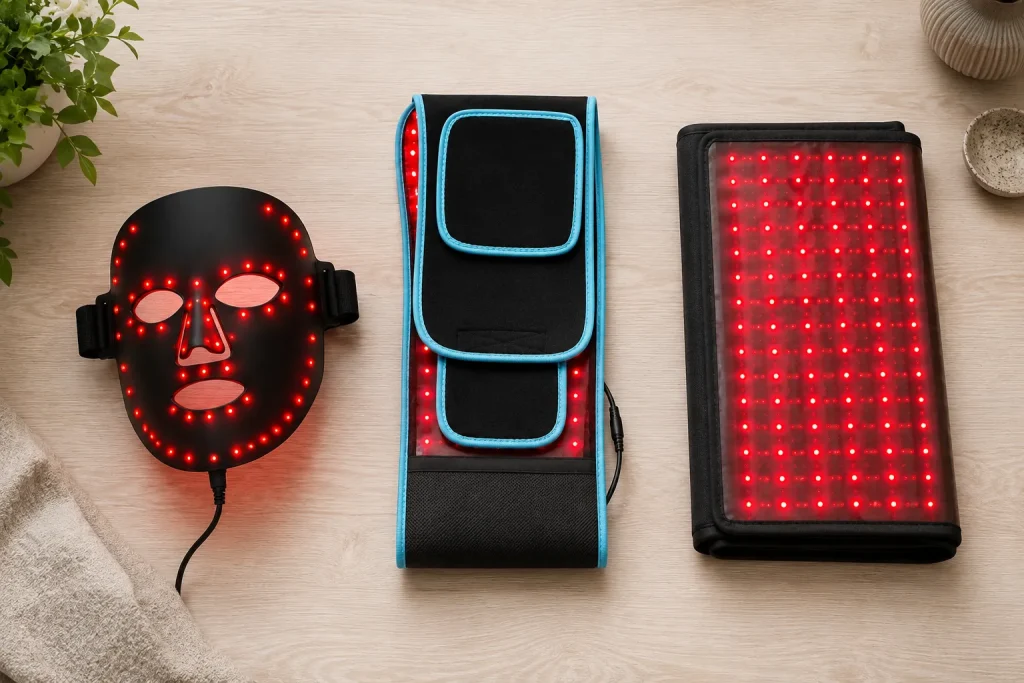
| LED Face & Neck Mask | Skin, glow, evening ritual | Face + neck | $299 |
| Red Light Therapy Belt | Focused, wrap-and-wear sessions | Targeted areas | $249 (was $299) |
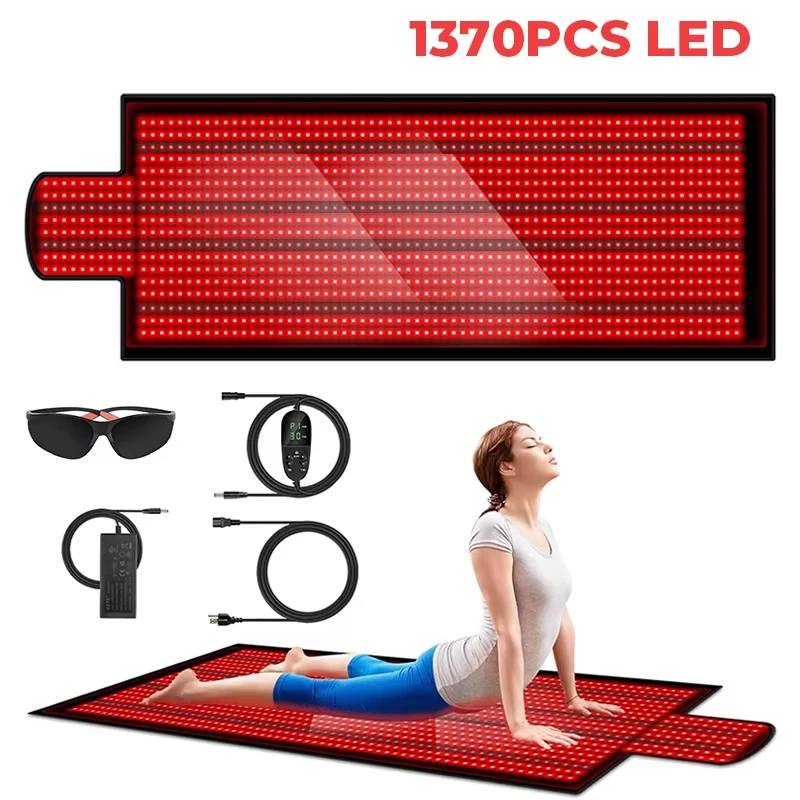
| Red Light Therapy Mat | Larger-area, lie-down sessions | Whole body (1370 LEDs) | $1,099 (was $1,199) |
*Example prices, subject to change — check the live product page. Use code ALPHA5 for 5% off eligible single products. Prefer a set? See the Belt + oils bundle or browse the full Shop.
Quick chooser:
- Want a glow step for your evening skincare? → Face & Neck Mask
- Want something portable and focused you can wrap on? → Belt
- Want larger-area, whole-body sessions? → Mat
Still deciding? Get the free Alpha device guide to compare all options in one place.
Is red light therapy safe? Side effects to know
Red light therapy is considered low-risk for most people. It is non-invasive and does not use UV light, which can damage the skin. Some people may experience mild side effects, such as temporary redness or irritation.
A few sensible precautions:
- Red light can damage your eyes, so wear the protective eyewear provided during full-panel sessions.
- If you take photosensitising medication, are pregnant, or have a skin condition, check with your doctor first.
- More isn't better — stick to recommended session times.
Frequently asked questions
What is red light therapy good for? Red light therapy is most used for skin rejuvenation (collagen, fine lines, tone), easing everyday muscle and joint discomfort, supporting post-exercise recovery, encouraging hair growth, and helping with an evening wind-down for sleep. The strongest evidence is for skin.
How long does red light therapy take to work? For skin, most people notice a healthier glow within 2–4 weeks of consistent use, with collagen changes building over 8–12 weeks. Recovery benefits can be felt sooner; hair growth typically takes 3–6 months.
How often should you use red light therapy? Three to five sessions a week, 10–20 minutes each, is a solid starting point for most goals. You can build toward daily use over time.
Is red light therapy the same as a tanning bed? No. Tanning beds use UV light, which damages skin. Red light therapy uses red and near-infrared light, produces no heat, and doesn't carry the same UV-related risks.
What's the difference between red light and near-infrared? Red light (around 660nm) is visible and works on the surface layers of skin — great for tone and fine lines. Near-infrared (around 850nm) is invisible and reaches deeper into muscle and tissue — better for recovery and larger-area sessions. Many devices, including Alpha's, combine both.
Can I use red light therapy at home? Yes. At-home LED masks, belts and mats are designed for safe, regular use. Follow the device's session times and setup guide.
Does red light therapy have side effects? For most people, side effects are minimal — occasionally mild, temporary redness. Wear eye protection with bright panels and check with your doctor if you're pregnant, have a skin condition, or take photosensitising medication.
The bottom line
So, what is red light therapy good for? It's a low-risk, non-invasive way to support skin health, muscle recovery, everyday comfort, hair growth, and a calmer wind-down — with the most convincing evidence in skin rejuvenation and growing support elsewhere. It's not a miracle or a medical cure, but as a consistent, at-home ritual layered onto the basics of good health, it's one of the more accessible wellness tools available today.
Ready to build your own routine? Compare devices in the Alpha Shop, see the science on How It Works, or grab the free device guide and 5% off with code ALPHA5.
Sources
- Cleveland Clinic — Red Light Therapy: Benefits, Side Effects & Uses
- Healthline — Red Light Therapy: Is It Safe and Where Can You Get It?
- WebMD — What Is Red Light Therapy?
- UCLA Health — 5 health benefits of red light therapy
- UT MD Anderson — What is red light therapy?
- Peer-reviewed studies referenced on the Alpha How It Works page (Wunsch & Matuschka 2014; Avci et al.; Hamblin 2017)