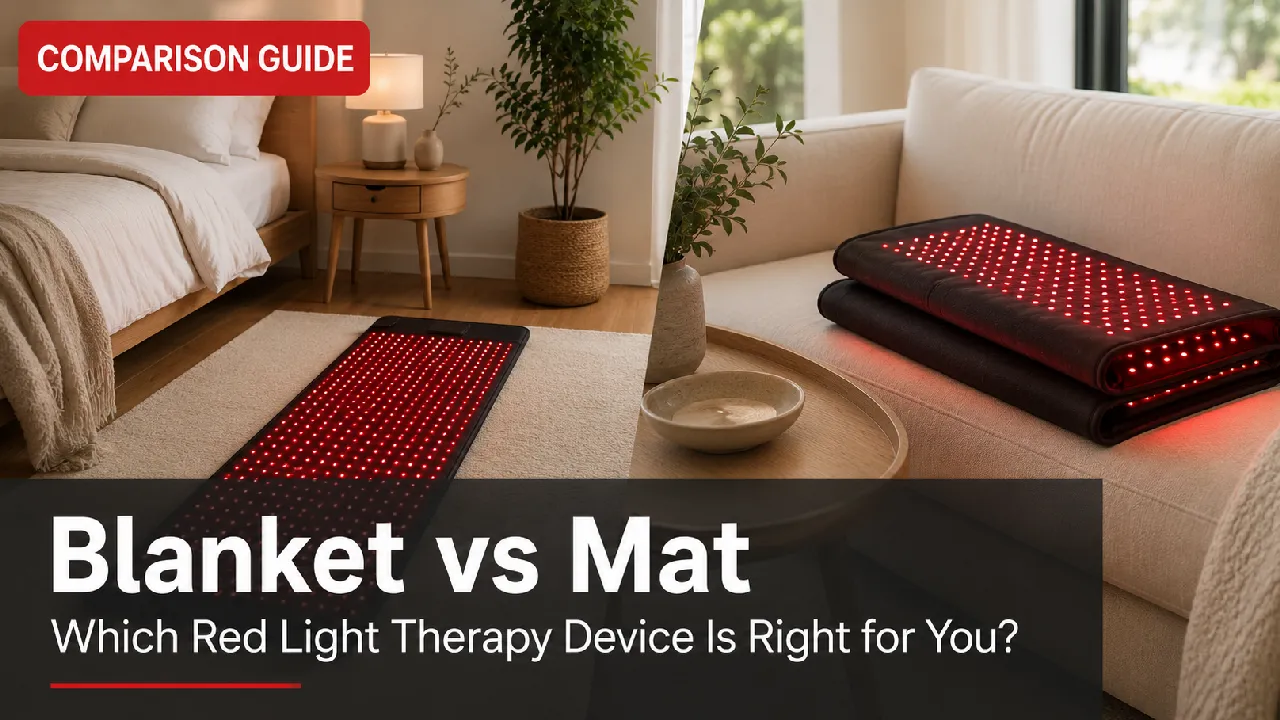
Trying to decide between a red light therapy blanket and a mat? Both deliver the same core technology — red and near-infrared light for comfort support, recovery, and skin health — but they work very differently in practice. Choosing the wrong format can mean paying for coverage you do not need, or buying a device that does not match the way you plan to use it.
This guide breaks down exactly how each device works, who each one suits best, and how to decide which one belongs in your home.
Compare the Alpha mats and blankets range: If you are deciding between a mat and a blanket, start with the Alpha mats and blankets comparison page, then use code ALPHA5 on eligible single-product orders. Bundle pricing is already set, so the code does not apply to bundles.
The Core Difference: Coverage and Experience
Both a red light therapy mat and a red light therapy blanket use the same dual-wavelength technology — typically 660nm red light and 850nm near-infrared (NIR) light — for a red and near-infrared light exposure routine. The difference isn't the science. It's how that light reaches your body.
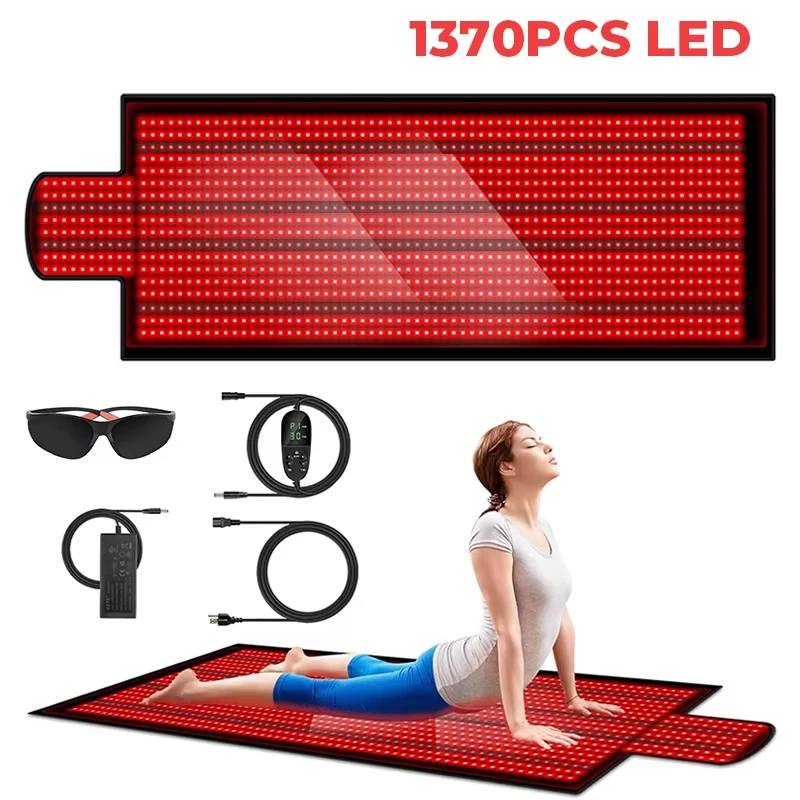
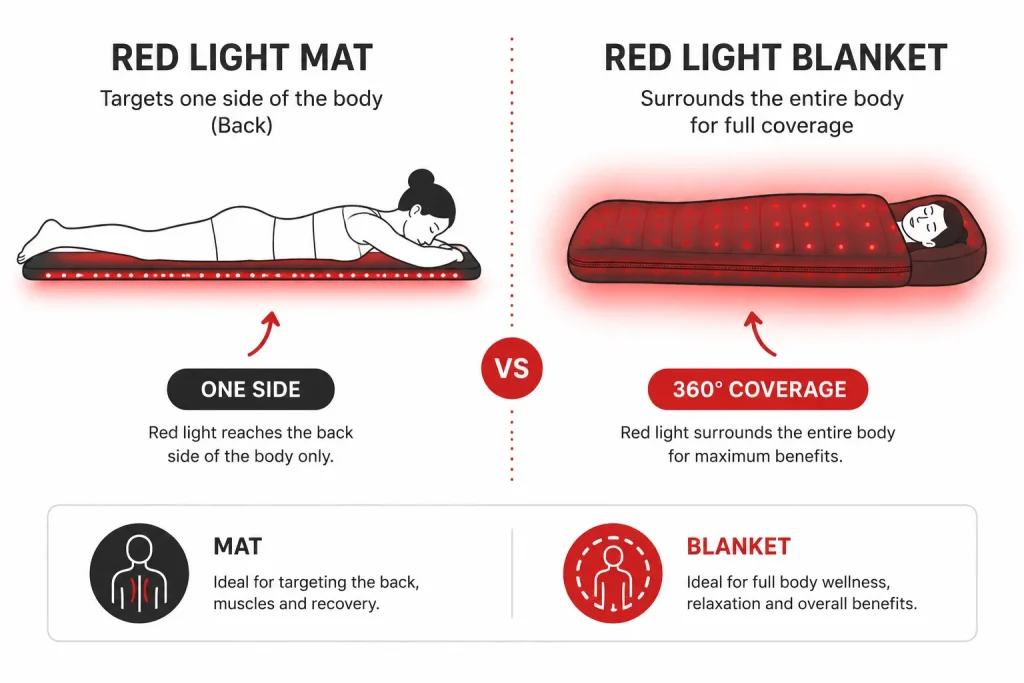
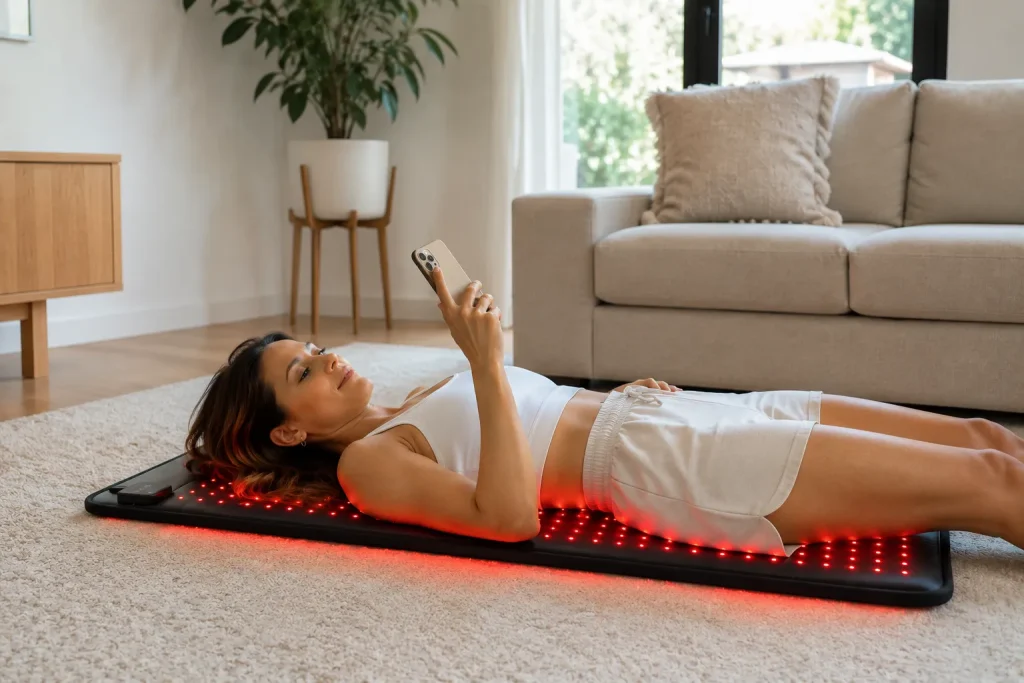
A mat is a flat, flexible pad you lie on top of, sit on, or drape over a specific area. It covers one side of your body at a time — the side in contact with the LEDs.
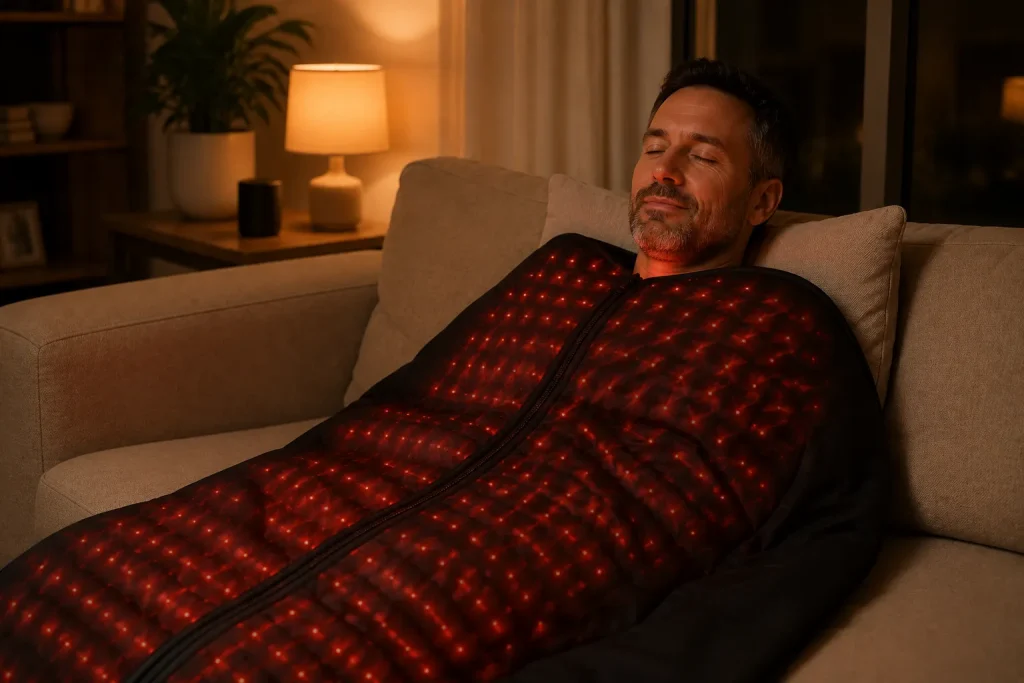
A blanket wraps around your entire body, sleeping-bag style, delivering light to both your front and back simultaneously. It's a fully enclosed, 360-degree experience.
That single difference — one-sided vs. all-sided — shapes almost every other decision in this comparison.
Red Light Therapy Mat: Pros and Cons
What it's good at: A mat gives you flexibility. You can lie on it for back and posterior chain session, drape it over your knees or shoulders, or even use it propped up like a mini panel. Mats are particularly well-suited to targeting specific areas like the lower back, knees, or shoulders, while still offering enough surface area for broader sessions when needed.
Mats also tend to be more affordable, lighter, and easier to store than blankets — making them a practical entry point if you're new to red light therapy.
Where it falls short: Since a mat only covers one side of your body per session, full-body coverage means either accepting partial session or repositioning halfway through — flipping over to treat your front after your back, for example. This roughly doubles your session time if you want genuinely full-body coverage.
Best suited for:
- Targeted back, posterior chain, or joint session
- People who want to multitask during sessions (read, scroll, watch TV) since a mat doesn't enclose you
- Buyers wanting a more affordable entry point
- Anyone who runs warm or finds enclosed heat uncomfortable
Red Light Therapy Blanket: Pros and Cons
What it's good at: A blanket's biggest advantage is simultaneous 360-degree coverage. Sleeping bag-style blankets zip around the user for full 360-degree coverage in a soft, flexible format — meaning your front and back are treated in the same session, with no repositioning required.
This makes blankets the most efficient option for genuine full-body sessions, and particularly effective for systemic goals — whole-body recovery, inflammation reduction, relaxation, and skin benefits across your entire body at once.
Where it falls short: The enclosed design means less freedom of movement during your session — you're zipped in for the duration. Some users also find the experience warmer, since being fully wrapped traps more heat than an open mat. Enclosed sleep bag-style devices can feel overwhelming for people who overheat easily, including those with certain thyroid conditions, or anyone with claustrophobia. Blankets are also generally a larger investment than mats, given the higher LED density required to cover the entire body.
Best suited for:
- People prioritising full-body, systemic session in the shortest session time
- Those using red light therapy primarily for relaxation, sleep support, or stress relief
- Anyone wanting a passive, "lie back and let it work" experience
- Buyers who don't mind a higher upfront investment for maximum convenience
Quick Comparison Table
| Factor | Mat | Blanket |
|---|---|---|
| Coverage per session | One side at a time | Both sides simultaneously |
| Session flexibility | High — multitask freely | Low — enclosed for duration |
| Best for | Targeted areas, back pain | Full-body, systemic wellness |
| Heat experience | Mild, open | Warmer, enclosed |
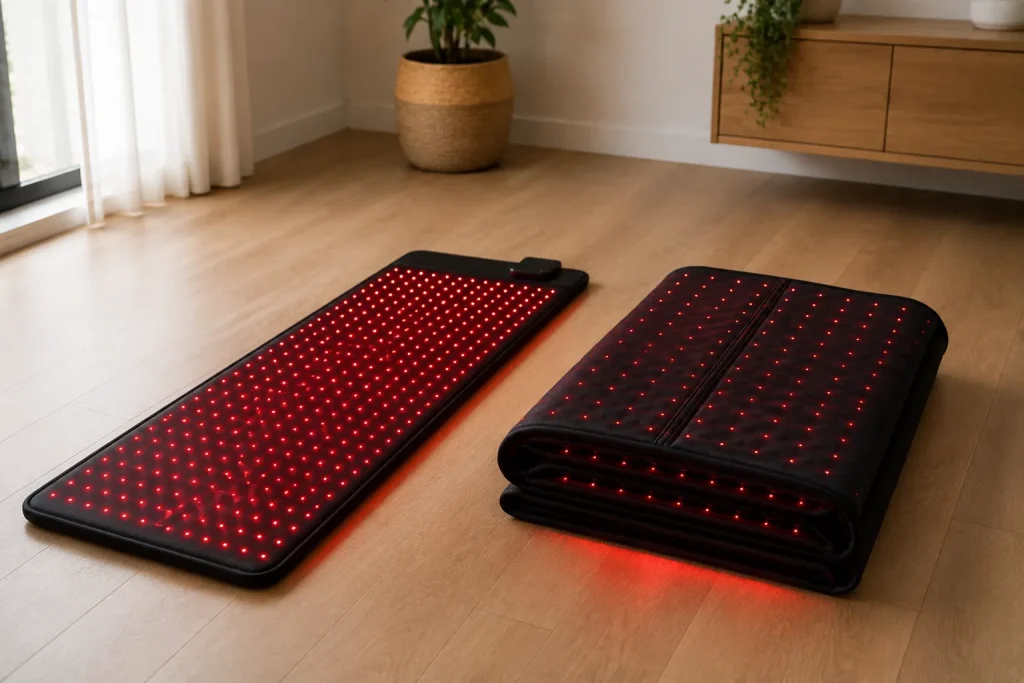
| Portability | Lighter, easier to store | Bulkier |
| Typical investment | More affordable | Higher |
| Ideal user | Targeted relief seekers | Full-body recovery seekers |
What Actually Matters More Than Mat vs. Blanket
Before you decide on format, there's a more important factor to get right: irradiance. A device with thousands of LEDs spread over a large area can deliver less irradiance per square centimetre of skin than a device with far fewer LEDs concentrated in a tighter format — meaning LED count alone tells you very little.
Whichever format you choose, confirm:
- Dual wavelengths — 660nm and 850nm, clearly stated
- Disclosed irradiance — measured in mW/cm², ideally 60mW/cm² or higher
- Certifications — look for CE, FCC, or similar safety certifications
A high-quality mat with strong irradiance will outperform a poorly specified blanket — and vice versa. Format is about matching your lifestyle and goals; irradiance and wavelength accuracy are about whether the device actually works.
Can You Get Full-Body Coverage From a Mat?
Yes — with a longer session. A general recommendation for full mat-based sessions is around 30 to 50 minutes per day, since you may need to reposition to cover both sides of your body. If your priority is maximum efficiency in the shortest time, a blanket's simultaneous front-and-back coverage will always be faster. If you're comfortable with a slightly longer session and want the flexibility a mat offers, it remains a fully viable full-body option — just structured differently.
The Alpha Red Light Therapy Mat and Blanket
The Alpha Red Light Therapy range includes both formats, so you can choose based on how you actually want to use it — not settle for whichever device happens to be marketed hardest.
Alpha Red Light Therapy Mat — Dual-wavelength (660nm + 850nm) therapy in a flexible, easy-to-store format. Ideal for back pain, posterior chain recovery, and targeted sessions where you want the freedom to move or multitask.
Alpha Red Light Therapy Blanket — Full 360-degree dual-wavelength coverage in a single session. Built for people who want maximum full-body benefit with minimum session time — recovery, relaxation, and systemic wellness in one passive sitting.
Both are designed for Australian homes, ship across Australia, and use the same clinically-relevant wavelengths — the only difference is how the light reaches you.
Frequently Asked Questions
Is a blanket more effective than a mat? Not inherently — both use the same core wavelengths and mechanism. A blanket is more efficient for full-body coverage since it covers both sides simultaneously, but a mat with strong irradiance delivers an equally effective light exposure to the areas it covers.
Can I use a mat to treat my whole body? Yes, by lying on it for one side and then repositioning to cover the other — though this roughly doubles your total session time compared to a blanket's simultaneous coverage.
Which is better for back pain specifically? A mat is often the more practical choice for back pain, since you simply lie on it directly over the affected area without needing full-body enclosure.
Which is better for sleep and relaxation? A blanket tends to suit this goal better — the enclosed, cocoon-like experience combined with full-body light exposure creates a more immersive, calming session.
Do I need both eventually? Many users do end up owning both — a mat for quick, targeted sessions during the day, and a blanket for longer, full-body evening sessions. It comes down to your routine and goals rather than one being objectively superior.
Is one safer than the other? Both are equally safe when used as directed, using non-UV red and near-infrared wavelengths. The main consideration is heat tolerance — some users find a fully enclosed blanket warmer than an open mat, which is worth factoring in if you run hot or are prone to overheating.
Final Verdict: Which Should You Choose?
If your main goal is targeted relief — back pain, joint discomfort, or recovery in a specific area — and you want flexibility during your session, the mat is the better fit.
If your main goal is full-body, systemic session in the most efficient single session — recovery, relaxation, sleep support, or whole-body skin benefits — the blanket is the stronger choice.
Both deliver genuine photobiomodulation benefits when built with proper wavelengths and irradiance. The right choice comes down to how you want to use it, not which one is "better" in absolute terms.
Still not sure which fits your routine? Explore the full Alpha Red Light Therapy mat and blanket range and find the format that matches your goals.
→ Shop the Alpha Red Light Therapy Mat & Blanket Range
This article is for informational purposes only and does not constitute medical advice. Always consult a qualified healthcare professional for diagnosis and session of medical conditions.